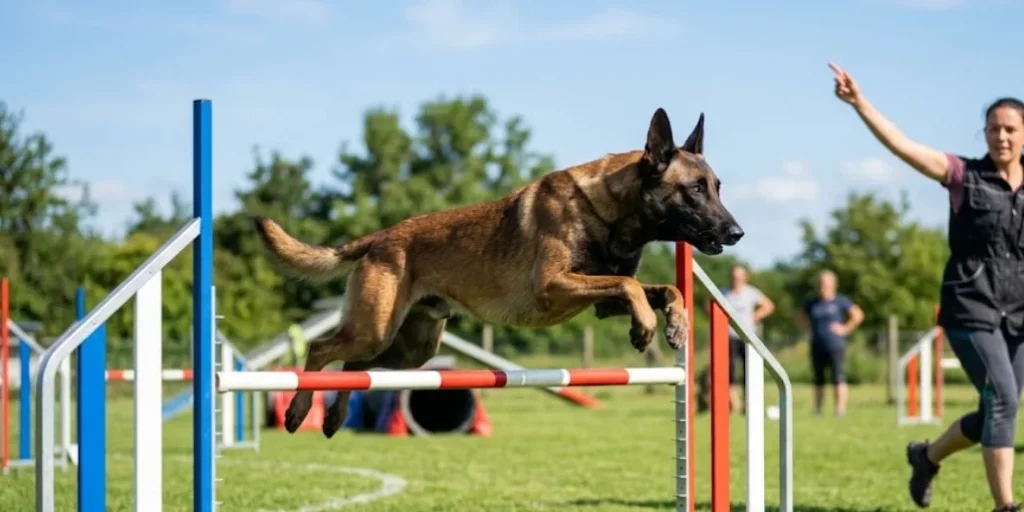
Herding breeds were bred to work independently at a distance from their handler, making split-second decisions about how to move livestock. That same independence and quick thinking makes them highly trainable, but also prone to boredom, over-herding household kids or other pets, and anxiety if their mental energy isn’t channeled somewhere constructive.
Part of the Dog Breed Training Guides directory.
Breeds in this guide
| Breed | Key training consideration | Guide |
|---|---|---|
| Belgian Malinois | Extremely high drive; needs a job or working-style structure, not just exercise | Belgian Malinois Training |
| Border Collie | Legendary intelligence; prone to obsessive behaviors (chasing shadows, lights) without mental outlets | Border Collie Training |
| Corgi | Herding instinct shows up as nipping at heels; short legs don’t reduce the need for mental stimulation | Corgi Training |
| Dutch Shepherd | Versatile working breed; needs structured, purposeful training from an early age | Dutch Shepherd Training |
| German Shepherd | Highly trainable but can develop anxiety or reactivity without early socialization | German Shepherd Training |
| Australian Kelpie | Bred for tireless independent work; among the highest-energy breeds, needs a real job | Australian Kelpie Training |