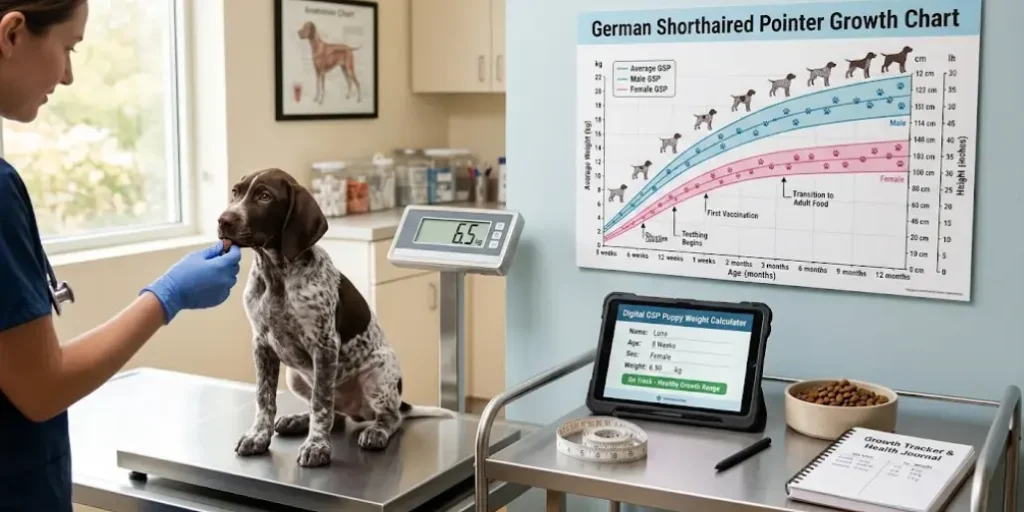
If you want to know how big your German Shorthaired Pointer will get, a standard growth chart shows the typical adult weight ranges by gender:
| Gender | Adult Weight |
| Males | 55 to 70 pounds |
| Females | 45 to 60 pounds |
Understanding the German Shorthaired Pointer Growth Chart
Growth & Weight Tool
How big will your puppy get?
Pick a breed to see its typical growth curve, or add your puppy’s current age and weight to check how they’re tracking against the average.
Estimates based on breed-standard adult weight ranges and typical size-class growth patterns. Every puppy is different — check with your vet for individual concerns.
Monitoring your German Shorthaired Pointer puppy using a reliable weight chart is essential for ensuring your young pup develops into a healthy adult dog. Because this athletic hunting dog experiences rapid growth during its first several months of life, tracking milestones helps dedicated dog owners:
- Provide optimal nutrition and appropriate portions of dog food
- Ensure regular veterinary checkups to guarantee long-term vitality
Importance of a Growth Chart for GSP Puppies
Utilizing a detailed German Shorthaired Pointer growth chart allows you to compare your specific GSP puppy's growth against established breed averages. Keeping your growing GSPs within a healthy weight range prevents excessive joint stress, ensuring your active pointer puppy develops strong bones and muscles as it transitions toward its ultimate adult size and full athletic potential.
Key Milestones in GSP Growth
Throughout the first twelve to eighteen months of age, German Shorthaired Pointer puppies undergo dramatic transformations from tiny furballs into powerful athletes. Most male GSPs and females will reach about half of their expected adult weight by six months of age, eventually slowing down significantly before they officially stop growing around eighteen months of age.
Using a Pointer Weight Calculator
By inputting your pet's current weight and age into a specialized pointer weight calculator, you can accurately predict your German Shorthaired Pointer's final dimensions and plan your feeding strategies accordingly. To track your puppy's ongoing development alongside these calculations, you can also utilize the following tools:
- A helpful dog growth chart for milestone comparisons
- A weight calculator for additional nutritional insights
Tracking Growth: What to Expect from Your GSP
Tracking the development of your German Shorthaired Pointer involves understanding the unique milestones that define this energetic hunting dog. As a dedicated dog owner, monitoring your GSP ensures that your puppy transitions smoothly through each phase of life. Proper nutrition featuring high-quality puppy food supports the rapid growth and high energy levels typical of dog breeds with such strong athletic drives.
Growth Patterns of GSP Puppies
GSP puppies experience an incredible surge during their first several months of age, requiring attentive care from experienced dog owners. Providing balanced dog food helps maintain a steady growth trajectory for your growing pup. As one of the most active dog breeds, your pointer puppy needs proper fuel to build strong muscles while staying safely within an ideal weight range throughout puppyhood.
When Do German Shorthaired Pointers Stop Growing?
Most German Shorthaired Pointer puppies will completely stop growing and reach their full size around 18 months of age. While male GSPs might take slightly longer to attain their ultimate adult weight compared to females, consulting your veterinarian during routine checkups helps confirm that your dog remains on track toward a healthy adult size.
Average Weight for a German Shorthaired Pointer
The average adult weight for this remarkable breed typically falls between 45 and 70 pounds, depending heavily on gender and genetics. Maintaining a healthy weight prevents unnecessary joint strain, allowing your companion to thrive. For a complete understanding of how your dog compares to other large dog categories, you can also explore the insights provided by DogBreedCalc.
Healthy Growth: Ideal Weight for Your GSP
Determining the Ideal Weight for Male GSPs
Determining the ideal weight for male GSPs is essential for every dedicated dog owner who wants to raise a strong hunting dog. As your German Shorthaired Pointer matures toward its adult size, maintaining a healthy weight prevents unnecessary joint strain. Regular checkups with your veterinarian ensure that your growing pup develops properly within the expected weight range while transitioning into a healthy adult dog.
Healthy Weight Ranges for 6-Month-Old German Shorthaired Pointers
At six months of age, German Shorthaired Pointer puppies typically reach half of their final adult weight. Providing high-quality puppy food supports this rapid growth phase for your energetic pointer puppy. Monitoring your German Shorthaired Pointer's development against a standard weight chart guarantees that your GSP stays on track during these critical developmental months before reaching full size.
Signs of Healthy Growth in Pointer Puppies
Healthy growth in GSP puppies is characterized by steady weight gain, vibrant energy, and a well-proportioned physique. As one of the most active dog breeds, a young German Shorthaired Pointer needs balanced dog food and proper care from attentive dog owners. Tracking your German Shorthaired Pointer puppy ensures that your companion achieves its maximum athletic potential by eighteen months of age.
Conclusion and Resources
Utilizing the Dog Growth Chart & Weight Calculator
Utilizing a reliable pointer weight calculator helps you accurately predict your pet's future dimensions based on current weight and age. By monitoring your German Shorthaired Pointer growth over time, you can adjust feeding portions accordingly. Comparing milestones using these digital tools ensures your German Shorthaired Pointer puppies maintain optimal health throughout their crucial developmental stages.
Final Thoughts on GSP Growth
Understanding the unique growth patterns of your GSP allows you to provide exceptional care from puppyhood through adulthood. Whether you own male GSPs or females, tracking their progress guarantees they stop growing into well-balanced companions. Every GSP puppy deserves proactive attention to ensure a long, healthy life filled with vitality and active adventures alongside you.
About DogBreedCalc
For more detailed insights into tracking your pet's development, expert feeding guidelines, and comprehensive breed statistics, be sure to visit DogBreedCalc for all your canine growth tracking needs.
FAQ
How much should a German Shorthaired Pointer weigh at each age?
Growth varies by sex, genetics, nutrition, and overall health, so a German Shorthaired Pointer weight chart is best used as a general guide rather than a strict target. Compare your puppy’s age and weight with breed-specific growth information, and ask your veterinarian to assess their progress and body condition.
When is a German Shorthaired Pointer considered full size?
Most German Shorthaired Pointers reach close to their adult height by about 9 to 11 months, though they may continue filling out afterward. Many are near their full size between 1.5 and 2 years of age.
What is the adult height of a German Shorthaired Pointer?
The American Kennel Club gives a typical adult height of 23 to 25 inches for males and 21 to 23 inches for females. Individual dogs may fall slightly outside these ranges, so height alone does not determine whether a dog is growing normally.
How can I tell whether my puppy is gaining height at a healthy rate?
Measure your puppy periodically from the floor to the top of the shoulder, using the same method each time. Growth often happens in spurts, and a puppy may gain height quickly before adding muscle. Track current age, weight, and height together rather than judging progress from a single measurement.
What should I expect from a German Shorthaired Pointer puppy at 5 months?
At 5 months, a puppy is still growing rapidly and may look lanky as its legs lengthen before the body fills out. There is no single ideal weight for every puppy at this age. Your veterinarian can provide guidance based on your puppy’s growth pattern, diet, and body condition.
Is a German Shorthaired Pointer fully grown at 9 months or 11 months?
Many puppies are approaching their adult height by 9 months, but they are not necessarily finished growing. At 11 months, some may still be developing muscle and filling out. Maturity differs between dogs, so assess overall development rather than relying on a specific birthday.
Can a puppy growth calculator predict my dog’s adult size?
A puppy growth calculator can offer a rough estimate using age and weight, but it cannot account perfectly for genetics, health, or individual growth spurts. Treat its result as an estimate, not a diagnosis or a substitute for a veterinary assessment.
What feeding schedule supports healthy growth?
Choose a complete, balanced food formulated for puppies and follow its feeding guidance, adjusting portions with your veterinarian’s advice. A consistent feeding schedule helps you monitor appetite and growth. Avoid overfeeding, since excess weight can put unnecessary strain on developing joints.
Should I give my German Shorthaired Pointer puppy supplements like glucosamine?
Do not add supplements like glucosamine unless your veterinarian recommends them. A complete puppy diet generally supplies the nutrients needed for growth, and unnecessary supplements can create imbalances or interact with other treatments. Consult your veterinarian before changing your puppy’s diet or adding supplements.