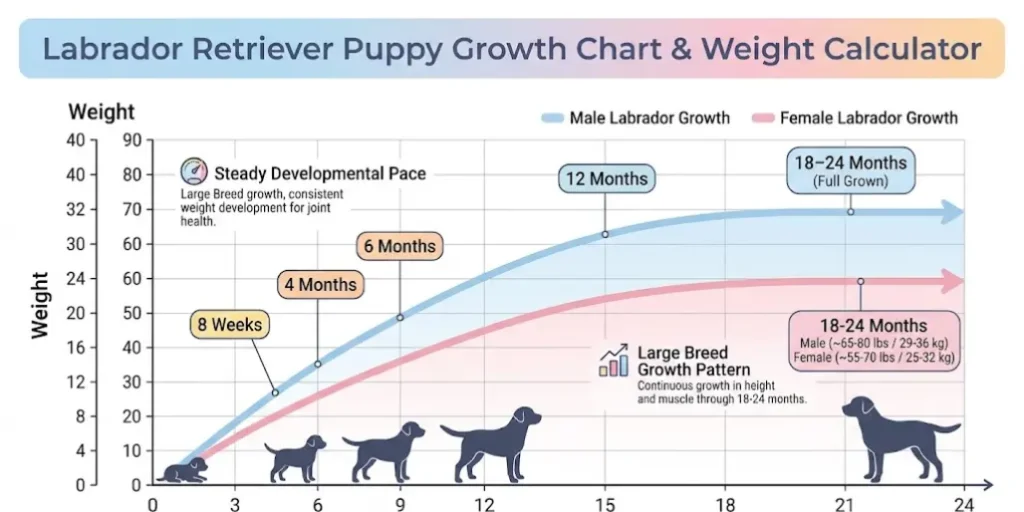
A Labrador Retriever puppy reaches its full adult size and height between 12 and 18 months of age, though filling out in muscle mass can take up to two years. To accurately determine if your young dog is developing on schedule, utilizing a reliable puppy growth chart and weight calculator provides immediate insight into their expected adult weight. By tracking metrics such as current weight against standard growth curves, owners can easily monitor height and weight milestones, ensuring their large-breed companion maintains a healthy weight throughout every developmental phase.
Puppy Growth Stages
Understanding Labrador Retriever Growth
Monitoring the complex growth stages of a young dog requires paying close attention to their rapid weight gain during the first several months of life. Every individual puppy follows a unique growth trajectory dictated by genetics and nutrition, making a specialized Labrador Retriever weight calculator an indispensable tool for pet owners. Understanding how these physical changes occur helps in identifying whether your animal is achieving a healthy growth pattern, avoiding potential issues related to being underweight or overweight as they mature into an adult Labrador Retriever.
Key Growth Stages for Puppies
The journey from a newborn dog breed to a fully developed adult involves distinct developmental phases that every owner should carefully observe. During the early months, Labrador puppies experience exponential increases in mass, transitioning through critical windows where proper nutrition and controlled exercise are vital for bone development. Utilizing a comprehensive puppy weight chart allows caretakers to compare male and female milestones, ensuring that the physical proportions align closely with established breed standards recognized by organizations like the AKC.
When Do Labrador Retrievers Stop Growing
Many owners frequently wonder exactly when Labrador Retrievers stop growing and reaching their final structural dimensions. While the skeletal height is mostly established around one year of age, the process of filling out and gaining solid muscle mass continues well into their second year. Consulting with a veterinarian regularly helps evaluate the body condition of your pet during these transitional months, ensuring that the final adult size reflects optimal health and proper nutritional management throughout the entire developmental timeline.
Puppy Weight Chart and Calculator
Growth & Weight Tool
How big will your puppy get?
Pick a breed to see its typical growth curve, or add your puppy’s current age and weight to check how they’re tracking against the average.
Estimates based on breed-standard adult weight ranges and typical size-class growth patterns. Every puppy is different — check with your vet for individual concerns.
Using the Weight Calculator for Labrador Puppies
Implementing a specialized weight calculator helps owners monitor the daily weight gain of their young dog with precision. By inputting specific details into the tool, you can easily track your pet's development:
- Current weight
- Age in months of Labrador puppies
Using this data, you can project the anticipated adult size. This digital growth calculator takes into account typical growth patterns for a large breed, ensuring your Lab puppies develop properly. Regular use of the weight calculator prevents guessing and provides exact metrics for tracking health.
Interpreting the Puppy Weight Chart
A detailed puppy weight chart offers a visual representation of expected development milestones from youth to maturity. When reviewing the growth curve, you can utilize the following standard metrics to ensure steady progress:
| Growth Stage | Standard Metric / Consideration |
| Youth to Maturity | Expected development milestones and overall growth curve |
| Size Variations | Distinguishes between male and female averages |
Utilizing a comprehensive puppy weight chart allows you to spot any deviations early, ensuring your companion stays on track toward a healthy weight.
Ideal Weight for Labrador Retrievers
Maintaining an ideal weight is crucial for preventing joint stress and other health complications in your pet. By cross-referencing your animal with established breed standards, you can determine the correct weight range for their specific age and frame. To ensure your dog stays healthy, you should focus on:
- monitoring metrics like height and weight to confirm they are neither underweight nor overweight
- providing proper nutrition, balanced puppy food, and regular evaluations of body condition to support adult Labrador Retrievers in staying fit and active
Healthy Growth Monitoring
Tracking Your Puppy’s Growth Rate
To successfully track their growth rate, owners should consistently record measurements and compare them against a trusted Labrador Retriever growth chart. Understanding the underlying genetics and typical growth trajectory of the dog breed helps contextualize these numbers. Whether you measure in pounds or kg, keeping a meticulous log of puppy weight ensures you notice any sudden changes in rapid weight gain. This proactive approach supports overall well-being throughout the formative months.
Signs of Healthy Growth
Observing positive indicators of healthy growth involves looking at energy levels, physical proportions, and steady weight and growth progression. A well-developing animal shows balanced muscle development and proper skeletal alignment without excessive fat accumulation. Regular check-ins using a reliable puppy growth calculator will confirm that your companion is achieving appropriate milestones. Ensuring your new puppy meets these physical benchmarks is the foundation for a long, healthy life as an adult Labrador.
When to Consult Your Vet
If you notice unusual fluctuations in weight and height or suspect your pet is straying from the expected Labrador Retriever growth curve, it is time to consult a professional. A qualified veterinarian or trusted vet can perform a thorough physical examination to assess body condition and address any underlying nutritional concerns. Professional guidance ensures that any developmental issues are caught early, keeping your dog healthy and strong. For those looking to monitor milestones at home, the DogBreedCalc tool offers additional insights into your dog's development.
Utilizing the Labrador Retriever Growth Chart
How to Read the Growth Chart
When reviewing the Labrador Retriever growth chart, it is essential to understand how the growth curve maps out the expected weight and height of your companion from youth to maturity. By plotting the current weight against standard weight-by-age metrics, owners can evaluate the growth trajectory of the dog breed. This visual tool accommodates both male and female averages, ensuring you can accurately track the growth rate and development of your puppy as they transition through various months of age.
Benefits of Monitoring Growth
Consistently utilizing a puppy growth chart provides significant advantages for ensuring your large-breed animal maintains a healthy weight throughout its formative months. Monitoring rapid weight gain and comparing it against established breed standards helps prevent issues like becoming overweight. Whether you measure in pounds or kg, keeping a close eye on the puppy weight and overall body condition supports proper bone development and ensures your Labrador Retriever achieves its ideal weight by adulthood.
Resources for Further Tracking
Accessing reliable resources is vital for accurately evaluating your puppy growth stages and predicting adult size. Utilizing a dedicated Labrador Retriever growth chart alongside professional guidance from a veterinarian or trusted vet ensures any deviations from the typical growth pattern are addressed promptly. Combining these tools with proper nutrition and puppy food guarantees your dog breed stays on a healthy growth path toward becoming a strong, active adult Labrador.
Puppy Weight Calculator Tools
Features of the Labrador Retriever Weight Calculator
The specialized Labrador Retriever weight calculator offers advanced digital features designed to predict the adult Labrador Retrievers' final dimensions with impressive accuracy. By inputting the puppy weight and current weight along with the exact age in months, owners can leverage this growth calculator to foresee future milestones. This tool simplifies the process of tracking weight and growth, removing guesswork and providing precise data tailored specifically for this popular dog breed and its unique genetics.
Comparing Weight Calculators
Evaluating different digital tools reveals that a dedicated weight calculator provides much more reliable projections than generic estimations. When assessing options, look for a calculator that incorporates comprehensive data on male Labrador and female averages, ensuring the resulting weight range aligns with recognized AKC guidelines. Utilizing a sophisticated weight chart and calculator combination helps owners effectively monitor the ongoing development and rapid weight gain of their Lab puppies with confidence.
Using the Dog Growth Chart & Weight Calculator
To accurately project your new puppy's adult size, you can easily use our growth tracking tool to monitor their development over time. Inputting precise metrics ensures you understand the expected Labrador Retriever puppy growth chart trajectory and stay informed about their overall health. Regular assessments keep your dog on track for a long, vibrant life.
FAQ
Q: What exactly is a Labrador Retriever puppy growth chart and why do I need one?
A: A Labrador retriever puppy growth chart is basically a reference tool that shows you the average weight for a labrador at different ages, from birth all the way up to adulthood. It helps you figure out if your pup is following a healthy growth pattern compared to other labrador retriever puppies. Honestly, it's super handy because labs grow fast and it's easy to wonder if they're too skinny or too chunky!
Q: How does the puppy growth calculator actually work?
A: You just plug in your puppy's current age and weight, and the growth calculator does the math to estimate where they'll land in terms of adult weight range. It compares your pup's numbers against typical labrador retriever growth stages. It's not 100% perfect since every dog is different, but it gives you a solid ballpark idea of how your puppy's weight by age stacks up.
Q: What's considered a healthy weight for a labrador puppy at each stage?
A: It really depends on the age and whether you've got a male or female labrador, since females tend to run a bit smaller. Generally speaking, a lab puppy might weigh around 10-15 lbs at 8 weeks, then shoot up pretty dramatically during that rapid period of growth between 3-6 months. By checking a labrador retriever weight chart, you can see the general size and weight expectations for each stage without stressing too much.
Q: Do male and female Labradors grow at different rates?
A: Yep, definitely! Male labs usually end up heavier and taller than females once they hit adulthood. A female labrador might top out around 55-70 lbs while males can reach 65-80 lbs or more. The growth calculator usually lets you specify gender because it does affect the whole growth and weight trajectory.
Q: At what age do Labrador puppies experience rapid growth?
A: Most labrador retriever puppies experience rapid growth between 2 and 6 months old. This is when you'll notice your puppy's weight climbing fast, sometimes doubling in just a few weeks! After that initial growth spurt, things slow down a bit until they reach their full adult size, usually somewhere around 12-18 months depending on the individual dog.
Q: How accurate is a size calculator for predicting my Labrador's adult size?
A: A size calculator gives you a decent estimate, but it's not a crystal ball. It uses your puppy's breed, current age and weight, and sometimes parent size to predict the adult weight range. Genetics play a huge role too, so if you know the size of the puppy's parents, that can help make the prediction more accurate.
Q: What should I feed my Labrador puppy to support healthy growth?
A: Since labs grow so quickly, it's smart to feed them large-breed puppy food specifically formulated to support bones and joints during that rapid growth phase. This type of food usually has controlled calcium and phosphorus levels, which helps prevent your puppy from growing too fast and putting stress on their developing skeleton. Always chat with your vet about specific puppy needs too.
Q: My Labrador puppy seems bigger or smaller than the average labrador on the chart. Should I be worried?
A: Not necessarily! Every puppy's breed line and genetics are a little different, so some natural variation from the labrador retriever puppy growth chart is totally normal. As long as your puppy is growing steadily, has good energy, and your vet isn't flagging any concerns, slight differences in weight by age usually aren't a big deal. If something feels way off though, definitely get your vet's opinion.
Q: When does a Labrador stop growing and reach their final size and weight?
A: Most labs reach close to their full height by around 12 months, but they can keep filling out and gaining muscle mass until about 18-24 months old. So while the height chart might look "done" earlier, the puppy's weight continues to increase a bit as they mature into their adult frame.
Q: Can I use a growth chart or calculator for mixed-breed puppies with Labrador in them?
A: You can use it as a loose reference, but keep in mind these tools are really designed around the specific growth patterns of a purebred labrador. If your pup is mixed, their growth and weight might not follow the same curve, especially if the other breed is significantly bigger or smaller. It's still a fun tool to check progress, just don't expect pinpoint accuracy for mixed pups.