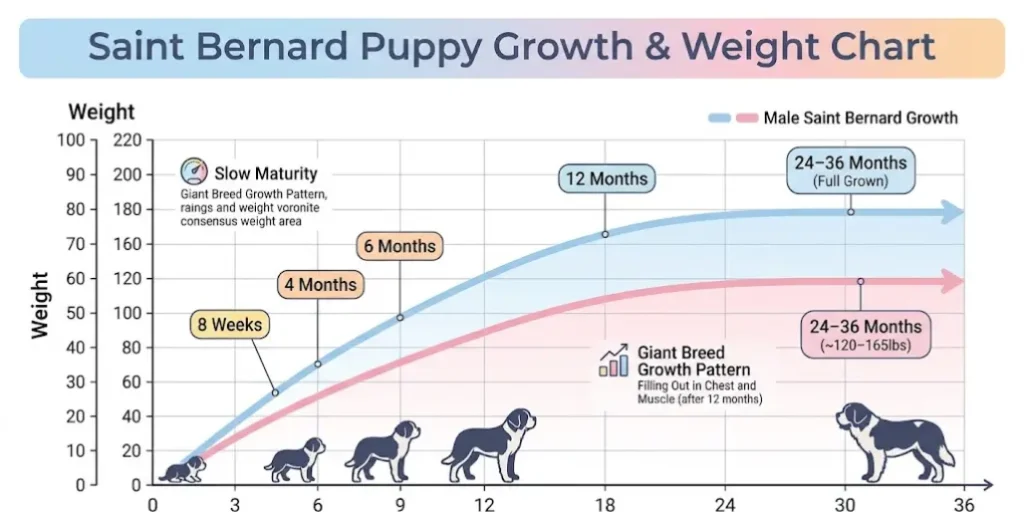
A Saint Bernard puppy grows at an astonishing rate, often reaching massive milestones each month on the weight chart as they transition from a tiny St. Bernard into a giant adult Saint Bernard. To ensure your dog maintains an ideal weight and healthy joints, you should follow these important steps:
- Monitor their daily food intake.
- Track their average pound gains.
- Regularly consult a veterinarian for a proper body condition score.
Understanding Saint Bernard Growth Patterns
Watching your Saint Bernard puppy go through such rapid Saint Bernard growth can be overwhelming, especially when you realize how quickly a young St. Bernard transforms into a massive adult dog. Keeping a close eye on their weight gain, overall size, and monthly pounds helps you spot any unusual shifts, making sure your giant breed develops strong bones without putting too much stress on their growing joints.
Growth Rate of Saint Bernard Puppies
Every Saint Bernard puppy follows a unique growth curve, but you can generally expect your St. Bernard to pack on pounds at a staggering rate during those first few months. By tracking your puppy weight against a standard weight chart, you can easily see if your dog is developing at a healthy pace, hitting all the right milestones on the way to becoming a magnificent adult.
Factors Influencing Growth
A variety of elements can alter how your Saint Bernard puppy develops, ranging from the specific daily calorie count in their dry food to how much daily exercise they get. If you want to make sure your St. Bernard stays within a healthy weight range and avoids joint issues, you need to balance their meals carefully, manage their puppy weight, and watch out for any sudden shifts in their growth rate.
Importance of Monitoring Weight
Regularly checking your Saint Bernard puppy on a scale is the absolute best way to ensure your St. Bernard avoids dangerous growth spurts that could harm their developing bones. By keeping track of your dog using a reliable weight chart, you can easily spot if your puppy weight is trending too high, allowing you to adjust their daily food and activity before any joint problems start.
Saint Bernard Weight Chart by Age
Growth & Weight Tool
How big will your puppy get?
Pick a breed to see its typical growth curve, or add your puppy’s current age and weight to check how they’re tracking against the average.
Estimates based on breed-standard adult weight ranges and typical size-class growth patterns. Every puppy is different — check with your vet for individual concerns.
Every growing Saint Bernard puppy needs careful tracking on a standard weight chart to ensure they reach adult size safely. As your St. Bernard transitions through each month, keeping an eye on the scale helps you maintain an ideal weight and protect vulnerable joints from excess stress and early wear.
Weight Expectations for Each Month
During those early months, a young Saint Bernard will pack on pounds rapidly on any reliable weight chart. By watching the average weight gain week by week, you can easily check if your puppy is developing at a healthy rate while avoiding sudden, risky growth spurts.
Ideal Weight Ranges for Saint Bernard Puppies
Maintaining a healthy weight range is vital for any giant breed puppy like the Saint Bernard. You should regularly weigh your dog and compare the results against a trusted puppy weight guide to ensure your growing companion stays lean and avoids bone issues.
Comparative Weight Chart for Adult Saints
When looking at an adult Saint Bernard, males and females will often show a noticeable difference in weight. Consulting a comprehensive weight chart helps you understand what typical adult size to expect once your giant dog finishes growing into their full frame, as outlined below:
| Sex | Life Stage |
| Male and Female | Adult |
| Giant Dog | Fully Grown |
Feeding Guidelines for Saint Bernard Puppies
Proper daily feeding plays a massive role in managing the growth rate of a Saint Bernard puppy. By measuring out exact cups of dry food and monitoring your daily calorie counts, you can successfully control weight gain and support strong, healthy bones throughout puppyhood.
Caloric Needs by Age
Every active Saint Bernard puppy requires a specific daily calorie intake that will naturally shift from month to month. Tracking these nutritional needs helps you adjust meal portions so your dog never packs on too many pounds too quickly during development.
Recommended Diet for Optimal Growth
Choosing the right food for your giant breed puppy prevents rapid bone growth and keeps your Saint Bernard at an ideal weight. Always look for high-quality dry food formulas designed for large dogs, and make sure to measure every single meal carefully.
Consulting Your Veterinarian
Regular checkups with a trusted veterinarian are essential for monitoring your Saint Bernard puppy's overall body condition score and joint health. For an easy way to track these milestones, you can use the Dog Growth Chart & Weight Calculator to help guide your puppy care routine.
Managing Your Saint Bernard's Weight
Weight Management Strategies
Controlling your giant breed Saint Bernard puppy and adult dog requires careful daily food measurement and balanced exercise. To keep your active pet at a healthy weight, consult your veterinarian regularly to check their body condition score, ensuring every meal supports strong bone development without causing unwanted weight gain or joint stress.
Signs of Overweight in Saint Bernards
When monitoring your growing Saint Bernard, watch for a hidden waistline and reduced activity levels that signal excess pounds. Checking your adult Saint Bernard or younger dog against a standard weight chart helps you spot heavy weight gain early, allowing you to adjust daily feeding habits and prevent long-term health issues.
Utilizing the Dog Growth Chart & Weight Calculator
Tracking your Saint Bernard puppy and estimating adult size becomes much simpler when you use a reliable dog growth chart and weight calculator. By inputting current weight in pounds and age in months, you can easily verify if your giant dog remains on a healthy track throughout every developmental stage.
Conclusion and Resources
Summary of Saint Bernard Growth and Weight
Managing a Saint Bernard puppy from a tiny St. Bernard into a massive adult Saint Bernard takes dedication to proper feeding and regular weight checks. Keeping your dog lean on any standard weight chart protects their vulnerable joints and ensures a long, happy life for your beloved giant companion.
Further Reading on Saint Bernard Care
To deepen your knowledge about proper Saint Bernard care, explore additional veterinary guides covering essential topics such as:
- Nutritional needs
- Ideal weight ranges
- Safe exercise routines
Staying informed about your giant breed puppy helps you navigate every single month with confidence and expert veterinary backing.
About DogBreedCalc
DogBreedCalc is dedicated to helping pet owners monitor their growing dogs with accurate growth data and helpful weight tracking resources.
FAQ
Q: What should a Saint Bernard puppy weight chart actually show me as a guide?
A: Basically, a good guide gives you ballpark numbers so you can tell if your pup is on track. Most charts break it down by month old milestones — like 2 months, 4 months, 6 months and so on — showing average lbs for that age. But don't stress if your puppy is a few lb off either way, because genetics and individual growth totally vary. It's more about spotting a trend than hitting an exact number every single week.
Q: How much should a St Bernard weigh at 6 months?
A: Around 6 months, a St Bernard puppy is usually somewhere between 60-90 lbs depending on the dog. That's a huge range, I know, but this breed can differ a lot even within the same litter. Boys tend to run heavier than a female saint at the same age. If your pup is way outside that range, it doesn't automatically mean something's wrong, but it's worth a quick chat with your vet just to be safe.
Q: Is there a real difference between male and female Saint Bernard growth rates?
A: Yep, there's a noticeable difference. Males typically end up bigger and heavier as adults, sometimes by 20-30 lbs compared to females. A female saint usually matures a bit faster too, hitting her adult size sooner than the males do. So when you're comparing your pup to a chart, make sure you're looking at numbers that match their sex, not just a generic average.
Q: How many calories does a growing St Bernard puppy need?
A: This depends on age, activity level, and current weight, but giant breed puppies generally need a calorie-dense diet split into multiple meals a day, especially early on. As they grow, you'll adjust the calorie intake based on their body condition. It's smart to avoid overfeeding though, since Saint Bernards are prone to packing on weight fast, and too much too soon can stress their joints and growth plates.
Q: Why does overfeeding matter so much for this breed specifically?
A: Great question. Because Saints grow so fast and so big, extra weight puts a lot of strain on developing bones and joints. Overfeeding can contribute to problems like hip dysplasia, plus general obesity down the road. Giant breeds are already more prone to joint issues because of their size, so keeping them lean while they're growing — not skinny, just lean — really does help their long-term health.
Q: What's BCS and why should I care about it?
A: BCS stands for body condition score, and it's honestly more useful than the number on the scale. It's a simple scale (usually 1-9) that looks at whether you can feel ribs, see a waist, that kind of thing. Checking BCS regularly can help track whether your pup is gaining fat or muscle, which a weight chart alone can't really tell you. Ask your vet to show you how to check it at home.
Q: How tall will my St Bernard get, in inches?
A: Adult males usually stand around 28-30 inch at the shoulder, while females are a bit shorter, typically 26-28 inch. Height growth tends to slow down before weight gain does, so don't panic if your pup looks lanky for a while — they're probably still filling out with muscle and bulk after their height levels off.
Q: When should I actually worry and call the vet about my puppy's weight?
A: If your pup's weight suddenly drops, stalls for weeks, or skyrockets way past the chart averages, that's when you call the vet. Growth can naturally vary, but sudden changes aren't normal. Vets can also help you establish a proper feeding plan tailored to your specific puppy instead of just guessing based on a generic guide.
Q: At what age is it easiest to predict a Saint Bernard's adult size?
A: Around the 1 year mark you'll get a decent idea, though Saints don't fully fill out until they're 2-3 years old. Comparing their weight at various month old checkpoints against their parents' sizes (if you know them) can give you a more personalized guide than breed averages alone, since genetics play such a big role in how big they'll end up.
Q: Does muscle development affect how I should read the weight chart?
A: Definitely. A chart just shows total lbs, it doesn't tell you if that weight is muscle or fat. Two puppies at the same weight can look totally different body-wise. That's another reason to combine the chart with a BCS check — it helps you see the full picture instead of fixating on one number that doesn't tell the whole story.