Are you the proud owner of a magnificent Dutch Shepherd, or perhaps considering bringing one into your home? These intelligent and energetic dogs are truly remarkable, but they come with unique training needs. This guide will provide you with essential dog training tips to help you foster a strong bond with your Dutch Shepherd and ensure they become a well-behaved, happy companion.
Is a Dutch Shepherd easy to train?
Understanding the breed’s characteristics
When it comes to the Dutch Shepherd, “easy to train” is a bit of a nuanced statement. These dogs are incredibly intelligent and eager to please their handler, which can certainly make dog training sessions productive. However, their high energy levels and strong working dog instincts mean that proper Dutch Shepherd training requires a few key elements:
- Consistency and understanding from the handler.
- A willingness to provide ample mental stimulation.
The role of drive in training
The Dutch Shepherd possesses a significant amount of drive, which is a key characteristic of this versatile working breed. This drive, whether it’s prey drive, play drive, or defense drive, can be a fantastic asset in obedience training when channeled correctly. Understanding what motivates your specific dog and utilizing it as a reward during training sessions is crucial for success and maintaining their engagement.
Comparison with Malinois and GSD
Many dog owners compare the Dutch Shepherd to the Malinois and German Shepherd (GSD) when discussing trainability, and for good reason; they share similar working dog traits. While all three breeds are highly intelligent and excel in various dog sports and working roles, Dutch Shepherds are often described as having a slightly more “on-off” switch than a Malinois, making them potentially a bit easier for novice owners to manage, though they still require extensive engagement compared to many other breeds.
Dutch Shepherd puppy training basics
Starting early with structured training
Starting early with structured training is paramount for Dutch Shepherd puppies. Bringing a young pup home is the ideal time to begin establishing good habits and introducing them to basic obedience commands. Early, consistent training sessions will lay a solid foundation for their future behavior and help you manage their inherent energy and intelligence effectively as they grow into an adult dog.
Essential commands to teach
For your Dutch Shepherd puppy, essential commands are fundamental building blocks for all future dog training. These basic commands not only provide control in various situations but also help your pup learn to focus on you amidst distractions. Some of these crucial commands include:
- “Sit”
- “Stay”
- “Come”
- “Heel”
Consistent practice with positive reinforcement, such as treats and praise, will ensure these commands become second nature to your dog.
Creating a training schedule
A well-thought-out training schedule is invaluable for Dutch Shepherd puppies, helping to integrate training seamlessly into their daily routine. Regular, short training sessions, perhaps 5-10 minutes a few times a day, are often more effective than infrequent, long ones. This consistency helps to reinforce learning and provides the mental stimulation your pup craves, preventing boredom and potential behavioral issues.
Structuring training around working drive
Identifying your Dutch Shepherd’s drive
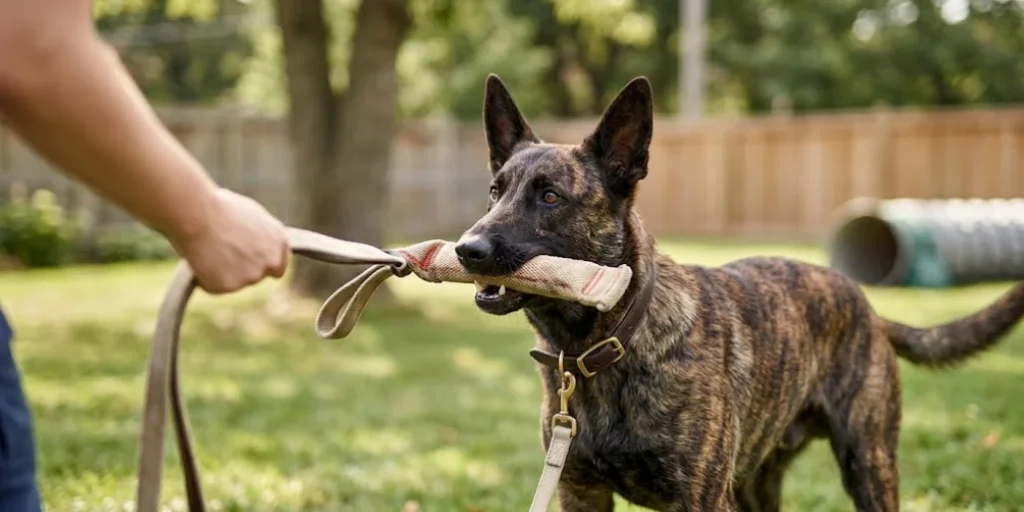
Understanding your specific Dutch Shepherd’s drive is crucial for effective dog training. Some Dutch Shepherds might be highly motivated by prey drive, making a flirt pole or ball an excellent reward, while others might thrive on a strong play drive with a tug toy. Identifying what truly excites your dog will allow you to tailor your training sessions, ensuring maximum engagement and making obedience training feel like a fun game rather than a chore.
Incorporating mental stimulation activities
Because the Dutch Shepherd is a versatile working breed, incorporating consistent mental stimulation activities is just as vital as physical exercise. Puzzle toys, scent work, and learning new tricks are fantastic ways to challenge your dog’s mind, preventing boredom and destructive behaviors. These activities, interwoven with structured training, help fulfill their innate need to work and solve problems, contributing to a well-balanced and happy Dutch Shepherd.
Balancing obedience and play
Successfully balancing obedience and play is an art form with Dutch Shepherds. These intelligent dogs need clear boundaries and consistent training, but they also thrive on vigorous playtime that lets them burn off energy and express their natural drives. Integrating short bursts of play as rewards during dog training sessions can keep your pup motivated and engaged, reinforcing the idea that working with you is a highly rewarding experience.
Socialization for a versatile working breed
Importance of socializing a Dutch Shepherd
Socialization is incredibly important for a versatile working breed like the Dutch Shepherd, laying the groundwork for a confident and well-adjusted dog. Early and ongoing exposure to a variety of people, environments, sounds, and other dogs helps prevent fear-based aggression or reactivity. A well-socialized Dutch Shepherd is much more adaptable and comfortable in different situations, making them a joy to live with and take out in public.
Effective socialization techniques
Effective socialization for your Dutch Shepherd involves controlled and positive exposure. This means introducing your pup to new experiences in a way that allows them to feel safe and confident, always paired with positive reinforcement like treats or praise. Avoid overwhelming situations, and focus on quality over quantity; a few positive interactions are far more beneficial than many stressful ones for developing a well-rounded dog.
Meeting other dogs and people
When meeting other dogs and people, it’s essential to ensure these interactions are positive and supervised for your Dutch Shepherd. Leash manners are critical, as is teaching your dog appropriate greetings. Enroll your pup in well-run puppy classes where they can interact safely with other dogs and people in a controlled environment, reinforcing good behavior and building their confidence around various individuals and canine companions.
Common Dutch Shepherd training challenges
Addressing stubbornness and independence
Addressing stubbornness and independence in a Dutch Shepherd requires consistent and clear leadership from the handler. These intelligent dogs, part of a versatile working breed, can sometimes have their own ideas, so maintaining a firm yet fair training style is key. Reinforce desired behaviors with positive reinforcement, and ensure that every member of the household is consistent with commands and expectations to prevent your Dutch Shepherd from developing selective hearing.
Dealing with distractions during training
Dealing with distractions during dog training sessions is crucial for a Dutch Shepherd, especially given their high drive and alertness. Start training in a quiet environment, gradually introducing more distractions as your dog masters each command. Short, engaging sessions with high-value treats and toys can help maintain focus, teaching your Dutch Shepherd to maintain eye contact and obey commands even when there’s a lot going on around them.
Managing high energy levels
Managing the high energy levels of a Dutch Shepherd is paramount to successful dog training and overall behavior. These dogs require significant daily exercise beyond just a walk; think vigorous play, dog sports like agility, or long runs. Without adequate physical and mental stimulation, a Dutch Shepherd can become bored and destructive, leading to challenging behaviors that can be mistaken for stubbornness rather than an unmet need for activity.
When to bring in a professional trainer
Recognizing when help is needed
Recognizing when help is needed from a professional trainer is a sign of responsible dog ownership, especially with a high-drive breed like the Dutch Shepherd. If you’re consistently struggling with specific behavioral issues, such as leash reactivity, aggression, excessive barking, or if your Dutch Shepherd isn’t responding to your current training tips despite your best efforts, it’s time to consider outside expertise. A fresh perspective can often make all the difference.
Choosing the right professional trainer
Choosing the right professional dog trainer for your Dutch Shepherd involves careful research to ensure they understand working dog breeds. Look for a trainer with experience in positive reinforcement methods and a deep understanding of dog behavior, especially with intelligent, high-drive dogs. Ask about their training philosophy, certifications, and always request references. A good trainer will be transparent about their methods and eager to help you achieve your training goals.
Training options: group classes vs. private sessions
When seeking professional help for your Dutch Shepherd, you’ll generally encounter two main training options:
| Training Option | Key Benefits |
| Group Classes | Excellent for socialization and working on obedience with distractions. |
| Private Sessions | Offers tailored, one-on-one attention for specific behavioral challenges or to accelerate learning. |
The best choice depends on your dog’s specific needs, your budget, and your personal training style preferences.
Where the Dutch Shepherd Fits in the Herding Picture
Everything here about drive, working purpose, and channeling energy applies just as much to Dutch Shepherd cousins like the Malinois and GSD. If you want to see how these traits play out across the broader herding group, Herding Breed Training covers that ground.
FAQ
Are Dutch Shepherds good family dogs when trained well?
Yes, Dutch Shepherds can be excellent family dogs when they are trained well and properly socialized from a young age. Their loyalty and protective instincts make them devoted companions. However, their high energy levels and need for mental stimulation mean they thrive in active homes committed to consistent exercise and structured dog training. They generally do well with children who respect their boundaries and understand dog behavior.
How much training does a Dutch Shepherd need?
A Dutch Shepherd needs a significant amount of ongoing training throughout their life. From puppyhood, consistent daily structured training sessions, focusing on obedience and mental stimulation, are essential. As adults, they still require regular reinforcement of commands and continued engagement in activities like agility, scent work, or advanced obedience to keep their intelligent minds and bodies challenged and prevent boredom.
Is a Dutch Shepherd similar to train as a Malinois or GSD?
Yes, a Dutch Shepherd is quite similar to train as a Malinois or German Shepherd (GSD) due to their shared working dog heritage and high intelligence. All three breeds thrive on structured training, consistent leadership, and ample mental and physical exercise. While there can be subtle differences in their drive and intensity, owners familiar with training a Malinois or GSD will find many similarities in the approach needed for a Dutch Shepherd.