Training a Belgian Malinois is a truly rewarding experience, but it’s not for the faint of heart. These intelligent and athletic dogs, often seen in K9 units, possess a unique set of characteristics that demand a dedicated and informed approach to dog training. This guide will help you understand how to train a Belgian Malinois effectively.
Is a Belgian Malinois hard to train?
While exceptionally intelligent and eager to please, the Belgian Malinois is a high-drive working breed that can present challenges for inexperienced owners. Their intense focus and energy, often funneled into demanding roles like protection work or police K9 duties, mean they need a consistent and skilled handler to thrive. Without proper structure and direction, their powerful instincts can easily lead to unwanted behaviors.
Understanding the breed’s working drive
The core of understanding this breed lies in recognizing their immense working drive. Belgian Malinois possess an inherent need for a “job,” which can manifest in various activities. This powerful drive, coupled with their high energy and prey drive, means they excel when given clear tasks and mental stimulation. Ignoring this fundamental aspect of their nature can lead to frustration for both the dog and the owner, often manifesting as destructive or reactive behaviors. Some examples of suitable activities for them include:
- Agility
- Obedience
- Scent work
- Structured play
The importance of early obedience training
Early obedience training is non-negotiable for a Belgian Malinois puppy. Starting foundational commands like sit, stay, and come as soon as possible establishes a crucial communication system between you and your dog. This early structured training also helps to channel their natural working drive in a positive direction, laying the groundwork for more advanced skills and a well-behaved adult dog. Consistency and positive reinforcement are key to success.
Common challenges faced by new owners
New owners often underestimate the sheer energy and mental needs of a Belgian Malinois. Their intelligence, while a huge advantage in training, can also present specific challenges:
- It can make them escape artists or prone to reactivity if not properly socialized and exercised.
- Their high prey drive can make leash walks challenging without early and consistent training.
Seeking guidance from a professional trainer or an experienced Malinois owner can be incredibly beneficial in navigating these common hurdles.
Belgian Malinois puppy training basics
Starting strong with your Belgian Malinois puppy sets the stage for a lifetime of good behavior. These intelligent little bundles of energy are like sponges, soaking up every lesson and experience. Establishing clear rules, consistent routines, and positive reinforcement from day one is absolutely essential to channel their burgeoning working drive and ensure they grow into well-adjusted adult dogs.
Starting with foundational commands
As soon as your Belgian Malinois puppy comes home, begin with foundational commands. It’s important to introduce them to basic obedience early on, focusing on commands such as:
- “Sit”
- “Stay”
- “Come”
- “Down”
Use positive reinforcement, like treats and praise, to make these training sessions enjoyable and effective. Short, frequent sessions are more beneficial for a puppy’s attention span than long, drawn-out ones. This early obedience training not only teaches essential manners but also strengthens the bond between handler and puppy.
Essential socialization techniques
Socialization is paramount for a Belgian Malinois puppy to prevent reactivity and ensure they are comfortable in various environments. Expose your puppy to a wide range of sights, sounds, people, and other well-behaved dogs in a controlled and positive manner. Puppy classes are excellent for this, providing supervised interactions. Proper socialization helps your Malinois learn to navigate the world calmly and confidently, reducing the likelihood of fear-based aggression or anxiety later on.
Incorporating mental stimulation from a young age
Even as a puppy, a Belgian Malinois needs significant mental stimulation to prevent boredom and destructive behaviors. Incorporate puzzle toys, short scent work games, and basic agility exercises into their daily routine. These activities tap into their natural working breed instincts and satisfy their intelligent minds. Mental enrichment is just as important as physical exercise for a Malinois, helping to create a well-rounded and content companion from an early age.
Socialization: why it’s non-negotiable for this breed
For a Belgian Malinois, proper socialization isn’t just a good idea; it’s absolutely non-negotiable for shaping a well-adjusted and confident dog. Given their strong protective instincts and potential for reactivity, exposing your Belgian Malinois puppy to a wide array of experiences, people, and other dogs from a young age is crucial. This proactive approach helps them develop resilience and reduces the likelihood of fear or aggression as they mature into powerful working dogs.
Best practices for socializing a Belgian Malinois
To effectively socialize your Belgian Malinois, focus on positive and controlled interactions. Enroll your puppy in a well-regarded puppy class where they can safely interact with other dogs and people under supervision. Always use positive reinforcement during these encounters, rewarding calm behavior. The goal is to create positive associations with new experiences, helping your Malinois build confidence rather than fear or reactivity, which is vital for this high-drive breed.
Exposure to various environments and situations
Beyond just other dogs, your Belgian Malinois needs exposure to diverse environments and situations. Take your puppy to different places—parks, pet-friendly stores, busy streets, and quiet trails. Introduce them to various sounds, surfaces, and types of people, including those with hats, glasses, or different gaits. This broad exposure during their critical socialization window is essential for helping your working breed adapt to the world and minimize reactivity to novel stimuli.
Identifying and managing reactivity
Even with excellent socialization, some Belgian Malinois may show signs of reactivity. It’s important to identify early warning signs, such as barking, lunging, or freezing when encountering new triggers. If your Belgian Malinois displays reactivity, it’s crucial to seek guidance from a professional trainer. They can help you implement structured training techniques and counter-conditioning to manage and reduce these responses, ensuring both your dog’s safety and the public’s.
Channeling high drive into structured work
Channeling the inherent high drive of a Belgian Malinois into structured work is paramount for their well-being and your household’s harmony. This breed thrives on having a purpose, and without appropriate mental stimulation and physical exercise, their energy can manifest in destructive or undesirable behaviors. Providing outlets that tap into their working breed instincts is key to a happy and balanced Malinois.
Effective activities to train a Belgian Malinois
There are numerous effective activities to train a Belgian Malinois and satisfy their intense working drive. Obedience training should be ongoing and advanced, incorporating complex command sequences. Scent work, where they use their powerful noses to locate hidden items, provides incredible mental stimulation. Agility training is fantastic for both physical and mental engagement, allowing them to problem-solve while burning off energy, all reinforcing their natural capabilities as working dogs.
Understanding bite work and protection training
Understanding bite work and protection training for a Belgian Malinois is crucial, but it’s not for every dog owner. This specialized training taps into their powerful prey drive and protective instincts, requiring immense skill from the handler and an experienced professional trainer. Inexperienced owners should never attempt DIY bite work, as improper training can have dangerous consequences. Always seek out certified, reputable trainers for any protection work, ensuring the safety and ethical development of your Belgian Malinois.
Utilizing agility training for mental and physical exercise
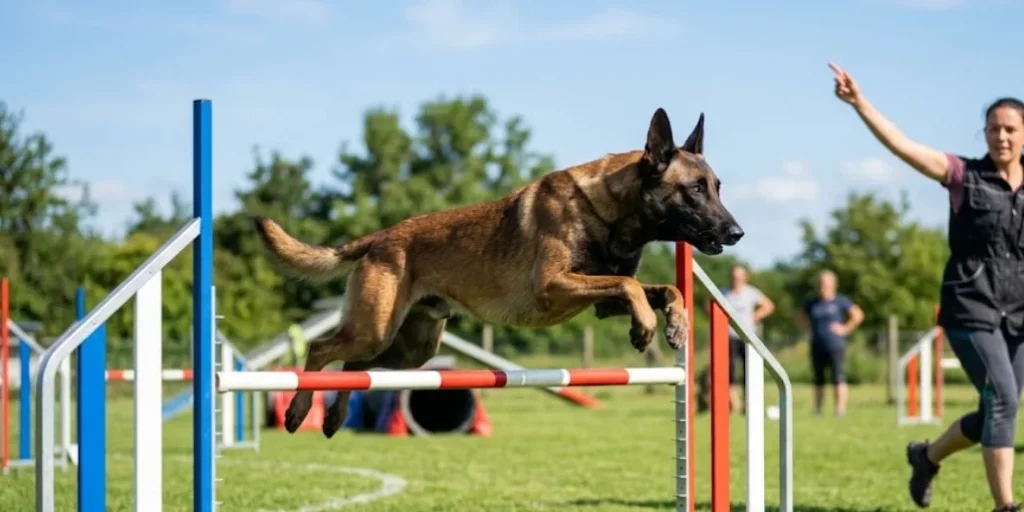
Agility training is an exceptional way to provide both mental and physical exercise for your Belgian Malinois. Navigating obstacles like jumps, tunnels, and weave poles requires focus, problem-solving, and precise execution, making it a perfect outlet for their intelligence and high energy. This structured activity strengthens the bond between you and your dog, reinforces obedience, and allows your Malinois to channel their working drive in a fun, competitive, and safe environment, preventing boredom and potential escape artist tendencies.
Common Belgian Malinois training problems
Even with their intelligence and eagerness, Belgian Malinois can present common training problems that require consistent effort and understanding. Their high-drive nature and strong personalities mean that behavioral issues can emerge if their needs for mental stimulation, physical exercise, and clear leadership aren’t met. Addressing these challenges effectively is key to a well-behaved and manageable companion.
Addressing behavioral issues early
Addressing behavioral issues with your Belgian Malinois early is critical. Problems like excessive barking, destructive chewing, or leash reactivity often stem from insufficient mental stimulation or physical exercise, or a lack of clear boundaries. As soon as you notice an unwanted behavior, consult with a professional trainer to implement structured training and behavior modification. Early intervention prevents these issues from becoming deeply ingrained and much harder to resolve later in their working dog life.
How to avoid common training mistakes
Avoiding common training mistakes with a Belgian Malinois involves understanding their unique needs. The biggest error is underestimating their energy and mental capacity, leading to insufficient exercise and mental work. Another mistake is inconsistency in commands or expectations, which can confuse this intelligent breed. Always use positive reinforcement, avoid harsh corrections, and ensure every member of the household is on the same page with training rules to prevent your Malinois from becoming an escape artist or developing reactivity.
Tips for overcoming stubbornness and distractions
Overcoming stubbornness and distractions in a Belgian Malinois requires patience, consistency, and engaging training methods. First, ensure their fundamental needs for exercise and mental stimulation are met, as a tired Malinois is less likely to be “stubborn.” Break training into short, fun sessions, gradually introducing distractions in controlled environments. Use high-value treats and enthusiastic praise to make yourself more rewarding than the distractions. A professional trainer can also provide tailored strategies to reinforce desired behaviors in challenging situations.
Do Belgian Malinois need a professional trainer?
Given the Belgian Malinois’s intense working drive, high energy, and intelligence, many owners find immense benefit in enlisting a professional trainer. While these dogs are highly trainable, their specific needs for mental stimulation, structured training, and consistent handling can be a lot for an inexperienced dog owner to manage alone. A professional can provide invaluable guidance, helping you effectively channel your Malinois’s powerful instincts and prevent common behavioral issues.
Benefits of hiring a professional trainer
Hiring a professional trainer for your Belgian Malinois offers numerous benefits. They can provide structured training plans tailored to your specific dog, addressing any existing behavioral issues like reactivity or leash pulling, and helping you build a strong foundation in obedience. A good professional trainer understands the nuances of this working breed, offering expertise in channeling their high-drive nature into positive outlets and preventing them from becoming escape artists.
When to seek help from a K9 expert
It’s advisable to seek help from a K9 expert or a professional trainer specializing in working dogs if you’re experiencing challenges that feel beyond your control, or if you simply want to ensure your Belgian Malinois reaches their full potential. This is particularly true if you are considering advanced training like protection work or bite work, which absolutely requires expert supervision to be done safely and ethically.
Choosing the right trainer for your Malinois
Choosing the right professional trainer for your Belgian Malinois is crucial. Look for someone with extensive experience with working breeds, particularly Malinois or German Shepherds, and who uses positive reinforcement methods. Verify their credentials and ask for references. Avoid trainers who advocate harsh or punitive methods, especially if you are interested in any form of protection training, as this can severely damage your dog’s temperament and trust.
How much exercise and mental work does training need to include?
For a Belgian Malinois, training isn’t just about obedience commands; it’s intricately linked to their daily exercise and mental work. These high-drive dogs require a substantial amount of both to remain balanced and well-behaved. Without adequate outlets for their energy and intelligence, a Malinois can quickly become bored, destructive, or develop reactivity, making them challenging companions for even the most dedicated dog owner.
Daily exercise requirements for a Belgian Malinois
A Belgian Malinois has significant daily exercise requirements. Expect to provide at least 1-2 hours of vigorous physical exercise every day, which can include brisk walks, running, hiking, or playing fetch. Simply letting them out in a yard isn’t enough; they need structured physical activity that engages their bodies and helps burn off their immense energy. This is critical to prevent restlessness and destructive behaviors in this working breed.
Activities that provide mental stimulation
Beyond physical exertion, a Belgian Malinois needs activities that provide ample mental stimulation to satisfy their intelligent minds and working drive. Scent work, puzzle toys, advanced obedience training, agility, and even learning new tricks are excellent ways to keep them mentally engaged. Regular mental challenges prevent boredom, reduce the likelihood of your Malinois becoming an escape artist, and contribute significantly to their overall well-being.
Balancing physical and mental work
Achieving a proper balance between physical and mental work is key to raising a well-adjusted Belgian Malinois. While physical exercise tires their bodies, mental stimulation tires their minds, and both are equally important for this high-drive breed. A good routine might include a vigorous morning run, followed by a training session with mental puzzles or obedience work, and then an evening walk or play. This holistic approach helps channel their energy constructively.
Not Just Malinois — Herding Breeds Share This Drive
Everything covered here — the working drive, the need for a job, the mental stimulation — isn’t unique to the Malinois. For a wider look at how this shows up across herding breeds and what it means for training, see Herding Breed Training.
FAQ:
Are Belgian Malinois good for first-time owners?
Belgian Malinois are generally not recommended for first-time dog owners. Their intense working drive, high energy, and need for significant mental stimulation and structured training can be overwhelming for someone without prior experience with high-drive breeds. They thrive with a confident, consistent handler who understands their unique needs and is committed to extensive dog training and socialization to prevent behavioral issues like reactivity.
At what age should you start training a Belgian Malinois?
You should start training a Belgian Malinois as soon as you bring your puppy home, typically around 8 weeks of age. Early puppy training focuses on foundational obedience commands, socialization, and positive reinforcement. Establishing clear rules and expectations from a young age is crucial for this intelligent working breed, helping to channel their energy and prevent the development of unwanted behaviors as they mature.
Do Belgian Malinois need a job to be well-behaved?
Yes, Belgian Malinois absolutely need a “job” or a purpose to be well-behaved. Their inherent working drive means they thrive on having tasks that engage their minds and bodies. Without adequate mental stimulation and structured activity, a Malinois can become bored, destructive, and difficult to manage. Activities like agility, obedience, scent work, or even intense interactive play serve as excellent outlets for their energy and intelligence.