Training a Doberman puppy can be an incredibly rewarding experience, transforming an energetic pup into a well-mannered companion. This guide will walk you through essential Doberman training tips and outline a timeline to help you raise a balanced and confident Doberman.
Are Dobermans easy to train?
Understanding the Doberman’s intelligence
Dobermans are often lauded for their high intelligence, which makes them incredibly receptive to dog training. Their eagerness to please and quick grasp of new concepts mean that they typically excel in obedience training, often picking up basic commands and more advanced training techniques with remarkable speed. This inherent intelligence, however, also means they require consistent training and plenty of mental stimulation to prevent boredom and destructive behaviors.
The role of protective instinct in training
While their high intelligence makes Doberman training efficient, it’s crucial to understand their strong protective instinct. This breed was originally developed as a guard dog, and that inherent trait remains prominent. Training a Doberman must involve channeling this protective instinct appropriately through structured obedience work and early socialization, rather than attempting to suppress it. Confident handling and clear boundaries are essential to ensure this instinct is a benefit, not a liability.
Initial training expectations
When you start training a Doberman puppy, it’s important to set realistic expectations. While their intelligence means they can learn quickly, no dog is born with perfect manners. Initial training should focus on foundational elements like potty training, crate training, and basic obedience commands such as sit, stay, and come. Consistent training sessions, coupled with positive reinforcement, will build a strong bond and establish you as the confident leader your Doberman pinscher needs.
Doberman puppy training essentials
Importance of early socialization
Early socialization is absolutely critical for Doberman puppies to ensure they grow into well-adjusted adults, especially given their protective instinct. Exposing your Doberman pup to a wide variety of sights, sounds, people, and other friendly dogs from a young age helps them develop confidence and good manners, preventing fear or aggression later on. This early exposure, alongside consistent training, helps a Doberman understand what is and isn’t a threat, making their protective instincts appropriate and controlled.
Basic obedience commands
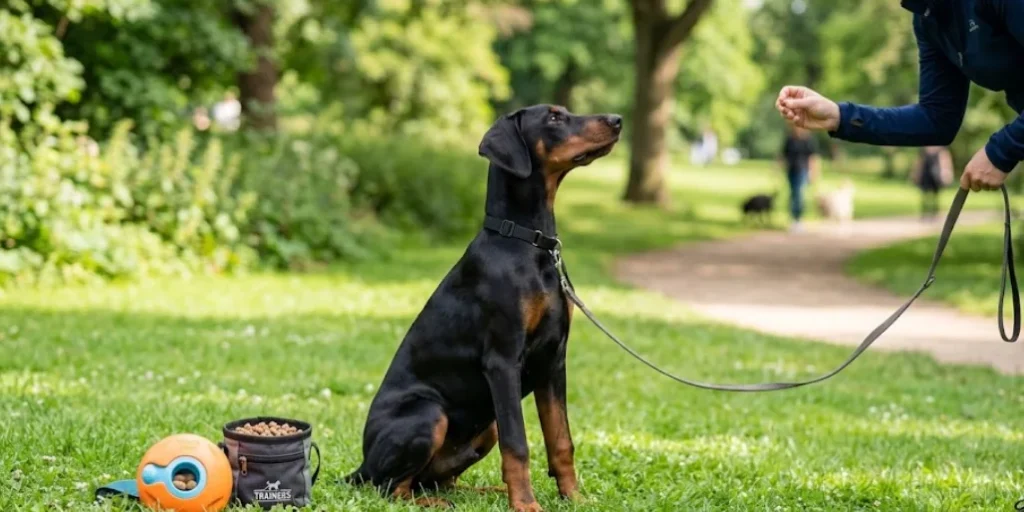
Starting with basic obedience commands as soon as you bring your Doberman puppy home lays the groundwork for all future training. Commands like “sit,” “stay,” “come,” and “down” are not just tricks; they are essential for safety and control. Consistent training sessions, even short ones, several times a day will help your Doberman quickly grasp these commands, building a solid foundation for more advanced training techniques and reinforcing your role as their confident leader.
Using positive reinforcement techniques
Positive reinforcement is the most effective way to train a Doberman puppy, fostering a strong bond and making the learning process enjoyable for your pup. This involves rewarding desired behaviors with treats, praise, or toys immediately after they perform a command correctly. Avoiding harsh corrections and focusing on what your Doberman does right encourages them to repeat those behaviors, making obedience training a positive experience and strengthening their eagerness to please.
Structured obedience work from an early age
Establishing a training schedule
Establishing a consistent training schedule from an early age is vital for Dobermans, who thrive on routine and structure. Regular, short training sessions, incorporated into your daily routine, will keep your Doberman engaged and reinforce learned behaviors. This structured approach helps manage their high intelligence and ensures they receive consistent mental stimulation, preventing boredom and redirecting their energy into productive learning, making for a well-behaved Doberman.
Incorporating crate training
Crate training is an invaluable tool for Doberman puppies, providing them with a safe den-like space and aiding in potty training and behavior management. Introducing the crate early and making it a positive experience with treats and comfortable bedding helps your Doberman feel secure and comfortable in their personal space. A properly crate trained Doberman will view their crate as a sanctuary, which is essential for developing a well-rounded and calm dog.
Developing a structured environment
Creating a structured environment is paramount for raising a well-adjusted Doberman, given their need for clear boundaries and leadership. This goes beyond just training sessions; it involves consistent rules for all aspects of their life, from feeding times to walks and playtime. A structured environment helps your Doberman understand expectations, reduces anxiety, and channels their protective instinct appropriately, fostering a confident and obedient companion who understands their place within the family.
Channeling protective instinct appropriately
Dobermans possess a strong protective instinct, which is a hallmark of the breed, but it needs to be properly managed through dog training. It’s crucial to understand that this isn’t something to eliminate, but rather to channel appropriately so your Doberman can be a reliable family member and not an overzealous guard dog. Confident handling and consistent training are key to ensuring their protective nature is a benefit, not a liability, especially with early socialization.
Recognizing signs of natural guarding behavior
Recognizing the early signs of natural guarding behavior in your Doberman puppy is essential for effective Doberman training. This might include barking at strangers approaching your home, being wary of new people, or even subtly positioning themselves between you and perceived threats. Understanding these cues allows you to redirect the behavior positively through consistent training and positive reinforcement, ensuring your Doberman learns appropriate responses to potential triggers.
Training methods to manage protectiveness
Managing your Doberman’s protectiveness requires specific dog training methods that focus on control and appropriate responses. This means teaching them a “quiet” command when they bark excessively at strangers and using the “stay” or “place” command when new visitors arrive. Consistent obedience training, combined with ongoing socialization, helps your Doberman understand that you are in control of situations, allowing them to relax and not feel the need to always be on high alert.
Socializing with different people and environments
Extensive socialization with different people and environments is paramount for a Doberman puppy, especially to manage their protective instinct. Exposing your pup to a wide variety of sights, sounds, and interactions helps them differentiate between everyday situations and actual threats. This ongoing socialization, coupled with structured training, builds confidence and ensures your Doberman pinscher becomes a well-adjusted dog that is protective when necessary, but not overly aggressive or fearful.
Common Doberman training mistakes
Even with their high intelligence and eagerness to please, Dobermans are susceptible to certain training mistakes that can hinder their development into well-adjusted companions. Understanding and avoiding these common pitfalls is crucial for effective Doberman training. It’s not just about what you do, but also about what you might inadvertently neglect, leading to behavioral challenges that could have been prevented with consistent training.
Overlooking socialization needs
Overlooking socialization needs is one of the most significant Doberman training mistakes. Given their strong protective instinct, a lack of early and ongoing exposure to various people, places, and other dogs can lead to fear-based aggression or excessive shyness. Consistent socialization is not a one-time event; it’s an ongoing process that helps your Doberman develop confidence and appropriate social skills, ensuring their protective nature is channeled correctly and they don’t become overly reactive.
Ignoring mental stimulation requirements
Ignoring mental stimulation requirements is another common error that can lead to behavioral problems in a Doberman puppy. This highly intelligent breed needs more than just physical exercise; they crave puzzles, new commands, and engaging training sessions. A Doberman who isn’t mentally challenged can become bored, leading to destructive behaviors like excessive chewing, barking, or even aggression. Incorporating advanced training, agility, or scent work is vital for their overall well-being.
Inconsistent training approaches
Inconsistent training approaches can severely undermine your efforts with Doberman training. Dobermans thrive on clear boundaries and predictable routines. If commands are not consistently enforced by all family members, or if rules change frequently, your Doberman can become confused and may start to ignore commands. Consistency in positive reinforcement, expectations, and daily routines is critical for developing a well-behaved and obedient Doberman pinscher who understands and respects their role.
Mental stimulation needs beyond basic commands
Dobermans are a highly intelligent breed, and while basic obedience training is essential, their minds need far more stimulation than just “sit” and “stay.” Neglecting their mental needs can lead to a bored and destructive Doberman, even if they are well-exercised physically. Incorporating advanced training techniques and engaging activities beyond simple command training is crucial for a well-rounded and happy Doberman pinscher. This ensures their high intelligence is channeled into positive outlets.
Engaging activities for Doberman puppies
For Doberman puppies, engaging activities are paramount for proper development. Beyond basic obedience, introduce puzzle toys that challenge their problem-solving skills, and engage them in scent games where they have to find hidden treats. Short, varied training sessions with new, simple commands can also provide excellent mental stimulation. These activities, combined with early socialization, will prevent boredom and help your Doberman develop into a confident and well-adjusted adult.
Advanced training techniques
Once your Doberman has mastered basic commands, it’s time to explore advanced training techniques to keep their high intelligence engaged. Consider enrolling in agility classes, which not only provide physical exercise but also significant mental stimulation as your Doberman learns complex courses. Protection training, when done responsibly with a qualified trainer, can also be an excellent way to channel their natural protective instinct. Learning complex chains of commands or even trick training can also be incredibly rewarding for both you and your Doberman.
Incorporating play into training
Incorporating play into training sessions is a fantastic way to keep your Doberman engaged and eager to please. Use their favorite toys as rewards for completing commands, or turn training into a game of “hide and seek” with you or a toy. This playful approach keeps the Doberman mentally stimulated and reinforces the idea that training is a positive and enjoyable experience. Play also strengthens your bond and helps in redirecting any unwanted behaviors into more constructive outlets.
More Training Ideas for Smart, Active Breeds
A Doberman needs mental work as much as physical exercise, and that is true for many intelligent working dogs. If you want to compare what different breeds need, our working breed training page is a good next stop.
FAQ
Are Dobermans good with proper training?
Absolutely, Dobermans are an excellent dog breed when they receive proper training and early socialization. Their high intelligence and eager-to-please nature make them highly trainable, excelling in various obedience and advanced training disciplines. With consistent training, a Doberman pinscher can be a loyal, protective, and well-mannered family member, far from the aggressive stereotypes. The key lies in understanding their needs for mental stimulation and confident handling.
At what age should Doberman training start?
Doberman training should ideally start as soon as you bring your Doberman puppy home, typically around 8 weeks of age. Even at this young age, you can begin with basic commands like “sit” and “come,” alongside potty training and crate training. Early socialization is also crucial during this period. The sooner you start consistent training, the better foundation you establish for their future behavior and the easier it will be to manage their high intelligence and protective instinct.
Are Dobermans naturally protective without training?
Yes, Dobermans are naturally protective due to their inherent guard dog instincts, even without formal protection training. This protective instinct is a strong breed characteristic. However, without proper training and early socialization, this natural protectiveness can manifest as fear, anxiety, or aggression. Consistent training teaches them appropriate responses, allowing them to differentiate between actual threats and everyday situations, ensuring their protective nature is a controlled asset rather than a liability.