Training a Cane Corso can be an incredibly rewarding experience, but it’s also a journey that requires dedication, understanding, and consistent effort. These magnificent dogs possess a unique blend of intelligence and guardian instinct, making proper guidance from a young age absolutely crucial for a well-adjusted companion.
Is a Cane Corso hard to train?
Understanding the Cane Corso temperament
Training a Cane Corso can present unique challenges due to their inherent guardian instinct and powerful presence. While intelligent and eager to please their owners, these dogs possess a strong-willed temperament that requires confident handling and consistent boundaries from a dedicated handler. Their protective nature means that without proper guidance and obedience training, they can become overly assertive.
Factors influencing training difficulty
The difficulty of training a Cane Corso often hinges on factors like the individual dog’s personality, the handler’s experience, and the consistency of the training methods used. Their large size and strength, combined with a potential for dominant behavior, mean that a relaxed approach simply won’t suffice. Effective training sessions need to be firm, fair, and engaging to keep these intelligent pups mentally stimulated.
How size and strength impact training
The sheer size and strength of a Cane Corso can significantly impact training, especially without early socialization and consistent obedience training. A full-grown Cane Corso has real bite force and could pose liability considerations if not properly managed. Therefore, size and strength management, along with teaching good leash manners and impulse control, are not just optional but absolutely essential for a safe and happy life with this breed.
Why early socialization is essential for guardian breeds
The critical socialization window
Early socialization is non-negotiable for guardian breeds like the Cane Corso, as they possess a strong guardian instinct. The critical socialization window, typically between 3 and 16 weeks, is a paramount time to expose your Cane Corso puppy to a wide variety of people, places, sounds, and other dogs in a controlled and positive manner. This helps them develop essential social skills.
Benefits of early exposure to different environments
Providing a Cane Corso puppy with early exposure to different environments during their critical socialization window is absolutely essential. This not only builds their confidence but also helps them learn to appropriately assess new situations rather than reacting with fear or aggression, which is vital for a large guardian breed. It lays the foundation for a well-adjusted dog.
Techniques for effective socialization
Effective socialization techniques for a Cane Corso involve controlled and positive exposure to various stimuli. This means carefully introducing your pup to new people, different situations, and other well-behaved dogs, always ensuring the experience is pleasant and never overwhelming. Consistent training sessions focused on positive reinforcement during these encounters will help your Cane Corso develop into a confident, well-rounded companion.
Cane Corso puppy training basics
Establishing a training routine
Establishing a consistent training routine is paramount for your Cane Corso puppy. From the moment you bring your pup home, a predictable schedule for feeding, potty breaks, and training sessions will help them understand expectations and build confidence. Early and consistent obedience training sets the stage for managing their guardian instinct and strong temperament as they grow into a large, powerful dog.
Essential commands every Cane Corso should learn
There are several essential commands every Cane Corso should learn to ensure they are well-mannered and safe. Basic obedience training should focus on commands like “sit,” “stay,” “come,” and “leave it.” These commands are not just tricks; they are crucial for safety and for establishing you as the confident handler, which is vital for a breed with such a strong guardian instinct and potential for dominant behavior.
Building confidence through positive reinforcement
Building confidence in your Cane Corso puppy through positive reinforcement is key to their development. This approach involves rewarding desired behaviors with treats, praise, or toys, making training sessions enjoyable and strengthening your bond. Positive reinforcement helps your pup associate training with positive outcomes, encouraging them to be eager learners and less likely to exhibit fear-based aggression or anxiety in different situations.
Managing guardian instinct around visitors and strangers
Understanding the guardian instinct in Cane Corsos
Understanding the deeply ingrained guardian instinct in Cane Corsos is crucial for effective training and responsible ownership. This breed was historically bred to protect, and that protective drive is a fundamental part of their temperament. While admirable, without proper early socialization and consistent obedience training, this instinct can manifest as excessive suspicion or aggression towards visitors and strangers, necessitating careful management.
Training strategies for visitor introductions
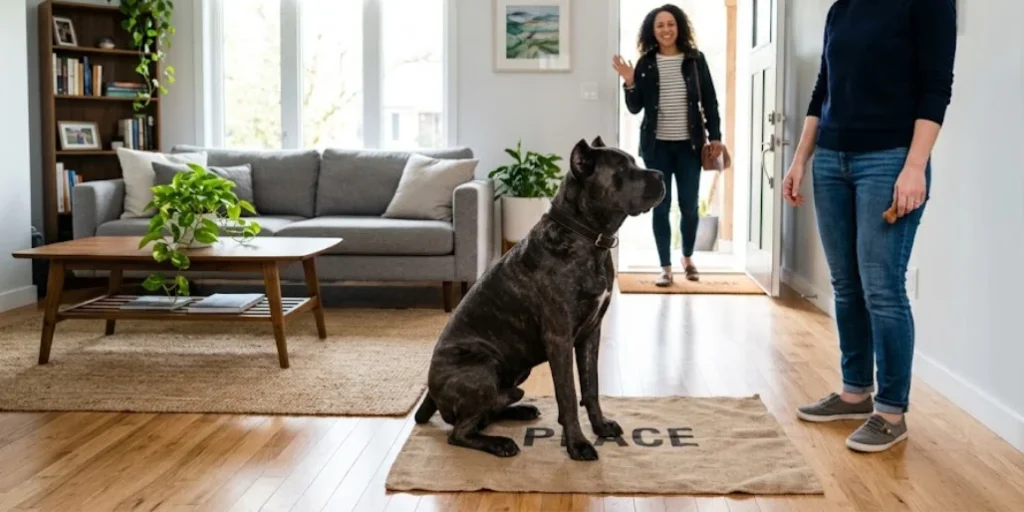
Implementing specific training strategies for visitor introductions is vital for a Cane Corso. Start with controlled, positive introductions to new people during their critical socialization window, always ensuring these encounters are pleasant and supervised. Teaching your pup a “place” command, where they go to a designated spot when guests arrive, can help manage their initial reactions and maintain control, preventing any assertive or dominant behavior.
Maintaining control in public settings
Maintaining control of your Cane Corso in public settings is non-negotiable, given their size, strength, and guardian instinct. Consistent leash training from a young age is essential, teaching them to walk calmly by your side and ignore distractions. This, combined with ongoing obedience training and regular exposure to various environments, helps your Cane Corso feel confident and respond to your commands, reducing potential liability considerations and ensuring safe interactions with the public.
Bite inhibition and impulse control training
The importance of bite inhibition
Teaching bite inhibition to your Cane Corso puppy is absolutely critical, even more so for a large guardian breed with real bite force. This isn’t about stopping them from ever biting, but rather about teaching them to control the pressure of their bite, so if they do mouth you, it’s a soft nip rather than a painful clamp. Early socialization and consistent training during the critical socialization window are paramount to developing good bite inhibition.
Techniques for teaching impulse control
Techniques for teaching impulse control are vital for a Cane Corso, a breed known for its power and guardian instinct. Games like “leave it” and “stay” are excellent for building this skill. Start in a quiet environment and gradually introduce more distractions, always using positive reinforcement. This helps your pup learn to defer to you and control their urges, which is essential for managing their size and strength in various situations.
Using toys and games for training
Using toys and games for training is a fantastic way to make learning fun and engaging for your Cane Corso puppy. Interactive play can teach valuable lessons in impulse control and bite inhibition. For instance, tug-of-war, when done correctly, can teach “drop it” and self-control. Always ensure toys are durable and appropriate for a strong chewer, and use these sessions to reinforce obedience training commands.
When to bring in a professional trainer
Recognizing the signs for professional help
Recognizing the signs that you might need professional help with your Cane Corso training is important for ensuring a well-adjusted dog. If you’re struggling with persistent dominant behavior, aggression, excessive guardian instinct, or if your dog’s size and strength are becoming unmanageable, it’s definitely time to consult a professional trainer. Don’t wait until issues escalate, especially with a breed that has significant liability considerations.
Choosing the right trainer for your Cane Corso
Choosing the right professional trainer for your Cane Corso is a critical decision. Look for someone experienced specifically with guardian breeds and large, powerful dogs, who understands their unique temperament and guardian instinct. A good trainer will use positive reinforcement methods, offer practical solutions for obedience training, and help you become a more confident handler, ultimately strengthening your bond with your pup.
The role of professional training in overall development
The role of professional training in your Cane Corso’s overall development can be invaluable, especially for more challenging behaviors or when you need expert guidance. A professional trainer can provide personalized strategies for early socialization, advanced obedience training, and even address specific issues like bite inhibition or managing assertive tendencies. Their expertise can ensure your Cane Corso develops into a well-mannered and confident companion.
Common Cane Corso training mistakes
Misunderstanding the breed’s needs
One of the most common Cane Corso training mistakes is fundamentally misunderstanding the breed’s needs, particularly their strong guardian instinct and requirement for confident handling. Many owners underestimate the importance of early socialization and consistent obedience training, leading to issues with their large, powerful pup. Without adequate mental stimulation and proper guidance, a Cane Corso can develop dominant behavior or become overly assertive, making their size and strength a challenge to manage.
Overlooking the importance of consistency
Overlooking the importance of consistency in Cane Corso training is another significant pitfall. These intelligent dogs thrive on routine and clear expectations, so inconsistent training methods or an erratic schedule can confuse your pup and hinder their progress. Whether it’s potty training, leash manners, or reinforcing basic commands, staying consistent with positive reinforcement and firm boundaries is crucial to successfully train a Cane Corso and prevent unwanted behaviors from forming.
Ignoring socialization opportunities
Ignoring socialization opportunities, especially during the critical socialization window, is a grave mistake when raising a Cane Corso. As a guardian breed, proper early socialization is non-negotiable for ensuring your pup develops into a well-adjusted and confident dog. Failing to expose your Cane Corso puppy to various people, places, sounds, and other dogs can lead to fear, anxiety, or even aggression, making their powerful presence a potential liability.
Keep Building Your Guardian Breed Training Skills
Guardian dogs like the Cane Corso do best with early socialization, clear boundaries, and calm handling. To see how these same principles work across other strong, protective breeds, browse our working breed training guide.
FAQ:
Are Cane Corsos good for first-time dog owners?
Cane Corsos are generally not recommended for first-time dog owners due to their strong guardian instinct, large size, and powerful temperament. They require a confident handler with experience in dog training, early socialization, and consistent obedience training. While incredibly loyal, their potential for assertive or dominant behavior and real bite force means that an inexperienced owner might struggle with size and strength management, making professional guidance often essential.
At what age should you start socializing a Cane Corso?
You should start socializing a Cane Corso puppy as early as possible, ideally during their critical socialization window, which typically runs from 3 to 16 weeks of age. This period is paramount for exposing your pup to various sights, sounds, people, and other well-behaved dogs in a positive and controlled manner. Early socialization is crucial for mitigating their natural guardian instinct and developing crucial social skills, preventing potential issues later on.
Do Cane Corsos need professional training?
While not every Cane Corso strictly needs professional training, it is highly recommended, especially for first-time owners or those experiencing challenges. A professional trainer can provide invaluable guidance on early socialization, obedience training, and managing the breed’s specific needs, such as their guardian instinct and powerful build. Given their size, strength, and potential liability considerations, expert input can ensure your Cane Corso develops into a well-mannered, confident, and safe companion.