If you want to successfully train a bichon frise, you need to start with consistency, positive reinforcement, and patience right from day one, whether you have a bouncy new puppy or an adult rescue. This charming dog breed thrives on human companionship, making effective dog training a wonderful bonding experience that helps your affectionate furry friend understand household rules and become a well-mannered companion.
Introduction to Bichon Frise Training
Overview of Bichon Frise Characteristics
Every bichon frise is naturally playful, cheerful, and incredibly affectionate, yet this specific dog breed can sometimes be a bit sensitive during daily handling and grooming routines. Understanding your pet and their lively personality helps you shape engaging training sessions where your lovely pup feels confident, happy, and eager to learn new tricks without any unnecessary stress or confusion.
Importance of Early Obedience Training
Starting obedience instruction early prevents bad habits from forming, ensuring your bichon frise puppy grows into a polite adult dog who listens to every command. By using tasty treats and gentle guidance, you teach your young dog how to behave indoors, handle exciting distractions, and respond reliably to verbal cues during short, fun learning moments.
Understanding Different Age Groups
Whether you are raising an energetic eight-month-old puppy, managing an adolescent dog, or working with an older rescue bichon frise, tailoring your approach to their life stage is crucial. Adult dogs and seniors still love learning new things, and adjusting your expectations keeps every session productive and rewarding for both you and your loyal companion.
Training a Bichon Frise Puppy
Starting Training at a Young Age
When you bring home a new puppy, launching into bichon frise training right away makes a huge difference in their development. This lively dog breed absorbs knowledge quickly during those early months. To ensure your furry friend stays focused and eager, follow these simple practices:
- Keep your daily routine consistent
- Use a lightweight leash for indoor exploration
- Maintain short training sessions
Basic Commands for Puppies
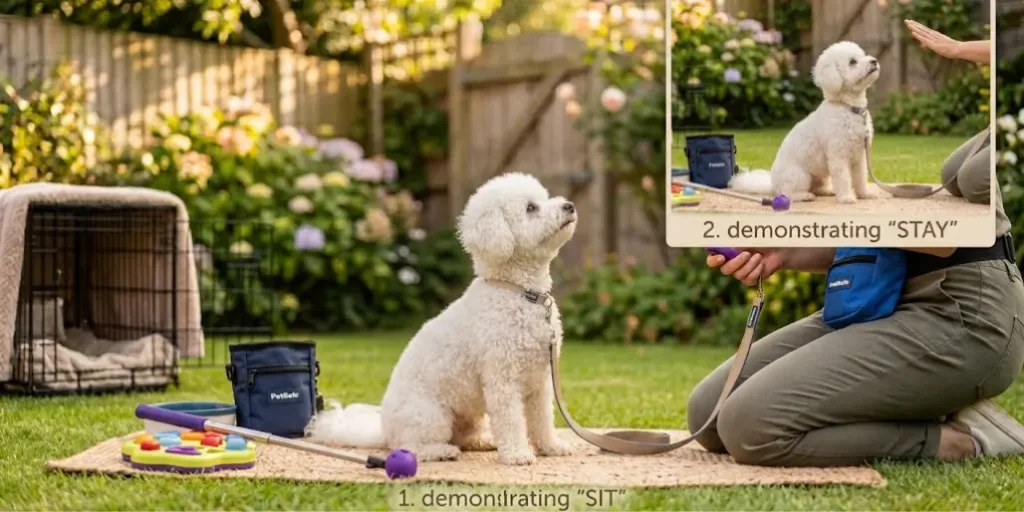
Teaching your bichon frise puppy fundamental skills is remarkably straightforward because these intelligent pups are generally very easy to train, such as:
- Sit
- Stay
- Paw
Every time your pet responds correctly to a verbal cue, offer an enthusiastic reward and a high-quality treat to reinforce the desired behavior and prevent any stubborn habit from taking root.
Positive Reinforcement Techniques
Using positive reinforcement builds a trusting bond between you and your affectionate dog. Never rely on harsh corrections; instead, celebrate your puppy’s successes with praise and delicious snacks. If you want more tips on working with smaller companions, check out our guide on non-sporting & toy breed training to help your companion thrive during every developmental milestone.
Training an Old Bichon Frise
Adjusting Training Methods for Older Dogs
Helping an old bichon frise learn new tricks requires a bit of extra patience, but senior dogs still thoroughly enjoy mental stimulation. Because an older bichon might move slower than a hyperactive pup, reduce the physical demands of each exercise while keeping the atmosphere fun, relaxed, and deeply rewarding for your senior pet.
Maintaining Obedience and Engagement
Preserving long-term obedience in an adult or senior bichon frise dog prevents regression and keeps their active minds sharp. To ensure your loyal companion remains a joy to live with, integrate refreshing training sessions into your daily routine twice a day by focusing on:
- Polite indoor manners
- Curbing excessive barking tendencies
- Practicing reliable recall
Health Considerations during Training
Before ramping up any physical activities with an aging bichon frise, consult your trusted vet to rule out joint stiffness or other underlying health issues. Prioritizing proper vet care ensures your senior dog remains comfortable, safe, and happy while learning, and DogBreedCalc is here to support you through every stage of your canine companionship journey.
Common Training Challenges
Addressing Behavioral Issues
Every bichon frise dog can occasionally develop frustrating quirks like excessive barking episodes if they feel bored or neglected. Tackling these behavioral hurdles requires identifying the root cause behind the noise. By addressing the habit early with positive reinforcement and redirection, you help your furry friend remain calm and well-behaved indoors without losing their playful spirit.
Leash Training Tips for Bichon Frises
Walking your bichon frise puppy on a leash takes practice, especially since this energetic dog breed loves to stop and sniff every interesting scent along the sidewalk. Keep your routine consistent by using a lightweight leash and offering a tasty treat whenever your pup walks beside you. Short training sessions will make outdoor adventures much more enjoyable for both of you.
Indoor Training Strategies
Mastering crate training and house manners inside your home ensures your affectionate pet understands where to relieve themselves and where to rest comfortably. Set up a dedicated indoor space with cozy bedding and safe toys. Whenever your dog follows your command and uses the designated area, provide enthusiastic verbal praise and a high-quality reward to solidify the rule.
Conclusion
Recap of Key Training Tips
Successful bichon frise training relies on consistency, patience, and rewarding your dog for making good choices during every single session. Whether you are guiding a young puppy or an old bichon frise, sticking to a predictable daily routine guarantees long-term success. Always consult a veterinary professional if you notice sudden changes in your pet’s behavior or health.
Encouragement for New Bichon Frise Owners
Raising this delightful dog breed is an immensely rewarding journey that deepens the bond between you and your loyal companion. Celebrate the small victories, maintain a positive attitude, and remember that every knowledgeable owner encounters minor setbacks. With steady guidance and plenty of love, your furry friend will blossom into the ultimate well-mannered household companion.
Additional Resources: Non-Sporting & Toy Breed Training
Finding the right educational resource makes a massive difference when you want to train a bichon frise effectively at any age. For more specialized advice on managing smaller dogs, check out our guide on non-sporting & toy breed training. You can also explore tools and calculators at DogBreedCalc to better understand your companion’s unique developmental needs and growth patterns.
FAQ
Q: When is the best time to start training a 8 month old puppy?
A: You should actually start training the moment you bring your pup home, but an 8 month old puppy is at a great stage to reinforce basic manners and channel all that endless playfulness into positive habits!
Q: How do I handle a year old bichon that barks a lot?
A: A year old bichon often barks to get attention or alert you to sounds, so the key is to teach a quiet command and reward them when they stay silent instead of yelling back.
Q: Can you still teach new tricks to an older year old bichon frise?
A: Absolutely, a year old bichon frise is still quite eager to please, and adult dogs often have a much better attention span for learning complex cues than hyperactive babies.
Q: Why should I always avoid punishment during obedience sessions?
A: You must avoid punishment because these sensitive pups get scared easily, which can ruin their trust in you and actually make behavioral issues much worse.
Q: How do I burn off energy for a dog that acts like a big dog in a small body?
A: Even though they are tiny, their high playfulness means they need daily brisk walks, interactive puzzle toys, and fun games of fetch to keep them mentally and physically exhausted.
Q: Is housebreaking a 3 month old puppy really that difficult?
A: A 3 month old puppy has a tiny bladder and lacks full physical control, so success comes down to a strict schedule, taking them out frequently, and throwing a massive praise party when they go outside.
Q: What is the secret to getting a stubborn pup to listen?
A: Patience and high-value treats are your best friends because these fluffy companion dogs respond way better to positive reinforcement than any kind of harsh correction.