
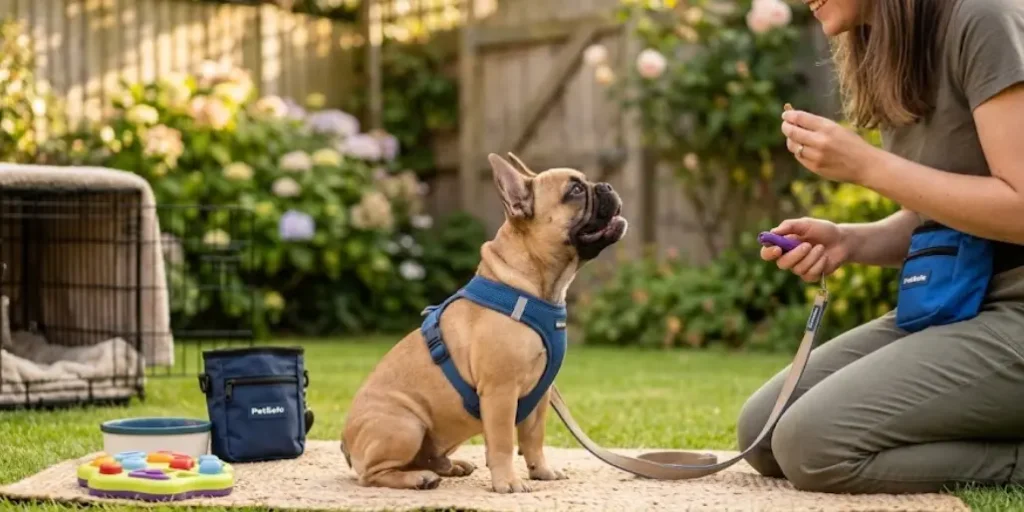
Effective french bulldog training starts early. Use positive reinforcement, offer tasty treats, and keep sessions short and consistent to work with your French Bulldog’s stubbornness.
When you bring your new French Bulldog home, take time to learn this charming brachycephalic companion’s needs and temperament. Most puppies combine affectionate loyalty with an independent streak, so early obedience work and socialization are essential for a well‑adjusted adult dog.
Understanding Your French Bulldog
Characteristics of French Bulldogs
These adorable little dogs are famous for their bat ears and affectionate personality, often acting like a furry family member who just wants to cuddle on the couch. As a distinct breed recognized by the AKC, your Frenchie puppy is naturally playful and loving, but they can also be a bit stubborn when you try to teach them new things. Because they have a brachycephalic skull structure, you must always use a safe harness instead of a traditional leash during walks to protect your pet’s sensitive respiratory system.
Why Training is Important for Puppies
Starting French Bulldog training during the first few weeks of life in your home helps prevent bad behavior and builds a strong bond between you and your dog. When you actively socialize your young pup and introduce basic obedience commands early on, you prevent future aggression and ensure your dog gets along wonderfully with strangers and other animals. Establishing good habits early means fewer accidents indoors and a much happier, well-adjusted adult dog that you can proudly take anywhere without any stress.
Common Misconceptions about Frenchies
Many people mistakenly believe that because these dogs are small and cute, they do not need professional guidance or structured crate training. Some folks think training your Frenchie is simply impossible due to their occasional unwillingness to listen, but in reality, they just respond best to short, engaging sessions filled with tasty treats and plenty of praise. Talk to your veterinarian or a qualified dog trainer if you ever feel stuck, and remember that consistency always beats harsh discipline when dealing with this sensitive little canine.
Key Training Tips for Your French Bulldog
When you want to train a French Bulldog effectively, you really need to rely on methods that keep your dog engaged without causing frustration for either of you. Every cute puppy responds wonderfully when you focus on clear communication and consistency during your daily interactions. Whether you just brought home a new Frenchie from a trusted breeder or you are trying to correct minor behavioral issues, utilizing the right approach makes all the difference. Your furry companion thrives on mental stimulation, and applying proven training tips will help turn that independent streak into reliable obedience. Keep your sessions upbeat and fun so your pet stays focused.
Utilizing Positive Reinforcement
Using positive reinforcement is hands down the absolute best way to shape your dog breed into a well-mannered family member who listens to every command. Whenever your French Bulldog puppy performs a desired action, immediately offer a tasty treat and enthusiastic verbal affection to reinforce that good habit. Dogs love rewards, and this method builds a strong bond of trust between you and your growing pup without ever needing harsh discipline. If you want more specialized advice on this topic, you can check out our guide on non-sporting & toy breed training for additional helpful strategies that work wonders for smaller dogs.
Effective Commands for Frenchie Puppies
Teaching your dog foundational cues like sit, stay, and come requires patience and repetition, especially with brachycephalic dogs who can sometimes be easily distracted. Start in a quiet room with minimal background noise, and keep each practice session exceptionally short to prevent your Frenchie puppies from losing interest. A professional dog trainer will always tell you that consistency is the secret sauce for successful French Bulldog training. Make sure every single family member uses the exact same verbal command and hand signal so your little canine companion does not get confused during your daily practice routines.
Strategies to Train a Stubborn French Bulldog
Sometimes you might feel like your Frenchies are being purposely selective, as this breed can famously display a stubborn streak when they would rather be napping on the couch. If you find your pet getting bored or acting a bit harder to train, try mixing up your routine by incorporating high-value rewards or turning obedience practice into an exciting game of playtime. Never lose your temper or get upset, because these sensitive dogs react poorly to anger. Instead, supervise them closely, manage their environment to prevent indoor accidents, and consult your veterinarian if stubbornness persists, before finally checking out DogBreedCalc for more insights.
Potty Training Your French Bulldog Puppy
Best Practices for Potty Training
When you start to potty train a French Bulldog, establishing a predictable routine is an absolute game changer for your cute puppy. Every single Frenchie needs to understand where it is acceptable to pee inside or outside your home. Make sure you use a high-value treat every single time your pup successfully does their business in the designated spot. A professional dog trainer will always emphasize that consistency prevents any nasty indoor accidents. Your furry companion relies on you to guide them through these important basics without any unnecessary frustration.
Recognizing Signs Your Puppy Needs to Go
Learning to spot the subtle clues that your young French Bulldog needs a bathroom break will save your carpets and reduce your own stress levels significantly. If your playful dog displays any of the following behaviors, take them outside immediately:
- Sniffing frantically in circles
- Pacing around nervously
- Whining near the door
This specific habit requires your undivided attention, especially during the first few weeks in your house. Keep a close eye on your French Bulldog puppy so you can catch these warning signs early and reinforce the correct behavior with plenty of praise.
Creating a Potty Training Schedule
Setting up a strict schedule helps your adorable family member build great habits that last a lifetime. To ensure your brachycephalic companion completely masters their bathroom routine, you should follow these key steps:
- Take your dog outside frequently, sometimes literally every 2 hours.
- Feed your Frenchies at the exact same times every day to regulate their digestion and make elimination much more predictable.
- Offer an enthusiastic verbal reward and a tasty snack whenever your dog successfully finishes going potty outdoors to celebrate the victory.
Socialization and Behavior Training
Importance of Socializing Your Frenchie
Proper socialization prevents fear, anxiety, and potential aggression as your charming companion grows from a tiny baby into a confident adult dog. Introducing your French Bulldog to various sights, sounds, and experiences helps curb their natural stubbornness and reduces any potential unwillingness to accept new environments. You want a friendly, well-adjusted pet that can get along wonderfully with everyone they meet. Take things slow, keep distractions to a minimum, and always rely on positive reinforcement to make every new exposure a fun and rewarding adventure.
How to Introduce Your Puppy to Other Dogs
Safely introducing your Frenchie puppies to other well-behaved animals requires careful planning and a secure harness rather than a restrictive neck collar. Allow your dog to sniff gently in a neutral space, but immediately intervene with a calm command if playtime gets too rough or overwhelming. Every breed reacts differently to strangers, so watch your pet’s body language closely for signs of tension. A trusted veterinarian can also offer fantastic advice on how to manage these early dog-to-dog interactions smoothly and safely without creating lifelong fears.
Training for Good Behavior Around Strangers
Helping your dog remain polite when meeting new people is a crucial part of comprehensive French Bulldog training that you simply cannot ignore. Teach your companion to sit patiently instead of jumping up, using a favorite treat as a lure to encourage calm manners. If your Frenchie seems a bit selective or distracted by unfamiliar faces, keep the greeting short and sweet. Consistent practice transforms an overly excited pup into a polite gentleman or lady whom you can proudly take anywhere without a single worry on your mind.
DogBreedCalc
When to Consult a Veterinarian
When you want to train a French Bulldog, sometimes your dog might display unusual health concerns that require a professional veterinarian to evaluate thoroughly. If your Frenchie experiences persistent digestive issues or breathing difficulties typical of brachycephalic dogs, seeking expert medical advice is essential. Your puppy needs a healthy body to focus during training sessions, and a vet can rule out underlying medical problems that might be making your cute pup harder to train or causing unexpected behavioral regressions at home.
Identifying Potential Health Issues
Spotting potential health issues early ensures your furry companion stays active, happy, and fully capable of participating in daily obedience routines. Watch closely for signs of discomfort during playtime or walks, such as:
- Respiratory distress
- Joint stiffness
- Skin allergies
If you notice your dog acting lethargic or showing an unusual unwillingness to engage with high-value treats, schedule an appointment with your trusted veterinarian immediately to address these physical concerns before they impact your overall training progress.
Behavioral Concerns that Need Professional Help
Severe behavioral challenges like sudden aggression, extreme fear of strangers, or relentless destructive chewing require the specialized intervention of a certified dog trainer or animal behaviorist. While everyday stubbornness is completely normal for this wonderful breed, biting or intense resource guarding goes beyond standard puppy mischief and demands expert guidance. Consulting a professional ensures you handle these tricky situations safely, protecting your family members and helping your cherished Frenchie overcome deep-seated anxieties through structured, positive behavior modification techniques.
Regular Check-ups and Training Recommendations
Scheduling routine veterinary check-ups allows you to discuss your ongoing French Bulldog training strategy with a medical professional who understands the unique temperament of your dog. Your vet can offer tailored recommendations regarding exercise limits, dietary needs, and socialization milestones that align with your puppy’s developmental stage. Maintaining open communication with animal care experts guarantees that your health and obedience goals remain balanced, setting your beloved pet up for a lifetime of good manners and robust wellness.
Conclusion
Recap of Essential Training Tips
Successfully raising a well-behaved French Bulldog relies heavily on patience, consistency, and the unwavering use of positive reinforcement techniques every single day. By keeping your learning sessions short, utilizing delicious rewards, and properly socializing your playful companion from an early age, you lay a solid foundation for lifelong obedience. Remember to respect your brachycephalic dog’s physical limitations by using a secure harness and watching for early signs of fatigue so your training journey remains positive and productive for both you and your pet.
Encouragement for Consistency in Training
Consistency is truly the secret ingredient when you want to train your dog to overcome stubbornness and master essential commands without unnecessary frustration. Even when your charming Frenchie tests your patience or seems momentarily distracted, sticking to your established routines will eventually yield incredible results. Celebrate small victories with an enthusiastic verbal reward or a tasty treat, and never give up on your furry family member because your dedication will ultimately create an exceptionally well-mannered canine companion.
Further Resources: Non-Sporting & Toy Breed Training
Expanding your knowledge beyond the basics helps you address specific behavioral quirks associated with smaller companion dogs and ensures your methods remain fresh and effective. For more expert guidance on managing independent streaks and refining your obedience approach, explore additional resources like our non-sporting & toy breed training guide. Combining these specialized strategies with the insights found on DogBreedCalc will give you all the tools necessary to raise a wonderfully confident and obedient dog.
FAQ
Q: When should I start to train a french bulldog puppy?
A: You can kick off french bulldog puppy training as soon as you bring your little buddy home, usually around 8 weeks old. Their brains are like little sponges at this age, so it is the absolute best time to teach them the basics!
Q: Why is consistent french bulldog training so important for these pups?
A: French bulldogs are one of the most stubborn yet lovable breeds out there. Staying consistent helps them understand house rules quickly and prevents bad habits from forming since they form a deep attachment to their humans.
Q: What is the best way to teach my dog the “sit” command?
A: The easiest way to get your pup to master a “sit” is by using a high-value treat right in front of their nose and moving it slowly backward over their head until their bottom naturally hits the floor.
Q: How can I use a reward effectively during obedience sessions?
A: Always make sure your reward is given immediately after your pup does the correct action, paired with a cheerful “yes!” or a clicker so they make the right connection right away.
Q: Why is harsh punishment ineffective when working with this breed?
A: Because these dogs are sensitive and thrive on love, yelling or physical scolding is totally ineffective and will only make them shut down or run away from you.
Q: How long should my daily training sessions be for a young pup?
A: Keep your sessions super short, around 5 to 10 minutes max, because french bulldogs have short attention spans and get tired very easily.
Q: How do I handle my puppy getting easily distracted during a lesson?
A: If your pup keeps losing focus, just take them to a boring, quiet room with zero distractions and try again when they are a little calmer.