Welcome, future and current Samoyed owners! This guide from the Samoyed Club is your go-to resource for understanding and navigating the wonderful journey of training your Samoyed puppy. We’ll delve into everything from their unique temperament to practical training tips, ensuring a well-behaved and happy Samoyed companion.
Are Samoyeds easy to train?
Understanding the Samoyed breed temperament
Training Samoyeds presents a delightful challenge due to their unique, friendly temperament. While they are intelligent dogs, their independent nature as an arctic sled dog breed means they aren’t always striving to please in the same way some other breeds might. Samoyeds thrive on companionship and positive interactions, making consistent training sessions crucial for their development into well-adjusted adult dogs.
Factors affecting training ease
The ease of training a Samoyed puppy largely depends on several factors, including early socialization and consistent training methods. Their breed’s history as a working dog means they possess a strong will and can display stubbornness if not approached with patience and understanding. Positive reinforcement is key, as Samoyeds respond best to rewards rather than harsh corrections, which can make them even more resistant to instruction.
Comparing Samoyeds with other dog breeds
When comparing Samoyeds with other dog breeds, it’s fair to say they aren’t typically ranked among the easiest to train, like some retriever breeds. Their independent spirit, characteristic of a sled dog, means they require an owner who understands their intrinsic motivations. However, with consistent training, patience, and a deep understanding of the Samoyed breed, these intelligent dogs can become wonderfully obedient and devoted companions.
Managing stubbornness with positive reinforcement
Identifying signs of stubbornness in Samoyeds
Samoyeds, with their distinct personality, can sometimes exhibit stubbornness, which isn’t defiance but often a display of their independent problem-solving skills or a lack of motivation. Recognizing the signs of this behavior is crucial, and it can manifest in several ways:
- Ignoring commands
- Deliberate slowness
- Wandering off during training sessions
Understanding your Samoyed’s behaviour helps you adjust your approach, making training sessions more effective and enjoyable for both of you.
Effective positive reinforcement techniques
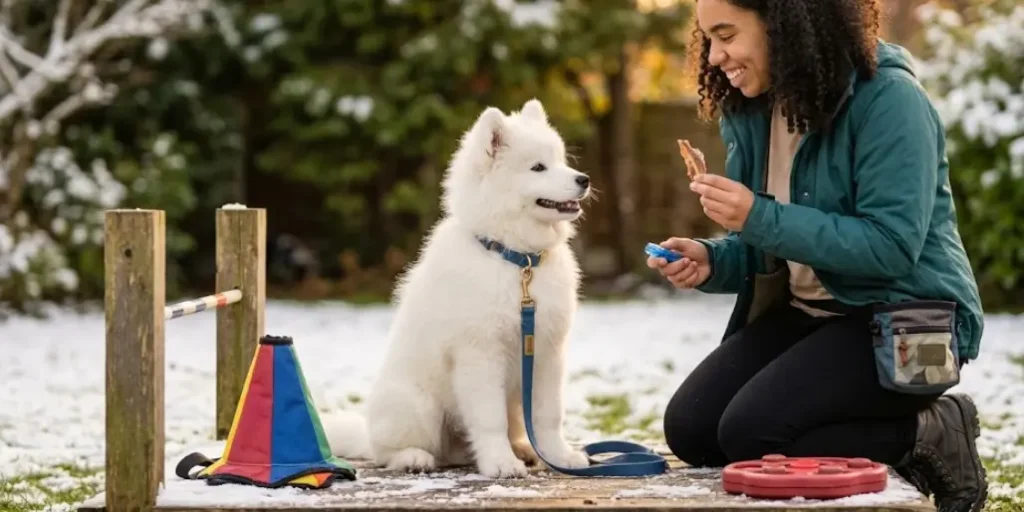
Positive reinforcement is the cornerstone of successful Samoyed puppy training. This approach strengthens your bond and encourages your pup to associate training with positive experiences, making them more eager to learn. Remember, a Samoyed pup thrives on encouragement and clear, consistent rewards. During training sessions, you can motivate your Samoyed to perform desired behaviours by utilizing:
- Treats
- Verbal praise
- Favourite toys
Building a trusting relationship through training
Training your Samoyed is much more than just teaching commands; it’s about building a trusting relationship that lasts a lifetime. Consistent training, especially with positive reinforcement, helps your Samoyed understand what is expected of them in a gentle and encouraging manner. This foundation of trust is vital, especially when dealing with the breed’s natural stubbornness, making your Samoyed feel secure and understood within your family.
Samoyed puppy training basics
Starting training early: age considerations
Starting Samoyed puppy training early is incredibly beneficial, ideally as soon as your pup arrives home around 8 weeks old. At this age, a Samoyed puppy is a sponge, eager to learn and form good habits. Early socialization and consistent training sessions lay a strong foundation for a well-behaved adult Samoyed, making it easier to manage their natural intelligence and the potential for stubbornness later on.
Essential commands every Samoyed should learn
Every Samoyed puppy should master several essential commands. These commands are crucial for safety and control, especially given the Samoyed breed’s history as a sled dog with an independent streak. Key commands include:
- “Sit”
- “Stay”
- “Come”
- “Leave it”
Consistent positive reinforcement during dog training will make learning these commands an enjoyable experience for your Sammy, reinforcing good behaviour and strengthening your bond.
Incorporating grooming during training sessions
Incorporating grooming during training sessions can be an excellent way to familiarize your Samoyed puppy with handling while reinforcing good behaviour. Use this time to practice calmness and cooperation, rewarding your pup for tolerating brushing or paw handling. This helps your Samoyed get used to being touched, which is especially important for their thick double coat, making future grooming much less stressful for both of you.
Dealing with vocalization (‘Sammy talk’)
Understanding why Samoyeds vocalize
Samoyeds are known for their unique vocalization, often dubbed ‘Sammy talk,’ which is a natural part of their breed’s communication. This includes a range of sounds beyond typical barking, like howling, yodeling, and chattering, stemming from their sled dog heritage where vocal cues were important. Understanding that this vocalization is often their way of expressing excitement, boredom, or a desire for attention is the first step in managing it.
Techniques to manage excessive barking
Managing excessive barking in your Samoyed requires patience and consistent training. Instead of punishing the bark, focus on rewarding quiet behaviour using positive reinforcement. Identify triggers for your pup’s vocalization and work on desensitizing them or providing alternative behaviours. Engaging your Samoyed in mental stimulation and plenty of exercise can also significantly reduce unnecessary “Sammy talk.”
Encouraging appropriate vocalization
While Samoyeds are naturally vocal, you can encourage appropriate vocalization by teaching your Samoyed puppy when it’s okay to make noise. For instance, you might teach them to “speak” on command and then “quiet.” This gives you control over their vocal habits, allowing your Samoyed to express themselves without becoming a nuisance. Remember, consistent training and clear communication are key to shaping their behaviour.
Common Samoyed training mistakes
Avoiding inconsistency in training
One of the most common mistakes in training Samoyeds is inconsistency. These intelligent dogs thrive on routine and clear expectations. If training methods change frequently or commands aren’t enforced consistently, your Samoyed puppy will become confused and more likely to exhibit stubbornness. Stick to a schedule and use the same cues and rewards for successful obedience training.
Overcoming common behavioral challenges
Samoyeds can present unique behavioral challenges, such as excessive barking or pulling on the leash. Overcoming these requires understanding the root cause—often boredom or a lack of mental stimulation. Address these issues with positive reinforcement, provide engaging activities, and consider professional dog training if challenges persist. Patience and consistent training methods are essential for a well-behaved Samoyed.
Recognizing the importance of patience
Patience is not just a virtue; it’s a necessity when training a Samoyed. Their independent and often stubborn nature means they learn at their own pace. Rushing or becoming frustrated will only hinder progress and damage your bond. Celebrate small victories, keep training sessions positive and short, and remember that consistent training over time yields the best results with your Samoyed puppy.
How much exercise and mental work is needed?
Understanding the exercise needs of Samoyeds
Samoyeds are an arctic sled dog breed, meaning they have high exercise needs. Daily physical activity, such as long walks, runs, or vigorous play, is crucial for their well-being and to prevent destructive behaviour. Without adequate exercise, your Samoyed pup may become restless and bored, potentially leading to unwanted behaviors like excessive vocalization or chewing.
Incorporating mental stimulation in daily routines
Beyond physical exercise, Samoyeds also require significant mental stimulation to keep their intelligent minds engaged. Incorporate puzzle toys, scent work, and new obedience commands into their daily routine. This kind of mental work helps satisfy their natural curiosity and problem-solving abilities, reducing the likelihood of boredom and the development of behavioral issues.
Finding the right balance for your Samoyed
Finding the right balance of physical exercise and mental stimulation is key to a happy and well-adjusted Samoyed. Too little of either can lead to frustration, while too much can cause overstimulation. Observe your Samoyed’s behaviour for cues, ensuring a mix of active play, structured training sessions, and quiet downtime. This balance supports both their physical health and mental well-being.
Training Tips for Other Northern and Working Breeds
Samoyeds respond best to positive reinforcement, patience, and a good balance of exercise and mental stimulation. For breed-by-breed advice on similar dogs, head over to our working breed training hub.
FAQ
Are Samoyeds stubborn to train?
Yes, Samoyeds can be perceived as stubborn to train due to their independent nature and strong will as a sled dog breed. They are intelligent dogs, but they often require more patience and consistent positive reinforcement than some other breeds. Their stubbornness isn’t defiance, but rather a reflection of their history as working dogs who made their own decisions.
Why do Samoyeds vocalize so much?
Samoyeds are known for their unique vocalization, often referred to as ‘Sammy talk,’ because it’s a natural trait of the breed. This includes a range of sounds beyond typical barking, like howling, yodeling, and chattering, stemming from their arctic sled dog heritage where vocal cues were important for communication within the pack. They vocalize to express excitement, boredom, or to seek attention.
At what age should Samoyed training start?
Samoyed training should ideally start as soon as your Samoyed puppy comes home, typically around 8 weeks old. Early socialization and consistent, positive reinforcement-based training sessions at this age lay a strong foundation for a well-behaved adult Samoyed. Beginning early helps manage their intelligence and potential for stubbornness, making future training much smoother for both you and your pup.