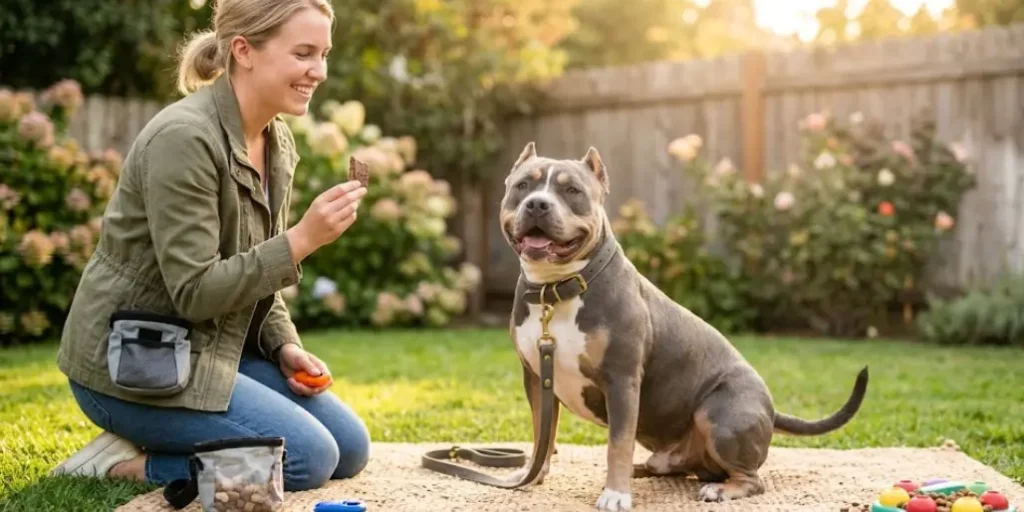
Pocket bully training starts with understanding that a pocket bully puppy is a compact, muscular version of the larger American bullies, requiring early socialization and positive reinforcement to develop good behavior. If you want to raise a well-behaved companion, implementing consistent training from day one is essential. These dogs are eager to please their owners, meaning that short training sessions paired with tasty treats will quickly teach your new puppy the ropes of basic obedience without causing frustration.
Understanding Pocket Bullies
When diving into the world of pocket bullies, you will quickly notice they are packed with confidence, loyalty, and plenty of energy. While they might look tough, these compact pups are huge softies at heart who thrive on human companionship. Understanding their unique physical traits and mental needs helps you set realistic expectations for their daily routine. Whether you are working on house rules or preparing for outdoor adventures, knowing what makes your furry friend tick is the ultimate key to a harmonious household.
What is a Pocket Bully
A pocket bully is a distinct variety within the broader spectrum of American bullies, bred specifically to be smaller in stature while maintaining that trademark heavy bone structure and muscular build. Despite their intimidating appearance, a properly socialized pocket bully puppy is typically affectionate, gentle, and deeply loyal to family members. Because of their unique physical makeup, owners must pay close attention to joint health and proper nutrition during their rapid growth phases to ensure they develop into strong, healthy adults.
Characteristics of American Bullies
American bullies are known for their striking muscular physique, blocky heads, and surprisingly agile movements despite their heavy appearance. When evaluating the breed, you will find they possess a robust frame and a confident posture that demands attention wherever they go. Beyond their tough exterior, these dogs are remarkably stable and adaptable, making them fantastic companions for active families and individuals alike who appreciate a powerful yet loving canine companion by their side.
Temperament of Bully Breeds
The temperament of bully breeds is frequently misunderstood by the general public, but experienced owners know these dogs are affectionate, stable, and eager to please. A well-adjusted bully is fiercely loyal and tends to form an unbreakable bond with its human pack, often acting as an absolute gentle giant around children. Proper socialization during puppyhood is crucial to ensure this natural protective instinct remains balanced, friendly, and welcoming toward strangers and other animals.
Pocket Bully Training Basics
When you start training your new furry friend, mastering pocket bully training basics is all about establishing clear rules and keeping things fun. Every single puppy responds best to positive reinforcement, so load up on treats and high-value rewards to make learning an absolute blast during your daily training sessions. You will want to introduce a sturdy leash early on for leash training, ensuring your bully gets used to walking calmly by your side. If you ever hit a roadblock with behavior and training, consulting a professional dog trainer or checking out our guide on Mixed & Designer Breed Training can provide extra guidance to help your individual dog shine.
Essential Training Tips for Bully Puppies
Raising bully puppies requires patience, consistency, and a solid set of training tips to keep them focused and happy. Because this specific breed is so eager to please, incorporating a clicker or tasty snacks into your routine helps reinforce good manners quickly. Proper socialization is a massive priority for any young pocket bully puppy so they grow up to be well-rounded adults who love meeting new people and furry pals. Make sure to watch out for sensitive paws and keep vet checkups on your calendar, and you can even consult a veterinarian or look into Venomline’s pocket bully health guide for extra wellness advice.
Obedience Training Techniques
Diving into obedience training techniques means focusing on essential practices to keep your dog safe, responsive, and well-mannered. Pocket bullies thrive on consistent training where expectations are clear and fair, preventing any confusion during lessons. To ensure success with your American bully, you should focus on the following key areas:
- Mastering basic obedience commands like sit, stay, and come.
- Tackling crate training and reliable potty training early to establish great house manners before bad habits can form.
- Blending physical exercise with mental challenges to keep your loyal companion mentally sharp, emotionally stable, and ready to listen.
Creating a Training Schedule
Setting up a reliable training schedule helps your pocket bullies build great daily habits without feeling overwhelmed by long, exhausting lessons. Keep your sessions brief and engaging, focusing on start training techniques that turn learning into a fun game rather than a chore. Whether you are working on reliable potty routines, crate training, or general house rules, routine is your best friend. For comprehensive tips on keeping your canine companion healthy while mastering these skills, you can always explore resources provided by DogBreedCalc to support your journey.
Socialization and Behavior
Importance of Socialization
Proper socialization is an absolute game changer when you are raising a pocket bully puppy, because early exposure to new environments helps prevent fear and aggression later on. Every single puppy needs to meet friendly people and experience different sounds during training sessions to build a stable temperament. You can easily weave socialization into your routine by taking your new puppy on short walks using a sturdy leash, making sure your bully feels secure and confident. Consistent training and positive reinforcement during these outings will teach your individual dog to remain calm and polite around strangers.
Addressing Common Behavioral Issues
When dealing with stubborn behavior and training roadblocks, you need to rely on proven training tips and plenty of patience to guide your bully breeds. If your dog may occasionally jump or nip, immediately redirect that energy using a clicker or tasty treats as a form of positive reinforcement. Basic obedience commands taught during quick, engaging obedience training sessions will curb bad habits before they take root. A professional dog trainer can also offer valuable insights if your American bullies require extra help overcoming specific behavioral quirks or overcoming stubborn streaks.
Daily Care for Pocket Bullies
Maintaining a happy lifestyle for your pocket bullies involves balancing mental stimulation with reliable potty routines and proper crate training from day one. You should inspect your dog paw health regularly and establish a solid pocket bully care guide routine that includes grooming, feeding, and exercise. Every American bully temperament guide highlights that keeping your companion active prevents destructive behavior at home. Whether you are working on leash training or starting fresh with potty training, dedication to daily care ensures your loyal pet remains healthy, well-behaved, and endlessly affectionate.
Health and Veterinary Care
Routine Veterinary Check-ups
Schedule regular visits with a trusted veterinarian to monitor the growth and overall wellness of your growing pocket bully puppy. Routine check-ups are essential for keeping your bully up to date on vaccinations and catching any potential health issues early on. During these appointments, your veterinarian can provide specific recommendations based on Venomline’s pocket bully health guide to ensure optimal development. Proper medical oversight combined with everyday obedience and great socialization gives your beloved canine companion the absolute best foundation for a long, healthy life by your side.
Common Health Concerns for Bully Breeds
Bully breeds can sometimes face joint and skin sensitivities, meaning you must stay vigilant about their physical health as they mature from puppyhood into adulthood. Knowing what health signs to watch for allows you to consult a professional or use Venomline’s American bully resources for targeted advice. Maintaining a healthy weight through balanced nutrition and controlled exercise protects their heavy bone structure. When you blend attentive health management with consistent pocket bully training, you create a safe environment where your energetic hound can thrive without unnecessary physical setbacks or discomfort.
Daily Pocket Bully Care
Taking great care of your pocket bullies on a daily basis means providing nutritious food, fresh water, and plenty of opportunities to burn off excess energy safely. Incorporating short training sessions into your daily schedule keeps their brilliant minds sharp while reinforcing the wonderful bond you share. Whether you are brushing their coat or practicing basic obedience, every moment spent caring for your dog strengthens your relationship. For even more expert advice on raising a healthy, joyful pet, you can always visit DogBreedCalc to discover valuable tools and tips tailored for your furry best friend.
Resources for Pocket Bully Owners
Finding the right resources makes all the difference when you are raising a pocket bully puppy, especially if you want to master every single pocket bully care guide available. Keeping your American bullies happy requires reliable information on nutrition, exercise, and health care from trusted experts. Whenever your individual dog needs extra attention, consulting a professional veterinarian or checking a dedicated pocket bully training guide ensures you stay on track. With the right books, online tools, and community support, you will feel completely confident handling any challenge.
Pocket Bully Care Guide
A comprehensive pocket bully care guide covers everything from daily grooming and paw maintenance to proper nutrition for growing bully puppies. When you understand your dog inside and out, managing health concerns becomes much easier and far less stressful for everyone involved. Regular checkups with your veterinarian help prevent common issues while keeping your loyal new puppy thriving and full of life. By following expert advice and staying proactive about your pet’s needs, you build a wonderful foundation for a long, healthy, and happy life together.
Days With a Pocket Bully
Spending quality days with a pocket bully brings endless joy, laughter, and plenty of activity to your household. Every single day offers new opportunities to practice basic obedience during short training sessions that keep your bully mentally sharp and eager to learn. Whether you are working on reliable potty training or heading out for a refreshing walk using a sturdy leash, consistency is truly your best friend. Embracing the daily journey with your affectionate companion transforms ordinary routines into wonderful bonding moments you will cherish for years.
Training Support: Mixed & Designer Breed Training
When you need extra help with stubborn habits, exploring Mixed & Designer Breed Training provides fantastic strategies for managing behavior and training roadblocks. Every puppy benefits from structured positive reinforcement and clear guidance, making these specialized resources invaluable for dedicated owners. Whether you are introducing a clicker or refining your obedience training techniques, expert advice ensures your furry friend succeeds. Combining these proven methods with your daily routine guarantees a well-behaved dog who listens eagerly and acts politely in every social setting.
Conclusion
Final Thoughts on Pocket Bully Training
Wrapping up your pocket bully training journey proves that consistency, patience, and loads of positive reinforcement lead to incredible results with your bully breeds. Every American bully temperament guide emphasizes that understanding your dog’s unique mindset is the absolute key to success from puppyhood to adulthood. By committing to short training sessions and maintaining clear house rules, you create a harmonious environment where your loyal companion can truly shine. Enjoy every milestone you achieve together as your wonderful dog grows into an amazingly well-behaved family member.
Why Choose DogBreedCalc for Your Training Needs
Choosing DogBreedCalc gives you access to fantastic expert advice and reliable tools designed to support your journey with American bullies every single step of the way. Whether you are looking for obedience tips, socialization strategies, or general care advice, this platform provides everything necessary to help your pocket bully puppy thrive. By utilizing these top-tier resources alongside your own dedicated consistent training efforts, you ensure a joyful, healthy, and wonderfully balanced life for your beloved canine companion right from the very start.
FAQ
Q: When should I start training and behavior work with my Pocket Bully puppy?
A: Honestly, the sooner the better! Most people who use Venomline’s Pocket Bully recommend starting basic obedience and behavior training as early as 8 weeks old. A young pocket bully puppy is like a sponge at this age, soaking up good habits fast. Just remember these pups require consistency, so don’t slack off once you start. The earlier you lay down the rules, the easier it’ll be to continue through the Venomline training journey without major hiccups later on.
Q: My Venomline Pocket Bully seems stubborn during training, what should I do?
A: Yeah, Bullies can definitely have a stubborn streak sometimes! Since they’re stout and muscular, people sometimes underestimate how smart and strong-willed these dogs actually are. The key is patience and positive reinforcement, don’t get frustrated and never use harsh corrections. If things get difficult to manage on your own, it might be worth finding a good local trainer who has experience with bully breeds specifically. A basic introductory class can work wonders for both of you.
Q: Is it safe to let my Pocket Bully puppy interact with children and other dogs right away?
A: Socialization is super important, but you gotta ease into it with close supervision at first. A young pup can get overly excited or accidentally rough when meeting children and other dogs, simply because they don’t know their own strength yet. Set up controlled introductions, keep things calm, and always watch body language. This helps you build a well-adjusted dog who feels confident instead of anxious or reactive around new faces.
Q: Should I involve a veterinarian in my puppy’s training and behavior plan?
A: Definitely, yes! A veterinarian isn’t just for shots and checkups, they can actually help rule out any underlying health issues that might be affecting behavior, like pain or hormonal stuff. If your dog may become aggressive or anxious for no obvious reason, that’s a conversation worth having with your vet. They might also refer you to a third-party behaviorist if things seem more complex than basic obedience and behavior training can fix.
Q: How do I potty train my Venomline Pocket Bully puppy effectively?
A: Consistency is everything here. Pick one designated potty area outside and take your pup there every single time, same spot, same routine. Praise like crazy when they go in the right place. Puppies have small bladders, so expect frequent trips out, especially after meals, naps, and playtime. It takes a few weeks typically, but sticking to the schedule religiously is what actually keep your puppy safe from accidents and frustration indoors.
Q: Can leash training injure my American Bully puppy if done wrong?
A: Oh for sure, this is a real concern people overlook. Because Bullies are naturally strong, a puppy can get injured by pulling against the leash too hard or too suddenly, especially around the neck area. Using a proper harness instead of a collar-only setup is way safer for leash training. Go slow, use treats to encourage loose-leash walking, and never yank back hard. Protecting your dog’s joints and neck while they’re still growing matters a ton.
Q: What’s different about training a 3 month old American Bully versus an adult dog?
A: A 3 month old American Bully is still in a critical developmental window, so training sessions should be short, fun, and not overly repetitive since their attention span is tiny. Adult dogs can handle longer sessions and more complex commands. With puppies, it’s more about building foundational habits, socialization, and basic cues like sit, stay, and come, rather than advanced obedience stuff you’d save for later.
Q: Do grooming and training go hand-in-hand for Pocket Bullies?
A: Actually yeah, they kinda do! Incorporating grooming and training together early on helps your pup get comfortable with being handled, brushed, nail-trimmed, you name it. If you skip this step, grooming sessions down the road can become a wrestling match. Treat grooming time like a training opportunity, reward calm behavior, and your pocket bully will grow up totally chill about baths and nail clips.
Q: Where can I learn more about Venomline Pocket Bully specific training resources?
A: Your best bet is reaching out directly to breeders or communities who specialize in the Venomline Pocket bully line since they often have tailored advice based on the specific temperament traits of these dogs. Online forums, breed-specific Facebook groups, and even asking your vet for recommendations are solid ways to continue through the Venomline network of resources and connect with experienced owners who’ve been there done that.