An Irish Wolfhound puppy will eventually reach an astonishing adult size, often recognized as one of the tallest dog breeds in the world, regularly standing at least 32 inches tall at the shoulder. If you want to figure out your pup’s trajectory, checking a reliable growth chart right away is the best way to estimate their final adult weight and monitor their development.
Understanding Irish Wolfhound Growth
The Unique Growth Rate of Irish Wolfhounds
Raising an Irish Wolfhound is a massive undertaking because these giant breeds experience an extremely fast development phase unlike almost any other animal. Your young Irish Wolfhound puppy will go through phases where they keep having growth spurts until they are 5 years old, even though their most rapid growth happens during the first year of life. You have to feed them special puppy food formulated for giant dog breeds to protect their delicate joints from long-term damage.
Growth Curves for Irish Wolfhound Puppies
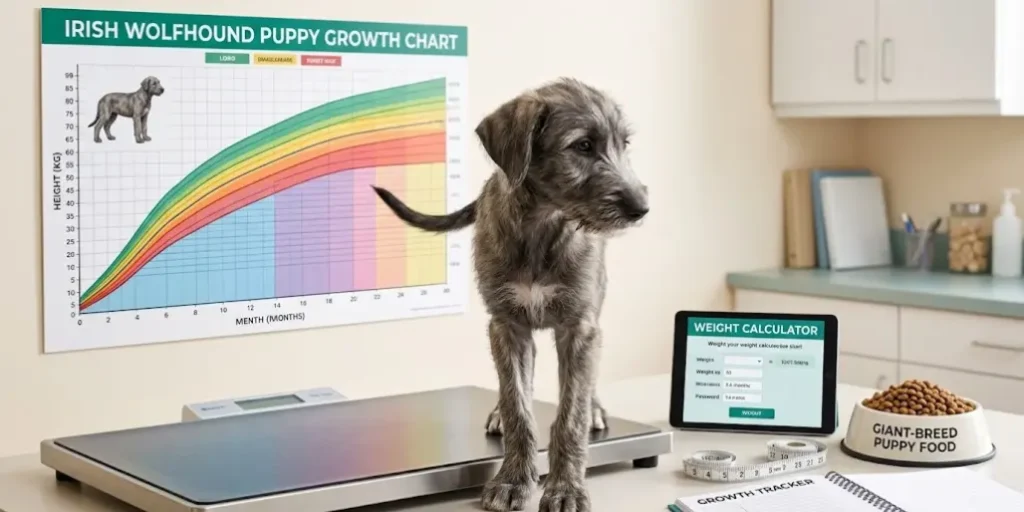
Plotting your dog on specific growth curves helps you visualize how a male Irish Wolfhound towers over other pets by the time they hit 4 months old. A typical pup goes from a small 8-week bundle of fur into a towering adolescent, with the wolfhound weight multiplying exponentially month after month. By tracking their current weight against expected milestones, you can easily anticipate when your young companion will transition through major developmental landmarks.
Factors Affecting Irish Wolfhound Growth
Genetics play a huge role in determining the final Irish Wolfhound weight, and a reputable breeder can usually give you a good baseline based on the parents. Unlike smaller dogs that mature quickly, an Irish Wolfhound growth chart must account for delayed bone closure and prolonged growth spurts that require careful monitoring of physical activity to prevent joint issues.
Puppy Weight Calculator for Irish Wolfhounds
Growth & Weight Tool
How big will your puppy get?
Pick a breed to see its typical growth curve, or add your puppy’s current age and weight to check how they’re tracking against the average.
Estimates based on breed-standard adult weight ranges and typical size-class growth patterns. Every puppy is different — check with your vet for individual concerns.
When you are trying to figure out how big your lanky giant dog is going to get, using a specialized puppy weight calculator is honestly the easiest way to make sense of the madness. Because these animals have such an extremely fast development phase, guessing just by looking at them never works out. You simply plug in your pup and their current weight to see if they are on track. If you want to check their numbers, you can easily use a helpful dog growth chart and weight calculator online to get a clearer picture of their upcoming growth curves and overall development milestones.
How to Use a Weight Calculator
Using a weight calculator for an Irish Wolfhound is super simple, but you have to keep accurate records of your Irish Wolfhound puppy every single week. To get started, you just need to:
- grab a scale and write down the current weight in pounds or kg
- enter the exact age in weeks or months
Since these puppies grow extremely fast, even a short gap in tracking means you might miss a sudden surge in their rapid growth rate. The tool will then process your data against standard growth curves for giant breeds to give you a pretty reliable estimated adult weight without any guesswork.
Expected Weight Ranges for Irish Wolfhound Puppies
Watching your Irish Wolfhound go from a tiny 8-week bundle of fluff into a towering adolescent is wild, especially when you realize males typically outweigh and outpace other dogs in the litter. By the time your young pup hits 4 months old, you will already notice a massive difference compared to other dog breeds in the world. As they keep having growth spurts until they are 5 years old, their wolfhound weight will skyrocket past 120 pounds long before they reach their final adult size. Females are slightly lighter, but both sexes need proper nutrition from quality puppy food.
Tracking Your Puppy’s Weight Progress
Keeping an eye on your puppy growth is super important because protecting every delicate growth plate during these heavy growth spurts until they're 5 years old prevents terrible joint issues later on. Your Irish Wolfhound growth depends heavily on genetics from your trusted breeder, so comparing your metrics against a verified Irish Wolfhound puppy growth chart helps you spot nutritional gaps early. Whether your male Irish Wolfhound is sitting at 9 months or pushing past 8 months, staying proactive ensures your gentle giant hits every healthy benchmark on their remarkable growth trajectory. DogBreedCalc
Irish Wolfhound Adult Size and Weight
Understanding the Adult Weight of Irish Wolfhounds
Figuring out the final adult weight of an Irish Wolfhound is always an exciting part of raising such a magnificent animal, especially since these gentle giants take years to fully fill out. Your Irish Wolfhound puppy will require consistent tracking using a reliable puppy growth chart to ensure they are packing on pounds safely rather than too quickly. Because puppies grow extremely fast during their first year, monitoring their current weight every single week helps you spot any deviations from standard growth curves. Even though males typically outweigh females, both benefit from specialized puppy food designed to support giant breeds through their prolonged development phase and protect every sensitive growth plate.
Average Height and Size of Adult Irish Wolfhounds
When it comes to physical dimensions, an adult Irish Wolfhound easily ranks among the absolute tallest dog breeds in the world, often able to stand at least 32 inches tall at the shoulder. By the time they reach their full adult size, a healthy male Irish Wolfhound can easily tip the scales well past 120 pounds, while females are slightly more slender yet still impressively massive. Tracking their rapid growth rate from those tiny 8-week-old beginnings up to 4 months old gives you a front-row seat to their incredible transformation. Keeping an eye on this growth trajectory ensures your giant dog develops strong bones without suffering from unexpected joint issues.
Comparing Irish Wolfhounds with Other Dog Breeds
If you compare an Irish Wolfhound with almost any other dog breeds out there, the sheer scale of this breed is truly mind-boggling, frequently rivaling a Great Dane in height and overall presence. While many smaller dogs finish maturing within a year, an Irish Wolfhound puppy will keep having growth spurts until they are 5 years old, maintaining an extremely fast development phase early on that eventually levels out. Consulting a detailed Irish Wolfhound weight guide helps owners understand that the wolfhound weight and estimated adult weight are far heavier than standard pets. By working closely with a reputable breeder, you can better prepare for the unique nutritional and space requirements of owning such a towering companion.
DogBreedCalc
Using Growth Charts Effectively
How to Read a Puppy Growth Chart
When you want to understand how your Irish Wolfhound is developing, reading a specialized puppy growth chart is super helpful for keeping track of every single kg as your giant dog gets bigger. You just look at the standard growth curves to see if your pup matches the expected Irish Wolfhound weight for their age. Since puppies grow extremely fast, checking the chart regularly allows you to:
- monitor their rapid growth
- ensure their current weight aligns with healthy milestones for giant breeds
Doing this ultimately helps you anticipate their final adult size without any unnecessary guesswork or stress.
Interpreting Your Puppy’s Growth Trajectory
Interpreting the growth trajectory of a male Irish Wolfhound requires paying close attention to how they handle their rapid growth rate during those early months when they keep having growth spurts until they are 5 years old. Because this breed belongs to the tallest dog breeds in the world, your Irish Wolfhound puppy will go through phases where they tower over a typical Great Dane while still being just a clumsy pup. By tracking your puppy growth against established metrics, you can easily spot if your Irish Wolfhound is gaining weight too quickly, which is super important for protecting every delicate growth plate from painful joint issues.
When to Consult a Veterinarian
Sometimes your puppy growth chart might show numbers that look a bit unusual for your Irish Wolfhound, making it a smart idea to talk to a professional to rule out any underlying health problems. If your estimated adult weight projections seem way off or if your 8-month or 9-month-old wolfhound's weight fluctuates strangely despite feeding them high-quality puppy food, a vet can help. Your trusted breeder might also offer advice, but a veterinarian is best equipped to evaluate whether your young hound is developing normally among other dog breeds in the world.
Conclusion
Final Thoughts on Irish Wolfhound Growth
Raising an Irish Wolfhound is an incredible journey, and watching your tiny 8-week-old bundle of fur turn into a magnificent adult is something you will cherish forever. Even though males typically outweigh females and reach an impressive 120 pounds or more to stand at least 32 inches tall at the shoulder, proper care remains essential throughout their extremely fast development phase. By keeping a close eye on their overall health, you ensure your gentle giant leads a long, happy life, potentially even living to 10 years with the right nutrition and veterinary support.
Importance of Monitoring Growth
Regularly checking your Irish Wolfhound growth helps you stay ahead of any potential nutritional gaps while your pup navigates those intense growth spurts until they're 5 years old. Utilizing a reliable puppy weight calculator alongside your weekly weigh-ins makes managing their heavy frame much easier. Whether your young hound is currently 4 months old or pushing toward their final adult weight, staying proactive guarantees they develop strong bones and avoid common giant breed complications as they transition into a majestic, fully grown adult.
Check out our Dog Growth Chart & Weight Calculator
If you want to keep your giant dog on track, using our intuitive weight calculator tool is the easiest way to estimate their future size and monitor their monthly progress. DogBreedCalc allows you to:
- Simply enter your metrics
- Compare the data against standard growth curves and watch your companion thrive
FAQ
Q: What should I expect regarding irish wolfhound weight during the early stages?
A: When you bring your little guy home around 8 weeks, they are already bigger than many breeds. During the first six months, their growth is astonishing, and keeping track of an irish wolfhound weight chart helps ensure they are developing properly.
Q: How big do these gentle giants get when irish wolfhounds reach adulthood?
A: Fully grown adults usually hit a massive 140 to 180 pounds. Males sometimes continuing to fill out past their second year, while females are females slightly smaller yet still impressively huge.
Q: Are these dogs nearly as tall as they look, and what is their adult height?
A: Yes! They are often standing taller than a kitchen table, frequently measuring at least 32 inches at the shoulder, making them one of the tallest dog types in the world.
Q: How does their development compare to other dogs, especially considering irish wolfhound weight milestones?
A: Unlike many breeds that mature quickly, these dogs go through an extended growth period that lasts up to 24 months. Managing their irish wolfhound weight carefully during this time prevents bone and joint stress.
Q: Why is proper nutrition so important for a large-breed puppy like this?
A: Feeding a specialized diet formulated for large and giant breeds prevents them from growing too fast. Too much weight gain too quickly can lead to structural problems down the road.
Q: What health concerns should I watch out for during their rapid development?
A: Owners need to be mindful of common issues like hip dysplasia and dilated cardiomyopathy. Regular vet checks and • preventative care are absolute musts.
Q: How much exercise should I give my pup while they are still growing?
A: Stick to gentle exercise and low-impact activities, especially as pups. Their bones are still forming, so you want to avoid forced running or jumping until they are fully matured.
Q: Why might two pups from the same litter look so different in size?
A: Even within the same litter, puppies can vary quite a bit in their development pace and final size within standard breed parameters.