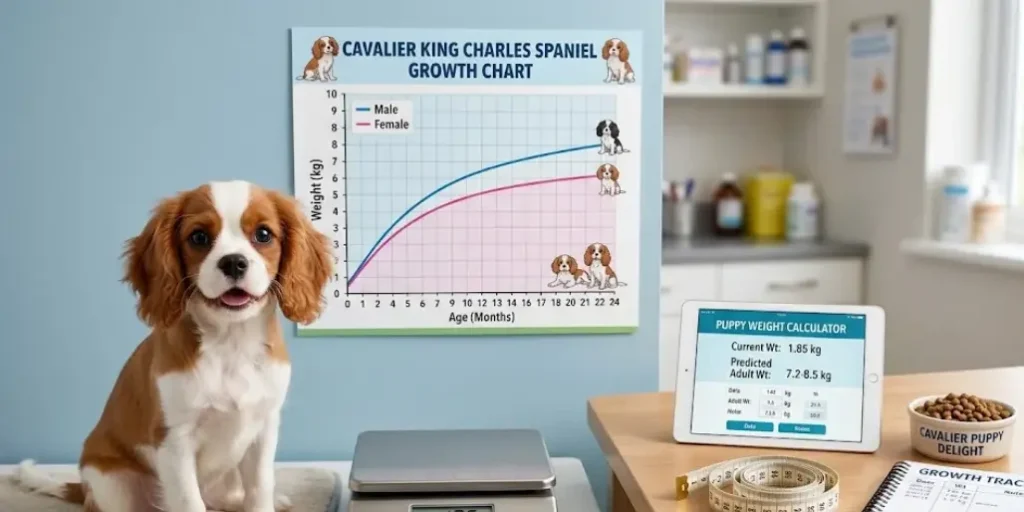
To accurately predict your Cavalier King Charles Spaniel puppy’s final adult size, tracking weight and age using a reliable growth chart is essential, as this toy dog breed typically matures into an adult weight between 13 and 18 pounds by twelve months of life. Understanding the specific growth rate of your Cavalier pup helps:
- ensure proper nutrition
- prevent the animal from becoming overweight during crucial developmental stages
Cavalier King Charles Spaniel Overview
Breed Characteristics
The Cavalier King Charles Spaniel is a beloved canine companion recognized for its gentle expression, silky coat, and affectionate temperament that endears the breed to families worldwide. According to the official breed standard, a healthy adult typically stands between 12 and 13 inches tall, with an ideal adult body weight ranging from 13 to 18 pounds, making them one of the most cherished small breeds.
Common Health Concerns
Responsible owners of a Cavalier puppy must remain vigilant regarding genetic health issues, particularly mitral valve disease and other cardiac conditions that frequently affect growth and longevity in these dogs. Regular consultations with a licensed veterinarian are crucial for monitoring heart health, joint development, and overall physical condition throughout the various stages of the puppy’s growth.
Importance of Growth Tracking
Closely monitoring the growth and development of a young pup ensures that any deviations from a normal growth curve are addressed promptly by a veterinary professional. By comparing your dog against established puppy growth charts during the first few months of age, you can better understand individual dog patterns and provide optimal care from birth weight through adulthood.
Puppy Growth and Development
Monitoring the growth and development of your Cavalier King Charles Spaniel puppy requires careful attention to how fast the pup adds pounds during the first twelve months of life. Each individual Cavalier puppy follows a unique growth curve that is influenced by genetics, nutrition, and overall health, making regular weigh-ins vital for ensuring your young dog achieves a healthy adult size.
Understanding Growth Curves
Every Cavalier King Charles Spaniel puppy follows a specific growth curve that maps out weight and age milestones from birth weight to maturity. By tracking these metrics closely, owners can ensure their developing pup does not gain weight too quickly, which helps prevent the animal from becoming overweight and reduces unnecessary strain on growing joints and developing bones.
Key Developmental Stages
During the early months of age, your Cavalier pup will experience rapid growth spurts followed by steadier periods as it approaches its final adult body weight. Understanding these critical windows allows you to adjust daily nutrition and exercise appropriately, supporting the dog through each distinct phase until the animal finally reaches its mature size.
Factors Influencing Growth
Numerous biological and environmental elements can affect growth in young dogs, ranging from initial litter size and maternal care to overall diet and parasitic health. Consulting with a qualified veterinarian ensures that your puppy meets every established growth standard and remains on track for a long, healthy life free from preventable developmental complications.
Using the Puppy Weight Calculator
Growth & Weight Tool
How big will your puppy get?
Pick a breed to see its typical growth curve, or add your puppy’s current age and weight to check how they’re tracking against the average.
Estimates based on breed-standard adult weight ranges and typical size-class growth patterns. Every puppy is different — check with your vet for individual concerns.
Utilizing a reliable puppy weight calculator provides owners with an easy way to predict future adult weight based on current measurements taken at specific weeks old. For a more detailed breakdown of your dog's developmental milestones, you can reference the helpful Dog Growth Chart & Weight Calculator to track progress effectively throughout the first year.
How to Measure Weight Accurately
Getting a precise measurement of your Cavalier puppy involves using the right tools depending on their age:
- A digital kitchen scale for very young animals
- A standard digital scale for older puppies as they gain weight
Recording these numbers consistently allows you and your veterinarian to evaluate the growth rate accurately and catch any unexpected weight fluctuations early.
Interpreting the Results
Once you input your pet data into a forecasting tool, the resulting projections help you visualize where your dog stands compared to expected averages for the breed. If the numbers indicate that your pet is trending to be slightly overweight or underweight, you can adjust feeding portions accordingly to maintain optimal physical condition.
Comparing with Breed Standards
Evaluating your growing dog against the official breed standard ensures that height growth and overall body weight in dogs remain within healthy, proportionate limits. While individual variations do occur among different sizes within the litter, keeping your companion within the recommended range guarantees a healthier transition into adulthood.
To get started with predicting your dog's final size and tracking milestones with ease, visit DogBreedCalc today for specialized tools designed to help every pet owner.
Managing Cavalier Puppy Weight
Signs of Being Overweight
Monitoring your Cavalier to ensure they do not become overweight is essential for maintaining their long-term health and preventing joint issues. To determine if your puppy is at a healthy weight, you should check for the following physical signs:
- A visible waistline
- Ribs that can be felt easily without excessive fat covering
If your pup starts to gain weight too rapidly, consult your veterinarian to evaluate their diet and overall growth rate.
Feeding Guidelines for Healthy Growth
Providing the correct amount of food during the first twelve months of life supports a steady growth curve without causing the animal to exceed normal parameters. A reputable breeder can offer initial dietary advice, but regular checkups with a licensed veterinarian will ensure your growing Cavalier puppy receives balanced nutrition tailored precisely to its specific developmental stage and activity level.
Exercise Requirements
Balanced physical activity helps every Cavalier puppy build strong muscles and maintain ideal body weight in dogs as they transition toward their final adult size. Engaging your young dog in moderate play sessions prevents boredom and supports healthy height growth, ensuring your beloved companion stays active and agile throughout the crucial formative months.
Conclusion
Final Thoughts on Growth Monitoring
Tracking weight and age milestones using a reliable growth chart guarantees your Cavalier King Charles Spaniel reaches a healthy adult weight between 13 and 18 pounds. Consistent observation of your puppy’s growth allows you to catch any potential health concerns early, ensuring a smooth and successful journey from birth weight into full maturity.
Resources for Cavalier Owners
Utilizing professional veterinary guidance alongside established puppy growth charts provides the best foundation for raising a thriving dog. By staying informed about breed standards and individual dog dietary needs, you can easily support your furry friend through every developmental milestone they experience.
Explore the Dog Growth Chart & Weight Calculator
To accurately predict your pet's future dimensions and monitor their overall development, use the Dog Growth Chart & Weight Calculator today. For comprehensive tools and reliable estimates tailored to your companion, trust DogBreedCalc to help you keep your beloved animal healthy and happy for years to come.
Cavalier King Charles Spaniel Growth Chart & Adult Weight FAQs
How much should an adult Cavalier King Charles Spaniel weigh?
Most adult Cavaliers weigh about 13 to 18 pounds, though healthy bodyweight varies with sex, frame, and individual build. Some may be close to 11 pounds or 20 lbs without that number alone indicating a problem. Use a growth chart as a guide, not a diagnosis, and ask your veterinarian to assess your dog’s body condition score (BCS).
How big will my Cavalier King Charles Spaniel get?
Adult Cavaliers typically stand about 12 to 13 inches tall at the shoulder. A puppy’s current age, weight, parents, and breed information can help estimate adult size, but no calculator offers an accurate prediction for every dog. Even purebred breed dogs vary, and a mixed breed Cavalier may grow to a different size.
How much should a Cavalier puppy weigh at 10 weeks?
At 10 weeks old, many Cavalier puppies weigh around 5 to 7 pounds, but normal growth varies. A puppy weighing 7 pounds may be healthy if they are following a steady growth pattern and have an appropriate BCS. Compare weights over time rather than relying on a single measurement, and discuss any sudden change at a vet visit.
When do Cavalier King Charles Spaniels stop growing?
Most Cavaliers reach close to their adult height by about 10 to 12 months and continue filling out until around 13 months or their first birthday. Individual dogs may continue growing or gaining muscle a little longer. Smaller breeds generally mature earlier than giant breeds, but development differs between dogs and cats and even among puppies from the same litter.
Are male Cavaliers heavier than females?
Males can be slightly taller or heavier than females, but there is substantial overlap between the sexes. A female may weigh more than a male of similar age and still be healthy. Assess body mass and shape alongside the scale rather than treating sex or a single weight, such as 16 pounds, as a strict target.
How can I tell if my Cavalier is at a healthy weight?
With a healthy body condition score, you should be able to feel your dog’s ribs beneath a light layer of fat, see a waist from above, and notice an abdominal tuck from the side. Your veterinarian can explain how to use the BCS scale and determine whether your dog is underweight or overweight. Regular checks support animal welfare and help prevent obesity.
How much should I feed my Cavalier puppy or adult dog?
Food intake depends on age, activity, health, and the calories in the food. Choose food formulated for your dog’s life stage and follow the label as a starting point, adjusting portions according to growth and body condition. Follow appropriate dietary recommendations, measure meals, and avoid feeding extra treats that could lead you to overfeed or underfeed.
Does neutering affect a Cavalier’s growth or weight?
Neutering does not usually change a dog’s eventual frame or determine that they will reach one size, but energy needs may change after the procedure. Monitor weight and body condition, and ask your veterinarian whether to adjust portions. Timing recommendations can depend on your dog’s health and development, so consult with your veterinarian rather than relying on a general schedule.
Can a kennel or breeder predict my Cavalier’s adult weight?
A responsible breeder or kennel can share parent sizes and typical breed information, which may help estimate an adult range, but it cannot guarantee a precise result. Growth charts are also estimates, not a substitute for veterinary care. If your puppy’s growth stalls, accelerates unexpectedly, or raises concerns, schedule a vet visit.