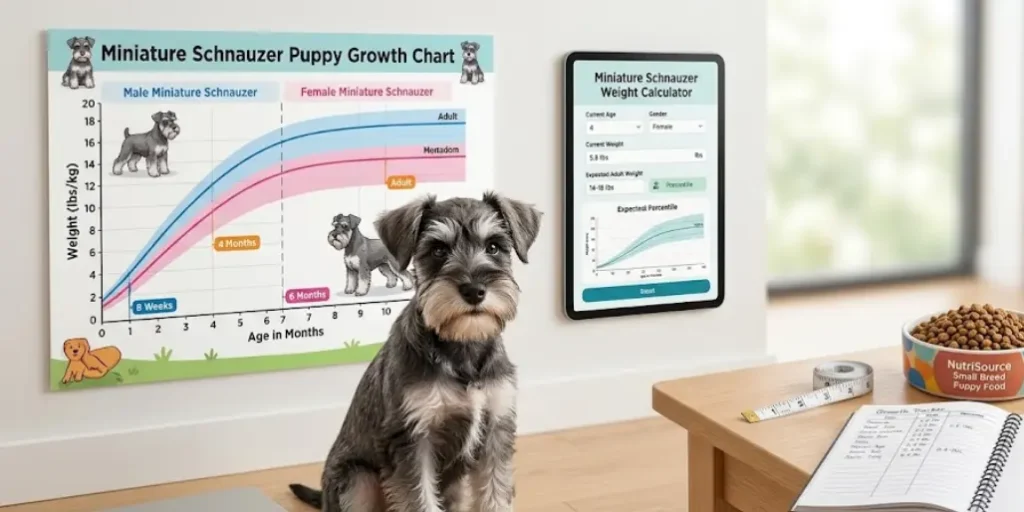
A miniature schnauzer puppy typically reaches an adult weight between eleven and twenty pounds, with females generally being slightly smaller than males. To accurately track your new puppy as they gain weight through various miniature schnauzer growth stages, utilizing a dedicated miniature schnauzer weight chart is essential for monitoring their development from two to twelve months of age.
Understanding Miniature Schnauzer Growth
What is a Miniature Schnauzer?
The miniature schnauzer is a distinctive small breed known for its spirited personality, signature beard, and wiry coat. When welcoming a miniature schnauzer puppy into your home, understanding this specific dog breed helps owners provide proper care, which includes:
- tailored puppy food to support their unique metabolism
- proper nutrition as they transition toward their final adult size
Miniature Schnauzer Growth Stages
During the early miniature schnauzer growth stages, puppies double their weight rapidly before their growth curve eventually flattens out around twelve months of age. By following a detailed puppy growth chart and observing changes in body condition, you can ensure your mini schnauzer reaches their full height and healthy weight without developing unnecessary health conditions related to overfeeding.
Importance of Tracking Puppy Weight
Monitoring puppy weight using a reliable miniature schnauzer weight chart by age allows you to consult your veterinarian if your dog fails to gain weight appropriately or deviates from standard weight ranges. Regularly placing your pet on a scale helps you:
- determine their current weight accurately
- ensure that any adjustments to how you feed your dog align with recommendations from a professional vet
Miniature Schnauzer Weight Chart
Growth & Weight Tool
How big will your puppy get?
Pick a breed to see its typical growth curve, or add your puppy’s current age and weight to check how they’re tracking against the average.
Estimates based on breed-standard adult weight ranges and typical size-class growth patterns. Every puppy is different — check with your vet for individual concerns.
Weight Chart by Age for Miniature Schnauzers
Consulting a reliable schnauzer weight chart by age helps every owner track how many pounds their miniature schnauzers should gain during each specific month. By reviewing this detailed puppy chart, you can easily compare your own puppy growth data against expected weight by age metrics to guarantee your small breed remains within normal weight ranges.
How to Use the Miniature Schnauzer Weight Calculator
Utilizing a specialized puppy weight calculator or online tool allows you to input your pet's current weight to predict their future adult size accurately. If you want a seamless experience tracking these metrics alongside tools like our recommended Dog Growth Chart & Weight Calculator, you can quickly estimate when your dog will reach their full height and targeted goals.
Miniature Schnauzer Weight and Size Expectations
Understanding standard miniature schnauzer size expectations ensures you recognize what constitutes a healthy weight for your developing companion as they mature. Every miniature schnauzer requires consistent monitoring of their body condition to prevent long-term health conditions associated with rapid weight gain during their formative developmental months.
Puppy Growth and Development
Puppy Growth Patterns
Tracking standard puppy growth patterns ensures your miniature schnauzer puppy develops strong bones and muscles without putting excessive stress on their growing joints. Observing how miniature schnauzers transform from a tiny newborn into an active adolescent helps you adjust daily portions and select appropriate puppy food for optimal health.
When Do Miniature Schnauzers Stop Growing?
Most owners often wonder when miniature schnauzers stop growing, especially as their energetic companion approaches approximately 12 months of age. While height is usually established earlier, filling out to reach final adult weight often continues until your miniature schnauzer is fully mature at around twelve months of age.
Factors Affecting Miniature Schnauzer Growth
Several vital elements influence miniature schnauzer growth, ranging from genetic background and daily activity levels to proper nutrition and potential hormonal changes from spaying or neutering. Specifically, your dog's development can be impacted by:
- genetic background and daily activity levels
- proper nutrition and potential hormonal changes from spaying or neutering
Always consult your trusted veterinarian if you notice unexpected deviations in miniature schnauzer weight, ensuring your precious pet receives professional guidance throughout every stage of life.
Consulting with Your Vet
When to Weigh Your Miniature Schnauzer
Every growing miniature schnauzer benefits greatly from routine physical assessments, making it vital to regularly weigh your new puppy to monitor their overall development closely. By scheduling consistent appointments with your trusted vet, you can effectively track puppy weight changes, ensure your miniature schnauzers maintain an ideal body condition, and prevent unexpected health conditions as they approach twelve months of age.
Signs of Healthy Growth in Puppies
Healthy miniature schnauzer puppies exhibit steady increases in puppy weight while maintaining vibrant energy levels and a well-proportioned adult size. Observing these positive signs of development ensures your small breed is progressing nicely toward their adult weight without encountering nutritional imbalances or unexpected growth complications during those crucial developmental months.
Using a Growth Chart for Regular Check-ups
Incorporating a detailed growth chart during routine veterinarian visits helps you compare your miniature schnauzer's current weight against established weight ranges and expected weight by age milestones. This proactive approach allows you to adjust how you feed your dog and address any concerns regarding miniature schnauzer weight immediately with professional medical guidance.
Conclusion
Final Thoughts on Miniature Schnauzer Growth
Monitoring your miniature schnauzer from puppyhood to adulthood requires patience, proper nutrition, and careful observation of their changing body condition and overall physical development. By understanding typical miniature schnauzer growth milestones and keeping track of their weight gain, you ensure your beloved canine companion enjoys a long, healthy, and happy life by your side.
Utilizing the Dog Growth Chart & Weight Calculator
Accurately predicting your miniature schnauzer's adult size is remarkably simple when you use a reliable dog growth chart and weight calculator to evaluate your puppy's progress. These helpful online tools empower dedicated owners to track specific weight ranges and anticipate when their energetic young dog will finally reach full maturity.
About DogBreedCalc
DogBreedCalc is dedicated to providing pet owners with accurate tracking tools, expert insights, and comprehensive guides to support the lifelong health and wellness of every cherished canine companion.
Frequently Asked Questions
When does a Miniature Schnauzer stop growing?
Most Miniature Schnauzers reach their adult height by about 12 months, though some may continue filling out until 18 months.
How much should a Miniature Schnauzer weigh?
Adult Miniature Schnauzers commonly weigh about 11–20 pounds, but healthy weight depends on their frame, sex, and overall condition. Ask your veterinarian what is appropriate for your dog.
How accurate is a Miniature Schnauzer growth chart?
A growth chart provides an estimate, not a diagnosis or guarantee of adult size. Individual puppies grow at different rates, so use the chart alongside regular veterinary checkups.
How do I use a Miniature Schnauzer weight calculator?
Enter your puppy’s age and current weight to get an estimated growth range. Results are approximate and should not replace advice from a veterinarian.
What should I do if my puppy is gaining weight too quickly or too slowly?
Check that you are measuring portions accurately and feeding a complete puppy diet. Contact your veterinarian if your puppy’s growth changes unexpectedly or you have concerns about their weight.