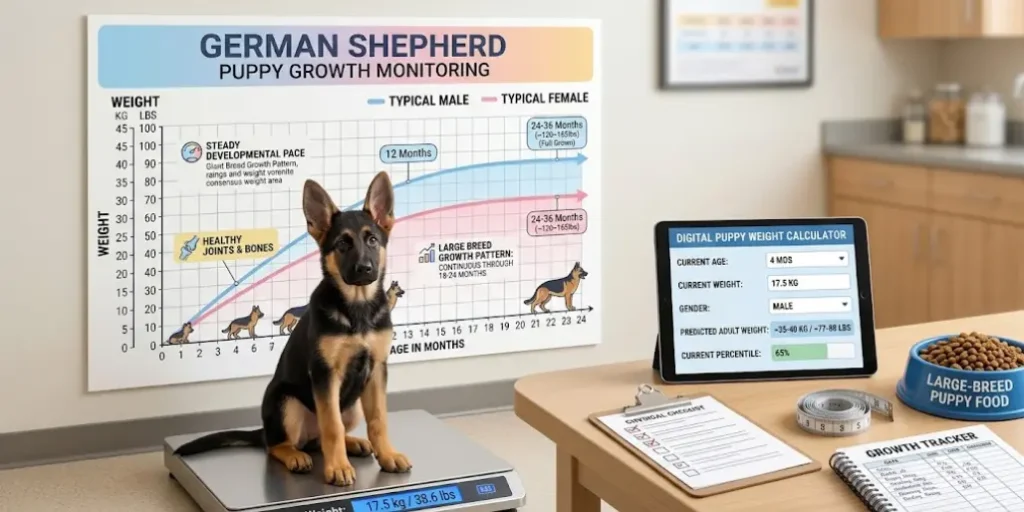
If you want to know how big your dog will get, a German Shepherd puppy weight calculator can instantly estimate your pet’s final adult weight based on their current weight and weeks of age. Raising German Shepherd puppies means watching a rapid puppy growth phase unfold right before your eyes. By keeping an eye on the German Shepherd weight and comparing it to a standard German Shepherd growth chart, you can ensure your dog stays on track for a healthy weight as a large-breed puppy member.
Understanding German Shepherd Puppy Growth
Importance of Tracking Puppy Weight
To monitor your German Shepherd puppy weight effectively, you really need to track your German Shepherd puppy’s progress using a reliable weight chart and weekly weigh-ins. Maintaining a steady growth rate is super important for every German Shepherd dog so they avoid joint issues. You can easily check if your female German Shepherd or male German Shepherd is hitting the right milestones by looking at a detailed German Shepherd puppy weight chart during each vital growth stage.
Stages of Growth in German Shepherds
Every single German Shepherd goes through massive physical transformations during their puppyhood, making a comprehensive German Shepherd growth curve an absolute lifesaver for owners. As your German Shepherd breed puppy moves through early weeks of age into adolescence, monitoring weight and height helps you spot any deviations from the average weight. This breed-specific growth pattern ensures your German Shepherd puppy’s growth remains balanced, supporting proper bone development and overall wellness throughout the entire puppy growth chart milestones.
When Do German Shepherds Stop Growing?
Many owners wonder when German Shepherds stop growing, especially since German Shepherd growth continues well past the initial twelve-month mark. While height often finalizes around 12 months, muscle mass and bone density continue developing until 18 months or even 24 months for some dogs. Because growth plates take time to close completely, watching your dog weight and using a specialized dog weight calculator helps you understand their final weight range and overall structural maturity.
Using the German Shepherd Puppy Weight Calculator
Growth & Weight Tool
How big will your puppy get?
Pick a breed to see its typical growth curve, or add your puppy’s current age and weight to check how they’re tracking against the average.
Estimates based on breed-standard adult weight ranges and typical size-class growth patterns. Every puppy is different — check with your vet for individual concerns.
When you want to figure out what your dog's future size will look like, using a specialized weight calculator makes the whole process super simple and stress-free. To get an instant estimate of their final adult weight and a clear picture of their projected growth trajectory in just a few seconds, all you have to do is provide a few key details:
- Your puppy's current weight
- Their exact weeks of age
This handy tool takes the guesswork out of raising your furry friend by processing the numbers against established data for the German Shepherd breed, whether you are caring for a lively male or a sweet female.
How the Weight Calculator Works
The underlying mechanism of a puppy weight calculator relies on mathematical algorithms that analyze standard developmental milestones and breed-specific growth curves. By evaluating your German Shepherd puppy's current weight against typical growth patterns for large-breed puppies, the system projects how much more weight gain to expect over the coming months. This tool looks closely at your puppy weight at a specific growth stage to forecast the eventual German Shepherd weight when they reach maturity. It essentially maps out the expected trajectory from those early weeks of age all the way through the 12 months and 18 months milestones, helping you anticipate their nutritional and exercise needs.
Interpreting the Results
Once the puppy weight calculator generates a number, you might wonder what those figures actually mean for your dog's daily care and long-term health. The resulting weight range provides a reliable forecast of your German Shepherd puppy's growth, ensuring you know whether your pet is maintaining a healthy weight. If the projected adult weight seems a bit higher or lower than expected, remember that every German Shepherd dog has a slightly different genetic background and growth rate. Keeping an eye on these projections helps you adjust feeding portions and discuss any unusual weight and growth patterns with your veterinarian during routine checkups.
Comparing with the Growth Chart
Checking your calculations against a standard German Shepherd growth chart is the best way to double-check your dog's physical development and overall health status. You can also utilize a helpful Dog Growth Chart & Weight Calculator to visualize these milestones side by side, making it much easier to spot any deviations early on. By comparing your puppy growth chart data with actual scale readings week after week, you ensure steady growth without putting unnecessary stress on developing growth plates. This proactive approach guarantees your companion transitions smoothly through every phase until they reach 24 months and beyond.
DogBreedCalc
German Shepherd Puppy Weight Chart
When you want to map out a clear German Shepherd puppy weight chart for your growing companion, knowing the average weight for each week of age is super helpful. Every single German Shepherd puppy goes through a unique growth stage where tracking the German Shepherd puppy weight becomes a daily adventure. You will notice rapid weight gain during the first several months, especially as large-breed puppies develop their bone structure and muscle mass. By comparing your puppy's current weight against standard benchmarks, you ensure your German Shepherd stays on track for a long, healthy life without any unexpected surprises.
Weight Chart by Age
Following a detailed chart by age helps you monitor how your German Shepherd is progressing from tiny weeks of age all the way through 12 months and 18 months. During this timeline, your German Shepherd puppy experiences massive shifts in weight and height, requiring consistent monitoring of their puppy growth chart milestones. Whether you are raising a spirited male German Shepherd or a clever female German Shepherd, watching their GSD growth week by week ensures they avoid excessive weight gain that could harm their sensitive growth plates. Keeping a close eye on your dog weight guarantees optimal development.
Typical Weight Ranges for German Shepherd Puppies
Understanding the typical weight range for a growing German Shepherd dog gives you peace of mind while navigating the complexities of puppyhood and canine nutrition. A reliable puppy weight calculator or a standard German Shepherd growth chart can show you exactly what adult weight to anticipate once your pet reaches 24 months. Because every German Shepherd breed has a distinct growth rate, your puppy's weight and growth might fluctuate slightly depending on genetics, diet, and daily exercise routines. Maintaining a healthy weight throughout these developmental years is the ultimate goal for every dedicated pet owner.
Factors Influencing Puppy Weight
Several key elements can significantly impact the overall German Shepherd growth and dictate whether your dog reaches the higher or lower end of their expected adult weight. Nutrition plays a massive role in supporting steady growth, and combining proper food portions with data from a trusted puppy weight calculator keeps your German Shepherd puppy on the right path. Genetics, activity levels, and overall health during each crucial growth stage also shape how fast your German Shepherd puppy's growth unfolds. By understanding these variables, you can better support your furry friend from puppyhood well into their adult years.
Monitoring Your Puppy’s Growth
Keeping a close eye on your German Shepherd puppy requires dedication, especially since monitoring the overall German Shepherd puppy's growth helps prevent joint issues and nutritional imbalances. As your German Shepherd transitions through each vital growth stage, staying observant ensures your male German Shepherd or female German Shepherd develops balanced proportions. Regular tracking of weight and height allows you to catch any sudden changes in the GSD growth pattern early on, giving your vet a clear history of how your German Shepherd dog is maturing day by day.
Regular Weight Checks
Stepping on the scale regularly is a fantastic habit when you want to measure current weight against a reliable German Shepherd growth chart to confirm steady growth. Every single German Shepherd puppy needs consistent weigh-ins during those early weeks of age to ensure proper weight gain matches what a standard puppy weight calculator predicts. If you notice your German Shepherd breed is falling behind or rushing ahead of the typical average weight, these frequent check-ins let you adjust feeding routines before any major skeletal stress happens to delicate growth plates.
Signs of Healthy Growth
Spotting a healthy weight in your growing companion involves looking for a visible waistline, well-defined muscle tone, and steady energy levels during daily play sessions. When large-breed puppies follow an optimal German Shepherd growth curve, their overall bone density and muscle mass develop harmoniously without placing too much pressure on the skeleton. Comparing your pet's progress against a detailed weight chart ensures they remain safely inside the expected weight range as they approach the 12 months, 18 months, and 24 months developmental milestones.
When to Consult a Veterinarian
Sometimes your puppy weight and overall physical development might present unexpected surprises that require professional medical advice from a qualified veterinarian. If you observe drastic shifts in weight and growth, or if your puppy seems lethargic while using a dog weight calculator to estimate future adult weight, you should schedule a checkup immediately. Professional guidance helps ensure your German Shepherd puppy weight stays on the right path, avoiding any long-term complications related to abnormal growth rates or improper nutritional balance during formative months.
Conclusion
Recap of Key Points
Throughout this guide, we explored how vital it is to monitor your German Shepherd puppy through every single growth stage using a reliable puppy weight calculator. By understanding the typical German Shepherd weight, tracking weekly changes in weeks of age, and consulting a standard German Shepherd puppy weight chart, you can easily support your pet. Keeping your German Shepherd dog at a healthy weight prevents future joint problems and guarantees that your puppy reaches their final adult weight safely and comfortably under your watchful eye.
Utilizing the Dog Growth Chart & Weight Calculator
To make tracking effortless, you can use our recommended tool to visualize milestones and project future adult weight with absolute confidence. This clever utility processes your dog weight and current weeks of age to map out expected growth curves instantly. By combining these digital projections with a physical chart by age, you remove all the guesswork from raising your loyal companion and ensure they thrive through every single milestone from puppyhood to maturity.
Final Thoughts on German Shepherd Growth
Raising a majestic German Shepherd is an incredibly rewarding journey that requires patience, proper nutrition, and consistent monitoring of your puppy's physical development. By staying informed about average weight expectations and utilizing helpful tracking resources, you set your furry friend up for a long, happy, and active life. Enjoy every moment of watching your German Shepherd puppies grow into strong, healthy adult dogs! DogBreedCalc
FAQ
Q: How does a german shepherd growth chart help me understand my puppy's development?
A: A german shepherd growth chart gives you a clear roadmap of what to expect during every growth stage. By comparing your pup to breed-specific growth expectations, you can easily track weight and make sure they are developing at a healthy pace without packing on too many pounds too quickly.
Q: What is the most accurate way to check my german shepherd weight at home?
A: To track weight accurately, the best method is to weigh yourself on a bathroom scale first, then weigh yourself while holding your puppy and find the difference. Doing this regularly helps you monitor their height and weight progress against standard average weight ranges for the breed.
Q: When will my pup reach their final adult weight?
A: While most young german shepherds look fully grown by one year old, reaching their actual adult weight and filling out completely usually takes much longer. Many dogs continue to gain muscle mass and substance until they hit 2 years of age or even up to 3 years of age.
Q: Why are sudden growth spurts so common during the first year?
A: Puppies experience massive spikes in their individual growth pattern during their first several months of life. These rapid phases mean your dog weight can change dramatically in just a few weeks, which is completely normal for large and active breeds.
Q: Can I use an adult weight prediction tool to know how big my dog will get?
A: An adult weight prediction formula can give you a pretty good estimate, but it is never an exact science. Things like genetics, nutrition, and whether you have working-line or show-line german shepherds will heavily influence their final size.
Q: When do the growth plates close in this breed?
A: The growth plates close relatively late compared to smaller dogs, usually around 18 months of age. Protecting your puppy from high-impact exercise before this milestone is crucial for their long-term joint health and proper skeletal development.
Q: Why might my puppy fall outside the average german shepherd weight guidelines?
A: Every puppy has a unique individual growth rate, so slight variations are totally normal. Factors like gender, genetics, diet, and activity level all play a huge role in determining if your dog stays within the typical breed weight limits.