To successfully train a Cavalier King Charles Spaniel puppy, you need to use positive reinforcement and start obedience work the moment you bring your puppy home. This comprehensive guide to training will help you address common challenges like separation anxiety, ensuring your cute companion grows into a well-behaved adult dog.
Understanding the Cavalier King Charles Spaniel
Before you begin to train your Cavalier King Charles, it really helps to understand what makes this charming dog breed so uniquely affectionate and eager to please. As one of the smallest spaniels, they share ancestry with the English Toy Spaniel, making them a fantastic choice as a good family dog for households wanting a gentle companion.
Characteristics of Cavalier King Charles Spaniel Puppies
Every adorable Cavalier King Charles Spaniel puppy brings immense joy into a puppy home with their sweet expression and silky coat. When you take your puppy outside or introduce your puppy to new environments, you will notice their naturally adaptable nature, which makes learning the basics and mastering puppy training an absolute breeze.
Common Behavioral Traits
Today’s dog owners often find that this particular dog or puppy type thrives on human companionship above all else. Whether you decide on a bouncy puppy or an adult Cavalier, these dogs rarely show any signs of dog aggression, instead preferring to cuddle and happily encourage your dog interactions during playtime.
Addressing Separation Anxiety in Cavaliers
Because they love people so much, a Cavalier puppy can sometimes develop severe separation anxiety when left alone indoors for too long. To prevent this, you should:
- incorporate crate training early on
- use helpful training tips
- practice gentle desensitization so your beloved pet feels totally safe and secure by themselves
Puppy Selection and Preparation
When you dive into puppy selection, finding a reputable breeder who cares deeply about the health of every Cavalier King Charles Spaniel puppy is super important. You want to pick an energetic Cavalier puppy that looks bright, playful, and curious about the world around it, setting the stage for smooth dog training later.
Choosing the Right Cavalier Puppy
Choosing the right Cavalier King Charles Spaniel involves watching how the litter interacts and picking a friendly dog breed that matches your lifestyle. Whether you adopt a young puppy or an adult Cavalier, make sure to observe their temperament closely so you can successfully train your Cavalier King Charles without unnecessary stress.
Preparing Your Home for a New Puppy
Getting your house ready for your new arrival involves taking care of a couple of important areas:
- Puppy-proofing all your rooms so your curious puppy stays safe indoors while exploring.
- Setting up a cozy puppy home with secure barriers and comfortable bedding that helps prevent accidents and makes the transition much easier when you finally take your puppy to their new sleeping spot.
Essential Supplies for Your Cavalier
Stocking up on essential gear is vital before your puppy arrives. Having these items ready allows you to focus entirely on applying great training tips and starting proper crate training right from day one with your adorable new furry family member. Make sure to get:
- Durable leashes
- Food bowls
- Comfy crates
Effective Training Techniques
Using effective methods is the absolute best way to shape good manners in your growing companion. By combining fun games with consistent rules, you can easily teach your dog new skills while strengthening your bond during every single daily practice session you share.
Positive Training Methods for Cavaliers
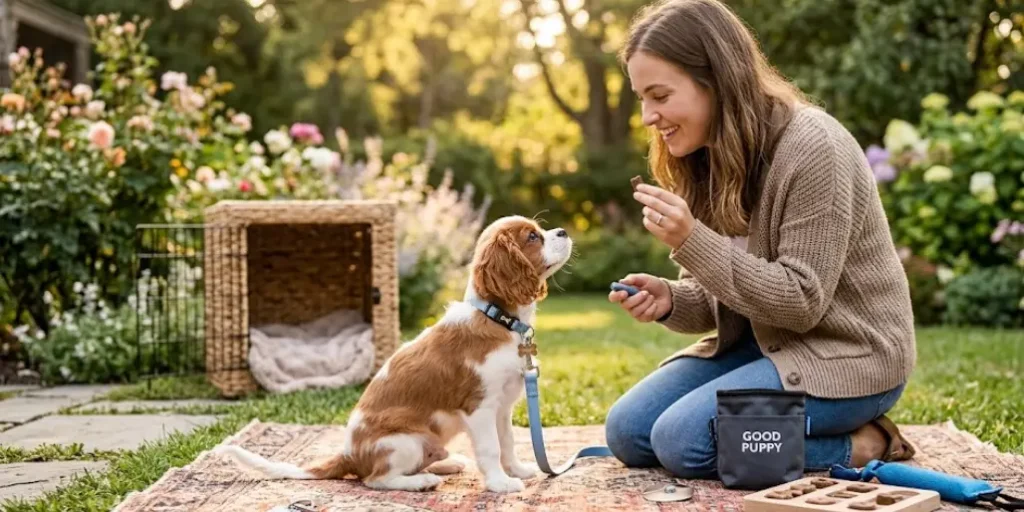
Embracing positive training relies heavily on using high-value treats and lots of praise instead of harsh corrections. This kindhearted approach ensures your sensitive pet feels confident and secure, making it much simpler to train a Cavalier King Charles Spaniel without ever damaging their trusting and affectionate personality.
Basic Commands Every Cavalier Should Learn
Teaching fundamental cues like sit, stay, and come is essential for keeping your pet safe in various situations. Consistent practice helps you train your dog to respond reliably, and you can even explore methods inspired by resources like Non-Sporting & Toy Breed Training to expand your skills.
Potty Training Your Cavalier King Charles Spaniel
Mastering potty training requires patience, a strict schedule, and plenty of rewards whenever your puppy does their business outside. Sticking to a reliable routine prevents indoor messes and ensures your lovely companion quickly learns where they are actually supposed to go.
Brought to you by DogBreedCalc.
Continuing Education and Socialization
Socializing Your Cavalier King Charles Spaniel
Socializing your Cavalier King Charles Spaniel is a crucial step to ensure your puppy grows into a well-adjusted adult dog. Exposing your puppy to new environments, sounds, and friendly dog breed companions helps prevent fear. Always use positive reinforcement and handy training tips during these adventures to build confidence.
Advanced Training Techniques
Once the basics are mastered, you can advance your puppy training by incorporating fun hand signals and challenging games. When you want to teach your dog new tricks, consistency is key. Make sure your puppy training sessions remain engaging so your clever Cavalier puppy stays focused and excited.
Resources for Ongoing Puppy Training
Finding quality educational material can significantly improve your Cavalier King Charles Spaniel training journey. Whether you prefer watching an informative training video or reading books featuring tips from Bark Busters, utilizing these external tools will help you effectively train your dog throughout every life stage.
Conclusion
Final Tips for Training Your Cavalier King Charles Spaniel
Consistently applying positive reinforcement is the absolute best way to train a Cavalier King Charles Spaniel successfully. Remember to stay patient, keep sessions short, and celebrate small victories. Whether dealing with an energetic puppy or an adult Cavalier, dedication ensures a harmonious household.
How to Access Additional Resources
If you want to deepen your knowledge, you can explore various online forums and specialized guides dedicated to toy breeds. Continuing to educate yourself guarantees you will always know the best methods to train your Cavalier and maintain a wonderful relationship with your furry best friend.
About DogBreedCalc
We hope this comprehensive guide has given you all the confidence needed to raise a happy pet. For more calculators, tools, and breed-specific insights, be sure to visit DogBreedCalc to support your ongoing journey as a dedicated and loving pet parent today.
FAQ
Q: Why is it so important to start training a Cavalier King Charles Spaniel puppy early?
A: Honestly, the moment your puppy is home is the best time to start training. These little guys learn quickly and they genuinely want to please you, so you’ve got a golden window where good habits stick fast. Wait too long and you’ll be undoing accidental bad habits instead of building good ones from scratch. Plus puppies are fun to train at this stage because everything is new and exciting to them!
Q: What’s the best way to train a Cavalier King Charles Spaniel for bathroom breaks?
A: Consistency is everything here. Take your pup out frequently, especially after meals, naps, and playtime, and praise them like crazy when they go in the right spot. Never scold them for accidents inside—this is just natural dog behaviour while they’re learning, and punishment only confuses them and slows down progress. Patience plus positive reinforcement equals a reliably housetrained compact little dog in no time.
Q: How do I train a Cavalier without overwhelming such a small breed?
A: Cavaliers are a compact little dog compared to larger spaniel breeds, but don’t let their size fool you into thinking training should be different. Keep sessions short and sweet (think 5-10 minutes), use lots of praise and treats, and make it feel like a game rather than a chore. Their short legs and long ears might make them look delicate, but they can handle regular training just fine when it’s done gently and positively.
Q: Is trick training a good idea for Cavalier King Charles Spaniel puppies?
A: Absolutely, trick training is fantastic for these dogs! Cavaliers thrive on mental stimulation and bonding time with their humans, so teaching tricks like “sit,” “shake,” or “spin” is a great family dog activity that strengthens your relationship. It also builds confidence and focus, which makes other training (like leash manners) easier down the road.
Q: Should I use a long line when training my Cavalier outdoors?
A: Yes, definitely consider it. A long line gives your puppy freedom to explore and practice recall without the risk of them bolting off after a squirrel or another dog. It’s especially useful in open spaces before you’re 100% confident in their off-leash reliability. Think of it as training wheels for outdoor freedom.
Q: What if my dog is adopted as an adult—can I still train a Cavalier King Charles the same way?
A: Totally! Whether your dog is adopted as a puppy or comes to you as an adult, the same positive reinforcement principles apply. Adult dogs might take a little longer to unlearn previous habits, but Cavaliers are eager learners at any age. Just be extra patient and consistent, and you’ll see progress.
Q: Are there specific games that encourage good behavior in Cavalier puppies?
A: Definitely! Games that encourage your dog to think and engage—like hide-and-seek with treats, puzzle toys, or gentle tug-of-war with rules—are brilliant for channeling their energy productively. These games also tap into their natural dog behaviour of sniffing, chasing, and problem-solving, which makes training feel less like work and more like fun for both of you.
Q: Why do people misunderstand Cavalier King Charles Spaniels in the modern-day dog world?
A: There are a lot of misunderstood dog activities floating around out there, and Cavaliers often get stereotyped as “just lap dogs” because of their long noble history as royal companions. But these dogs actually need mental and physical stimulation just like any other breed. Skipping proper training because they’re small or cuddly is a mistake—they’re smart, trainable dogs who deserve the same structure as any other pup in the dog park crowd.
Q: Should I consider professional help, like Bark Busters training, for my Cavalier puppy?
A: If you’re struggling or just want expert guidance, professional trainers work wonders. Services like Bark Busters training focus on understanding how to “speak dog,” which helps you communicate more effectively with your pup. A good foundation training course can set you and your Cavalier up for long-term success, especially if you’re a first-time dog owner.
Q: How long does it typically take to train a Cavalier to follow basic commands?
A: Most Cavalier King Charles Spaniel dogs pick up basic commands within a few weeks of consistent practice, thanks to their eagerness to please and sharp little brains. Of course, every dog is different, so don’t stress if yours takes a bit longer. The key is staying consistent, patient, and positive—rushing the process usually backfires and makes training take even longer.