Labradoodle puppy training tips start with understanding that mastering Labradoodle training requires patience, consistency, and early socialization for your new puppy. Because this popular dog breed combines the high intelligence of a Poodle with the loyal energy of a Labrador, successful dog training means keeping your Labradoodle puppies mentally and physically engaged every single day from the moment of bringing them home.
Understanding the Labradoodle Breed
To successfully train a Labradoodle, you really need to appreciate what makes this specific dog breed so uniquely wonderful for families and active dog owners. These clever dogs are famous for being eager to please, which makes starting any structured training program or obedience training routine an absolute joy when you use the right positive reinforcement methods consistently.
Temperament of Labradoodles
The wonderful temperament of these fluffy companions is naturally playful, incredibly friendly, and deeply affectionate towards everyone they meet during daily walks or adventures. Because they possess such an open and joyful personality, proper socialization and early puppy training sessions help ensure your growing dog develops into a well-mannered adult dog without unwanted jumping or excessive barking.
Characteristics of Labradoodle Puppies
Energetic Labradoodle puppies are bursting with curiosity, boundless stamina, and a coat that often attracts people looking for a hypoallergenic guide or family pet. Managing this high level of physical activity and providing plenty of mental stimulation through playing fetch will prevent boredom and keep your clever Labradoodle dog focused during every learning activity.
Why Choose a Labradoodle?
Choosing this remarkable mix means gaining a fiercely loyal companion that is generally very easy to train compared to other more stubborn dog breeds. Many devoted Labradoodle owners fall completely in love with how quickly these smart dogs pick up new commands, making them an ideal choice for anyone embarking on their very first canine education journey.
Puppy Training Essentials
When you start puppy training essentials, incorporating vital Labradoodle training tips makes teaching your Labradoodle a breeze. Every new puppy loves positive reinforcement during short, fun training sessions, helping your Labradoodle puppies master basic obedience quickly while keeping their high intelligence fully engaged throughout the day.
Basic Training Tips for Labradoodles
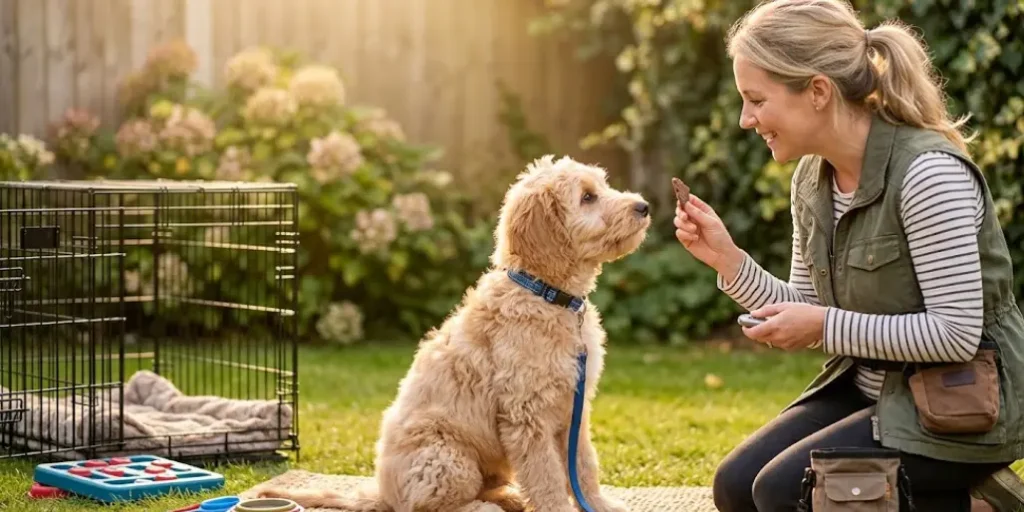
Applying smart training for your Labradoodle strategies ensures your Labradoodles grasp basic commands rapidly. Because this wonderful dog breed is so eager to please, you can easily teach your Labradoodle essential house rules using treats and praise, making every obedience training session an enjoyable bonding experience for both of you.
Crate Training Your Labradoodle
Successful crate training relies heavily on making the crate a safe, cozy den for your Labradoodle dog. Labradoodle owners often find that placing familiar toys inside helps their Labradoodle puppies settle down faster at night, ensuring your new puppy feels secure while adjusting to their wonderful forever home environment.
Socialization Techniques
Proper socialization helps your growing Labradoodle greet everyone with calm confidence rather than overwhelming excitement. Exposing your clever Labradoodle puppies to different sounds, friendly strangers, and other pets during daily walks prevents fearfulness, ensuring they mature into exceptionally well-adjusted and polite adult dog companions.
Advanced Labradoodle Training Techniques
Stepping up to advanced Labradoodle training requires a structured training program that challenges your dog mentally and physically. Combining regular physical activity with engaging games like playing fetch helps burn off that famous Labrador energy, keeping your clever Labradoodle focused and happy during every single learning milestone.
Training Your Labradoodle in Group Classes
Enrolling in local group classes provides fantastic distractions that test how well you can train a Labradoodle around other pets and people. These interactive sessions improve focus, offering brilliant socialization opportunities while teaching your energetic Labradoodle to maintain good manners in bustling public environments.
Leash Manners for Labradoodles
Mastering polite leash manners stops your enthusiastic Labradoodle from pulling during daily neighborhood walks and adventures. Consistent guidance and patience transform these lively walks into relaxing outings, ensuring your friendly Labradoodle dog stays safely by your side without constantly straining against the collar or harness.
Creating an Effective Training Program
Building a consistent training program is the ultimate secret weapon for every dedicated Labradoodle owner striving for long-term behavioral success. If you want even more structured advice for your furry friend, check out our helpful Mixed & Designer Breed Training resource, and remember that DogBreedCalc is here to support your wonderful journey.
Common Challenges in Labradoodle Training
Every Labradoodle owner eventually faces a few hurdles because raising these clever pups is not always a walk in the park. Even though they are remarkably easy to train, that high intelligence sometimes means your Labradoodle puppy gets bored quickly and invents their own mischief if you skip daily physical activity and proper mental stimulation.
Addressing Behavioral Issues
When bad habits start creeping in, tackling them early using a solid training approach saves you massive headaches down the road. If your Labradoodle starts to bark excessively or tries to jump on visitors, a professional dog trainer will always recommend redirection, positive reinforcement, and consistent boundaries to help your adult dog maintain lovely manners.
Overcoming Training Obstacles
Sometimes stubbornness pops up during training sessions, testing the patience of even the most dedicated dog owners who want to teach their Labradoodle new skills. Keeping things fun, breaking routines down into bite-sized pieces, and sticking to a reliable training program will help you blast through any frustrating plateau your Labradoodle dog encounters.
Tips for Easy Training
The secret weapon for smooth progress is keeping your Labradoodle training tips simple, upbeat, and rewarding for the energetic Labradoodles you adore. Regular short practices combined with playing fetch burn off that leftover Labrador energy, ensuring your Labradoodle puppies stay focused, happy, and fully receptive to every single lesson you share.
Conclusion
Final Thoughts on Labradoodle Training
Mastering Labradoodle training is an incredible journey that deepens the unbreakable bond between you and your fluffy best friend from the very first day of bringing them home. By leaning into their natural eagerness to please and maintaining consistent habits, your Labradoodle will blossom into a polite, well-adjusted companion you can take absolutely anywhere.
Resources for Further Learning
Continuing your education as a pet parent ensures you always stay one step ahead of any quirky behavior your growing Labradoodle might decide to test out. Keep reading helpful articles, consult trusted experts when needed, and always remember to enjoy every goofy, wonderful moment of your canine parenting adventure.
Explore Mixed & Designer Breed Training
If you are looking for even more ways to level up your skills, check out our guide on Mixed & Designer Breed Training to refine your methods further. Whether you are dealing with a bouncy new puppy or brushing up on advanced commands, DogBreedCalc is proud to support you every step of the way.
FAQ
Q: Are labradoodles an easy to train dog breed?
A: Yeah, totally! Labradoodles are known for being one of the easier breeds to work with when it comes to dog training. They’re super smart, eager to please, and inherit great traits from both breeds – labrador retrievers and poodles. Since poodles are crazy intelligent and labs are naturally food-motivated and people-pleasing, you get a pup who actually wants to learn. That said, “easy to train” doesn’t mean “no training needed” – you still gotta put in consistent work, especially in those early puppy months.
Q: What’s the best labradoodle training tips for a new puppy?
A: Start the moment you’re bringing home your new pup! Don’t wait around. The biggest tip is consistency – same commands, same routine, same rewards every time. Also, keep sessions short (like 5-10 minutes) since puppies have tiny attention spans. Positive reinforcement with treats and praise works way better than any punishment-based method. And don’t forget to socialise your labradoodle early with different people and other dogs – this makes a huge difference in how calm and confident they turn out as adults.
Q: Why do labradoodles make such a good family dog?
A: Honestly, it’s in their blood. This breed was originally bred to combine the non-shedding, hypoallergenic coat of poodles with the friendly, gentle temperament of labs. The result? A pup with amazing sociability – they genuinely love being around people and other dogs. They’re patient with kids, playful, and just want to be part of the family action. Add in the fact they’re generally pretty calmer than some other high-energy breeds once past the puppy stage, and you’ve got a solid family companion.
Q: Can labradoodles work as a guide dog?
A: Yes, absolutely! Labradoodles are actually used as guide dogs and assistance dogs in many countries. Their combo of intelligence, trainability, and that poodle-like non-shedding coat (great for folks with allergies) makes them perfect candidates. Plus their calm, focused nature when properly trained means they handle the responsibility well. If you’re following a good training guide, you’ll notice the same foundational skills used for service work apply to basic home training too.
Q: What should my dog training guide include for loose leash walking?
A: Loose leash walking is honestly one of the trickier skills, even for a smart breed like this. Your training guide should focus on stopping every time the leash gets tight, rewarding your dog when they walk next to you, and being patient – this takes weeks, not days. Labradoodles have energy to burn since they were bred to retrieve, so tire them out mentally and physically before leash training sessions for better focus.
Q: Do labradoodles need a lot of exercise given their history?
A: Yep, for sure. Remember, labs were originally used for hunting ducks and retrieving game, so that instinct and energy is still there. Poodles were also historically working dogs. This means your labradoodle needs both physical and mentally stimulating activities – long walks, fetch, puzzle toys, training games. A bored labradoodle with pent-up energy is way harder to train than one who’s had a good run around the yard first.
Q: When should I start socialisation and does vaccination matter?
A: Great question! You want to socialise your puppy as early as possible, but you also need to be smart about vaccination schedules. Talk to your vet about when it’s safe to start introducing your pup to public spaces and other dogs. Many vets suggest controlled socialisation (like puppy classes or visiting vaccinated friends’ dogs) even before the full vaccination course is done, since the socialisation window closes fast – usually by 16 weeks.
Q: Is this powerful breed hard to control as they get bigger?
A: Labradoodles can grow into a decently powerful breed, especially the standard-sized ones, so early training really matters before they’re too strong to manage easily. The good news is their eagerness to please makes basic obedience training go smoothly if you start young. Focus on commands like sit, stay, and loose leash walking while they’re still small enough that pulling isn’t an issue.
Q: What traits from both breeds make labradoodle training unique?
A: It’s a fun mix! From the poodle side, you get high intelligence, quick learning, and sometimes a bit of sensitivity (they don’t respond well to harsh corrections). From the lab side, you get that food-driven motivation, friendliness, and retrieving instinct. Good dog training for labradoodles usually blends positive reinforcement with engaging, varied activities since these traits from both breeds mean they get bored with repetitive drills but thrive with mental challenges.