Bringing a Bernese Mountain Dog puppy into your home is an exciting journey, and with their charming personalities, you’re in for a treat. This guide will walk you through the essential training tips and techniques to help your Bernese Mountain Dog puppy grow into a well-behaved and happy companion.
Are Bernese Mountain Dogs easy to train?
Bernese Mountain Dogs are generally considered easy to train, primarily because of their eager-to-please temperament. This inherent desire to make their owners happy makes them receptive to training and helps them pick up new commands and behaviors quite readily. Owners will find that positive reinforcement training methods work wonders with this breed, fostering a strong bond and a cooperative spirit during training sessions.
Eager to please temperament
The eager-to-please temperament of a Bernese Mountain Dog puppy is one of their most endearing qualities, making them a joy to train. They genuinely want to do what you ask, which simplifies the process of teaching your dog new commands and establishing good habits. This makes early obedience training a relatively smooth experience, as they are naturally inclined to respond to your guidance.
Understanding their slow maturity
While Bernese Mountain Dogs are eager to please, it’s crucial for dog owners to understand their slow maturity, both physically and emotionally. This means that consistent training needs to be sustained longer than many owners might expect. Patience is key, as your Bernese Mountain Dog puppy will go through an extended puppy phase, requiring continued guidance and socialization to become a well-adjusted adult canine.
Training techniques that work
Effective Bernese Mountain Dog training relies heavily on several key factors. Because of their sensitive nature, gentle handling and consistent routines are far more effective than harsh corrections. Teaching your dog basic obedience commands through rewards, praise, and play will build their confidence and make them enthusiastic participants in their learning journey. Key elements of successful training include:
- Positive reinforcement
- Short and engaging training sessions
- Early socialization
Why patience matters during an extended puppy phase
Patience is arguably the most vital tool in your Bernese Mountain Dog puppy training arsenal, especially given their extended puppy phase. While they are eager to please, their slow physical and emotional maturity means that they will behave like a puppy for longer, requiring sustained effort and understanding. This extended period offers a fantastic opportunity to solidify good habits and continue socialization, but it demands consistent patience from the owner.
The importance of gentle handling
Given the sensitive nature of Bernese Mountain Dogs, gentle handling is paramount throughout all puppy training. Harsh corrections or loud voices can be detrimental, potentially causing your pup to become withdrawn or fearful. Instead, a calm, reassuring approach using positive reinforcement will build trust and encourage your Bernese Mountain Dog puppy to respond positively to your guidance and commands.
Building a strong bond
Building a strong bond with your Bernese Mountain Dog puppy is the foundation of successful training. Through consistent, gentle handling and positive reinforcement during training sessions, you’re not just teaching commands; you’re fostering a relationship built on trust and mutual respect. This bond will make your Bernese Mountain Dog eager to please you and more receptive to learning throughout their extended puppy phase and into adulthood.
Managing expectations
When training a Bernese Mountain Dog, managing expectations is crucial due to their slow maturity. While they are eager to please, it’s important to remember that they won’t fully mature emotionally or physically until around two years of age. This means expecting rapid, consistent results from your Bernese Mountain Dog puppy might lead to frustration; instead, embrace the journey with patience and understanding, celebrating small victories along the way.
Bernese Mountain Dog puppy training basics
Obedience training fundamentals
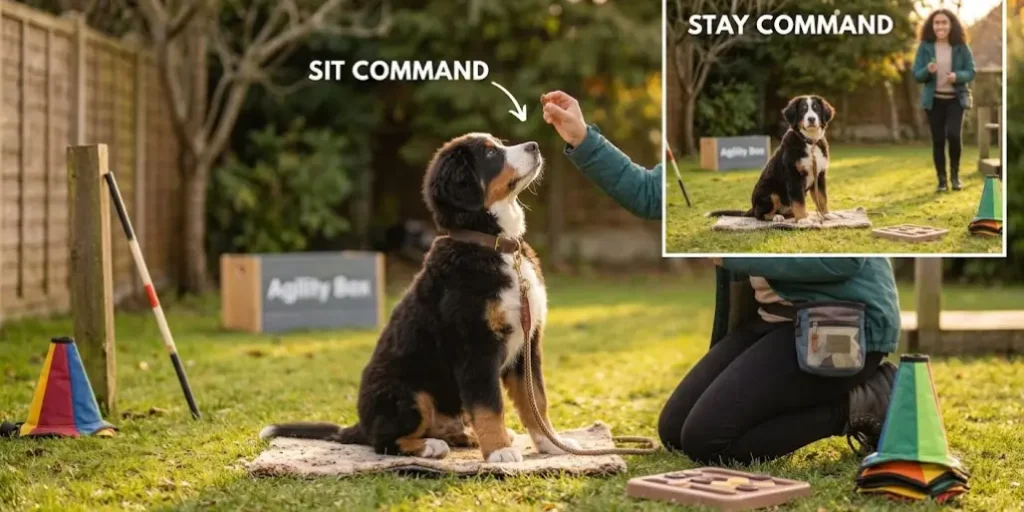
Starting obedience training early with your Bernese Mountain Dog puppy is essential. Focus on basic commands like “sit,” “stay,” “come,” and “down.” Because Berners are eager to please, positive reinforcement works exceptionally well. Keep training sessions short and fun to maintain your pup’s engagement, and always end on a positive note. Consistent practice will help solidify these foundational behaviors for your Bernese Mountain Dog.
Socialization tips for Bernese puppies
Socialization is incredibly important for a Bernese Mountain Dog puppy to grow into a well-adjusted adult. Expose your puppy to a variety of sights, sounds, people, and other friendly dogs in controlled environments. Early socialization helps prevent fear-based behaviors and ensures your Bernese Mountain Dog is comfortable and confident in different situations, making them a joy to take out in public.
Creating a positive training environment
A positive training environment is key for your Bernese Mountain Dog puppy. This means using gentle handling, praise, and treats to reward desired behaviors rather than relying on punishment. A calm and consistent approach makes your pup feel safe and eager to learn, fostering a stronger bond and making dog training a positive experience for both of you. Remember, patience and understanding are vital.
Leash and size management as they grow
Choosing the right leash for training
Selecting the appropriate leash for your Bernese Mountain Dog is crucial for effective training. A comfortable harness can also be beneficial, particularly for larger breeds.
| Leash Type/Feature | Recommendation for Bernese Mountain Dogs |
| Standard Leash Length | Around 4-6 feet |
| Material | Durable material |
| Retractable Leashes | Avoid (do not provide enough control) |
Size management techniques
Given the impressive size of a Bernese Mountain Dog, size management techniques are essential for safe and enjoyable walks. Start leash training early, teaching your Bernese Mountain Dog puppy not to pull. Consistent practice and positive reinforcement will help manage their strength as they grow, ensuring they understand polite leash behavior. This preparation is vital as your Berner matures.
Leash training strategies
Effective leash training for your Bernese Mountain Dog involves consistency and positive reinforcement. Start in a quiet area, rewarding your puppy for walking calmly beside you. If your pup pulls, stop walking until the leash loosens, then continue. This teaches your Bernese Mountain Dog that pulling gets them nowhere. Regular, short training sessions will help your Berner become a pleasure to walk on a leash.
Common Bernese Mountain Dog training mistakes
Ignoring the slow maturity factor
One of the biggest mistakes dog owners make with a Bernese Mountain Dog puppy is ignoring their slow maturity. Due to their extended puppy phase, assuming your Berner will outgrow certain behaviors quickly is a misstep. Consistency in training methods needs to be sustained much longer than with other breeds. This requires continued patience and understanding, as their physical and emotional development takes time, impacting how readily they respond to training sessions.
Inconsistent training methods
Inconsistent training methods can severely hinder your Bernese Mountain Dog’s progress. Because they are so eager to please, mixed signals or a lack of routine can confuse your pup. It’s crucial that all family members use the same commands and expectations. This consistency reinforces good behavior and helps your Bernese Mountain Dog puppy understand what’s expected, making the entire dog training process much more effective and less frustrating for everyone.
Overlooking socialization needs
Overlooking crucial socialization needs is a common mistake that can lead to a less confident Bernese Mountain Dog. While they are a gentle breed, insufficient exposure during their early months can result in timidity or reactivity. Expose your puppy to a variety of sights, sounds, people, and other well-behaved dogs regularly. This proactive socialization is essential for your Bernese Mountain Dog puppy to grow into a well-adjusted and secure adult canine.
How much exercise and mental stimulation is needed?
Daily exercise requirements
Despite their large size, Bernese Mountain Dogs have moderate daily exercise requirements. Over-exercising a Bernese Mountain Dog puppy should be avoided due to their slow maturity and developing joints. To keep your Berner healthy and happy without causing undue stress, focus on low-impact activities.
| Age/Stage | Exercise Guidelines |
| Adult Bernese Mountain Dog | Around 30-60 minutes of activity, split into a couple of walks or play sessions. |
| Bernese Mountain Dog Puppy | Gentle walks and playtime in a secure yard; avoid over-exercising. |
Mental stimulation activities
Mental stimulation is just as important as physical exercise for a Bernese Mountain Dog. Their intelligent and eager-to-please temperament means they thrive on engaging their minds. Incorporate puzzle toys, scent work, and short training sessions throughout the day. These activities not only prevent boredom but also reinforce their training and strengthen the bond between you and your Bernese Mountain Dog puppy, keeping them mentally sharp and content.
Adjusting exercise as they mature
Adjusting exercise levels as your Bernese Mountain Dog puppy matures is crucial due to their slow physical development. While they might seem like boundless bundles of energy, it’s important not to overdo it, especially during their first 18-24 months. As your Berner grows, you can gradually increase the duration and intensity of walks, ensuring activities remain appropriate for their developing joints. Always prioritize their long-term health over intense activity.
Gentle Training for Sensitive Large Breeds
Berners are eager to please but mature slowly, so a calm and steady approach works best. To see how training needs differ from breed to breed, explore our working breed training page.
FAQ
At what age do Bernese Mountain Dogs mature?
Bernese Mountain Dogs are known for their slow maturity, both physically and emotionally. Generally, they don’t reach full maturity until they are around two years old. This means that while your Bernese Mountain Dog puppy might look adult-sized earlier, their minds and bodies are still developing, requiring continued patience, consistent training, and understanding from dog owners throughout this extended puppy phase.
Are Bernese Mountain Dogs easy for first-time owners?
Bernese Mountain Dogs can be a good choice for first-time owners who are prepared for their size, slow maturity, and grooming needs. Their eager-to-please temperament makes them receptive to training, but the commitment to consistent socialization, gentle handling, and managing their substantial size is crucial. A first-time owner must be dedicated to ongoing training and providing adequate exercise for their Bernese Mountain Dog.
How much exercise does a Bernese Mountain Dog need?
A Bernese Mountain Dog typically needs about 30-60 minutes of moderate exercise daily. This can include a couple of brisk walks, playtime in a securely fenced yard, or engaging in mentally stimulating activities. It’s important to avoid strenuous exercise, especially with a Bernese Mountain Dog puppy, due to their developing joints and slow maturity, focusing instead on consistent, gentle activity to keep them healthy and happy.