Bringing a Rottweiler into your home is an exciting journey, and with the right approach to training, you can ensure your companion grows into a well-behaved and cherished family member. This guide will walk you through everything you need to know about Rottweiler training, from their unique temperament to essential socialization techniques.
Is a Rottweiler easy to train?
Rottweilers are remarkably intelligent dogs, eager to please their owners, which makes them quite trainable. However, their size and strength mean that successful Rottweiler training hinges on consistent training and confident leadership from their handler. Without proper guidance, their innate guardian instinct can lead to undesirable behaviors, so dedicated dog training is not just recommended, it’s essential.
Understanding the Rottweiler temperament
Understanding the Rottweiler temperament is key to effective training. These are smart dogs with a strong will and a desire to work, originally bred to herd livestock and pull carts. This working background means they thrive on having a purpose and respond well to mental stimulation and consistent training sessions. Their serious demeanor often hides a playful side, especially during puppyhood, which can be leveraged in positive reinforcement training.
The role of guardian instinct in training
The Rottweiler’s powerful guardian instinct plays a significant role in their temperament and, consequently, their trainability. They possess an inherent wariness of strangers and a strong protective drive towards their family. This protective instinct, while desirable, needs to be carefully managed through obedience training and early socialization to ensure it manifests as appropriate watchfulness rather than unwarranted aggression. You want a Rottweiler dog that can control their impulses.
Factors affecting trainability
Several factors affect a Rottweiler’s trainability, including genetics, the breeder’s practices, and the owner’s commitment. A well-bred Rottweiler puppy from a reputable breeder, with a sound temperament, will generally be more responsive to training. However, even the most promising Rottie requires consistent training methods, clear communication, and ongoing practice to develop into a well-mannered companion.
Why early socialization matters for this guardian breed
Early socialization is non-negotiable for this guardian breed, as it lays the foundation for a well-adjusted and confident adult dog. Rottweilers, with their natural wariness, absolutely need to be exposed to a wide variety of sights, sounds, people, and other dogs from a young age. This crucial step helps them develop into well-socialized individuals rather than becoming overly reactive or fearful.
Benefits of early socialization
The benefits of early socialization are vast, especially for Rottweiler puppies. It helps them become more adaptable, confident, and less prone to fear-based aggression. A well-socialized Rottweiler will be comfortable in various environments, less likely to develop anxiety, and generally easier to manage in public, fostering good habits from an early age. It enables them to differentiate between normal situations and actual threats.
How to socialize Rottweiler puppies
To socialize Rottweiler puppies effectively, introduce them to a diverse range of positive experiences in a controlled manner. This means supervised playtime with other vaccinated dogs, meeting different people of all ages, and exposure to various sounds and environments. Attending puppy classes can provide structured opportunities for socialization and begin foundational obedience training.
Challenges of inadequate socialization
The challenges of inadequate socialization for a Rottweiler can be severe, leading to behavioral problems that are difficult to correct later in life. A Rottweiler dog that hasn’t been properly socialized may exhibit excessive shyness, fear, or aggression towards strangers or other animals. This can make them a liability and significantly impact their quality of life and the peace of mind of their owners.
Rottweiler puppy training basics
Establishing confident leadership
Establishing confident leadership from day one is paramount when training a Rottweiler puppy. Your Rottweiler dog needs to see you as the clear, consistent leader, which isn’t about dominance but about clear communication and guidance. This sets the foundation for all future obedience training, ensuring your intelligent breed understands and respects boundaries, making the training sessions much more productive and enjoyable for both of you.
Basic commands and obedience training
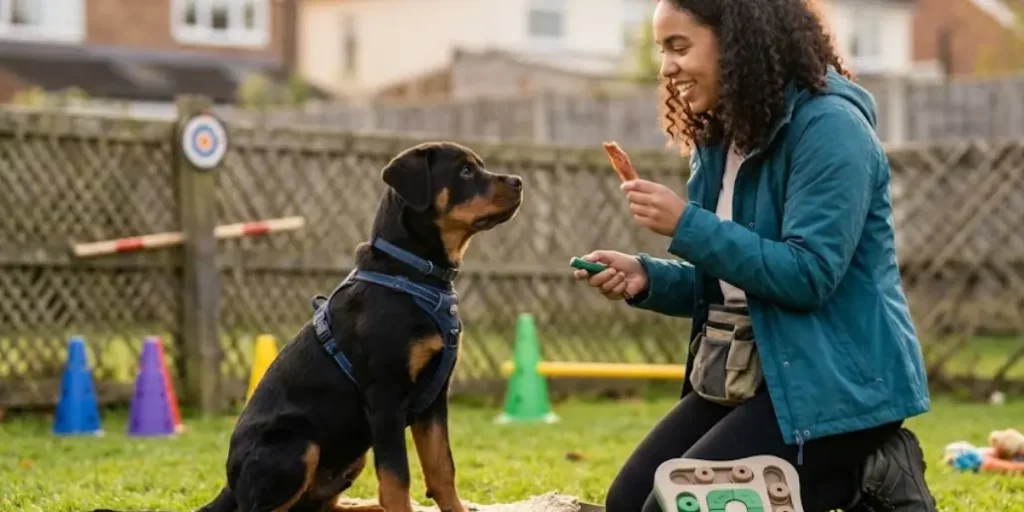
Starting with basic commands is essential for successful Rottweiler training. Commands like “sit,” “stay,” and “come” form the cornerstone of good habits and control. These initial obedience training sessions should be short, positive, and consistent, utilizing positive reinforcement to encourage your Rottweiler puppy. Early success with these commands builds confidence in your smart dog and strengthens your bond, making them more receptive to advanced training.
Crate training a Rottweiler puppy
Crate training is a valuable tool for Rottweiler puppies, offering them a safe den and aiding in potty training. Introduce the crate as a positive space, never as punishment, with treats and comfort items. This helps your Rottie develop impulse control and provides a secure environment when you can’t actively supervise. A well-adjusted Rottweiler dog will come to view their crate as their personal sanctuary, supporting overall well-mannered behavior.
Bite inhibition and impulse control
Teaching bite inhibition
Teaching bite inhibition is crucial for Rottweiler puppies, given their size and strength as a breed. Puppies naturally explore with their mouths, but it’s vital to teach them to control the force of their bites. When your Rottie nips too hard during playtime, a firm “ouch!” and a brief pause in play sends a clear message. This early training helps ensure your Rottweiler dog learns to control their mouth, fostering good habits for life.
Impulse control exercises
Impulse control exercises are vital for Rottweiler training, helping your smart dog learn patience and self-regulation. Simple activities like waiting for food, waiting at the door before going out, or ‘leave it’ games are excellent for developing this skill. Consistent practice of these exercises, coupled with positive reinforcement, teaches your Rottie to think before acting, which is especially important for a breed with strong protective instincts.
Importance of consistency in training
Consistency in training is the absolute key to success with your Rottweiler. Every member of the household needs to be on the same page, using the same commands and training methods. This steady approach reinforces good habits, prevents confusion for your Rottweiler puppy, and solidifies your role as a confident leader. Without consistent training, even the most trainable Rottie can develop undesirable behaviors, making ongoing practice indispensable.
Channeling protectiveness appropriately
Understanding Rottweiler protectiveness
Understanding your Rottweiler’s protectiveness is crucial for effective Rottweiler training. These smart dogs have a deep-seated guardian instinct, stemming from their history of guarding and herding. While this loyalty is admirable, it needs careful guidance. You want your Rottweiler dog to be watchful, not reactive, which means consistently reinforcing good habits and ensuring they understand appropriate boundaries through ongoing practice.
Positive reinforcement techniques
Positive reinforcement techniques are incredibly effective for channeling a Rottweiler’s protective instincts. Instead of punishing unwanted behaviors, reward calm, appropriate responses to new situations or strangers. When your Rottweiler shows desirable restraint or focuses on you, offer praise and treats. This type of training reinforces the idea that good behavior earns rewards, helping your smart dog make the right choices in challenging scenarios.
Redirecting unwanted behaviors
Redirecting unwanted behaviors is a cornerstone of successful Rottweiler training. If your Rottie starts to show inappropriate wariness or barks excessively, immediately redirect their attention with a familiar command like “sit” or “stay.” Once they comply, reward them. This teaches your Rottweiler puppy to shift their focus from potential triggers to you, helping them develop better impulse control and more well-mannered responses.
When to bring in a professional trainer
Identifying training challenges
Identifying when to bring in a professional trainer often involves recognizing specific training challenges that might be beyond your current skill set. If you find your Rottweiler puppy is struggling with basic commands, exhibiting persistent unwanted behaviors like excessive nipping, or if their protective instincts are becoming difficult to manage, it might be time to seek expert help. Persistent problems often indicate a need for specialized obedience training.
Benefits of professional guidance
The benefits of professional guidance for your Rottweiler training cannot be overstated, especially for this powerful breed. A professional trainer can provide tailored strategies for your Rottweiler dog’s specific temperament and challenges, offering an objective perspective and advanced training methods. Their expertise can help you establish confident leadership, improve communication, and ensure your Rottie develops into a well-mannered and well-socialized companion, reinforcing good habits effectively.
Choosing the right professional trainer
Choosing the right professional trainer is a critical step for successful Rottweiler training. Look for someone with extensive experience specifically with guardian breeds and a strong emphasis on positive reinforcement techniques. A good professional will involve you in the training process, clearly explain their methods, and offer ongoing practice advice. Always ensure they are certified and can provide references, guaranteeing the best guidance for your Rottweiler puppy.
Common Rottweiler training mistakes
Overlooking early socialization
Overlooking early socialization is one of the most critical Rottweiler training mistakes. For a guardian breed with strong protective instincts, skipping or insufficient early socialization can lead to a Rottweiler dog that is fearful, reactive, or even aggressive towards new people, places, or other animals. It’s absolutely essential to expose your Rottweiler puppy to diverse positive experiences to build a confident, well-adjusted temperament, fostering good habits from a young age.
Inconsistent training methods
Inconsistent training methods are a common pitfall for new Rottweiler owners. If different family members use varying commands, rules, or reactions, your Rottweiler puppy will become confused and training progress will stall. Consistency in obedience training, commands, and expectations from every handler is paramount for a smart dog like the Rottweiler. This reinforces your confident leadership and ensures your Rottie understands what is expected of them, making ongoing practice much more effective.
Ignoring the Rottweiler’s size and strength
Ignoring the Rottweiler’s size and strength during puppyhood is a serious training mistake. While they start as adorable Rottweiler puppies, they quickly grow into powerful adults. What might be cute nipping in a puppy can become a significant issue in an adult Rottweiler. Early and consistent training to control your dog, including leash training and impulse control, is essential to manage their physical capabilities safely and ensure they develop into a well-mannered companion.
Learn How Other Working Breeds Compare
Confident handling and early socialization help a Rottweiler grow into a steady family companion. If you are curious how other powerful breeds learn, read more in our working breed training section.
FAQ
Are Rottweilers good family dogs when trained well?
Absolutely, when trained well, Rottweilers can be exceptional family dogs. Their inherent guardian instinct makes them fiercely loyal and protective of their human family members, including children. Consistent training and socialization from puppyhood are crucial to channel their protective instincts appropriately. A well-socialized and well-mannered Rottweiler dog, with an owner who demonstrates confident leadership, integrates beautifully into family life, providing loving companionship and a watchful presence.
At what age should you start socializing a Rottweiler?
You should start socializing a Rottweiler as early as possible, ideally as soon as your Rottweiler puppy has received their first set of vaccinations, usually around 7-8 weeks of age. This critical window for socialization before 16 weeks is vital for this guardian breed. Exposing them to a wide variety of sights, sounds, people, and other well-behaved dogs during this period helps them develop into a confident and well-socialized adult Rottie.
Do Rottweilers need professional obedience training?
While it’s not strictly mandatory for every Rottweiler, professional obedience training is highly recommended, especially for first-time Rottweiler owners or those experiencing particular training challenges. Given their size, strength, and strong guardian instinct, a professional trainer can offer invaluable guidance on consistent training methods, confident leadership, and channeling protective instincts. This ensures your Rottweiler dog develops into a well-mannered, obedient, and reliable family member, reinforcing good habits from the start.