Learning to effectively train a Siberian Husky can be a rewarding, yet challenging, journey. These beautiful dogs are known for their distinctive personalities and intelligence, but they also come with a unique set of behaviors that new and experienced husky owners alike need to understand. This guide will provide practical husky training tips to help you build a strong bond with your furry companion.
Are Huskies hard to train?
Understanding the independent temperament of Siberian Huskies
Siberian Huskies are a breed renowned for their independent temperament, a trait that often leads to dog owners asking if Huskies are hard to train. Unlike some more eager-to-please breeds, Huskies were originally bred to pull sleds over vast distances without constant direction, which fostered a strong sense of self-reliance. This means that while they are intelligent and capable of learning, their inherent stubbornness can make traditional obedience training feel like an uphill battle, often requiring a trainer with patience and a deep understanding of the breed’s unique psychology.
The challenges of training a stubborn breed
The challenges of training a stubborn breed like the Siberian Husky often stem from their independent temperament and high energy levels. While they can be incredibly affectionate and loyal, their stubbornness means they might not always see the point in following commands, especially if there’s something more interesting to sniff or chase. This independent nature can make a training session less straightforward than with other breeds, requiring consistent positive reinforcement and a creative training approach to keep them engaged and willing to learn.
Comparing Huskies to other breeds in terms of trainability
When comparing Huskies to other breeds in terms of trainability, it’s clear they present a different set of considerations for dog owners. Breeds like Golden Retrievers or Labrador Retrievers are often considered highly trainable due to their strong desire to please and lower independent temperament, making them ideal candidates for various dog training disciplines. Huskies, on the other hand, with their strong prey drive and high energy, often require a more nuanced and patient approach to obedience training, where the focus is on making the training session engaging and rewarding rather than purely command-driven.
Why recall training is a top priority
Importance of recall for safety and exploration
Recall training is an absolute top priority for any husky owner, especially given the breed’s independent temperament and notorious escape artist tendencies. A reliable recall is not just about convenience; it’s a fundamental safety net that allows your pet to safely explore off-leash in appropriate environments, protecting them from dangers like traffic or getting lost. Without a solid recall, the natural high energy and strong prey drive of a Siberian Husky can quickly lead them astray, making secure containment and constant vigilance crucial.
Techniques to improve your Husky’s recall
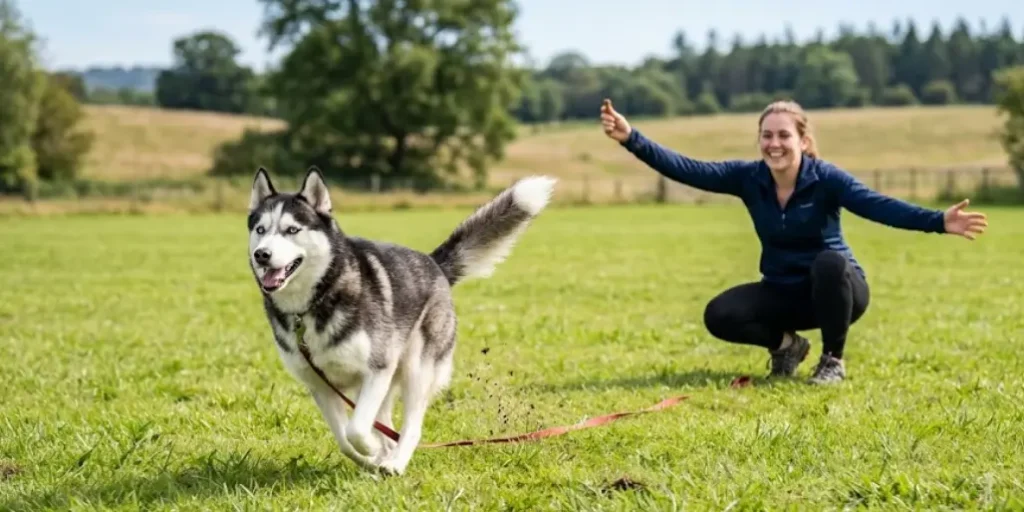
Improving your Husky’s recall requires consistent effort and a clear, positive reinforcement-based training approach. Start training in a distraction-free environment, using high-value treats and enthusiastic praise every time your husky comes when called, even if they’re on a short leash. Gradually introduce more distractions and extend the distance, always ending the training session on a high note. Making “come” a fun, rewarding experience, rather than something associated with ending their exploration, is key to overcoming their independent temperament and strengthening their response.
Common misconceptions about recall training
One of the most common misconceptions about recall training, especially with a breed known for its independent temperament like the Husky, is that once a dog knows the command, they will always obey. This simply isn’t true for many breeds, and particularly not for an escape artist like the Siberian Husky. Another myth is that you can solely rely on punishment when your husky doesn’t listen; this can actually make them less likely to come, as they’ll associate the recall with negative experiences rather than positive reinforcement. Effective husky training, including recall, requires ongoing practice, patience, and making the act of coming back to you the most rewarding option available.
Managing escape behavior and secure containment
Identifying escape artist tendencies in Huskies
Huskies are legendary escape artists, a trait deeply rooted in their independent temperament and high energy levels. Many husky owners quickly learn that a standard fence might as well be an open door, as these dogs are masters of digging, climbing, and even figuring out latches. Identifying these tendencies early in your husky puppy is crucial for preventing future headaches; look for signs of a strong prey drive, an insatiable curiosity, and a general disinterest in staying put when something more exciting is happening on the other side of the yard.
Strategies for secure containment
Given their escape artist reputation, secure containment is paramount for any husky owner. This often means investing in a robust fence, ideally one that is at least six feet high and has an L-footer or dig-guard buried along the bottom to prevent digging out. For added security, some husky owners even opt for a fully enclosed dog run. Remember, a bored husky with high energy is a resourceful husky, so secure containment also involves providing plenty of mental stimulation and exercise to prevent them from seeking their own adventures.
Implications of escape behavior on training
The implications of escape behavior on husky training are significant, primarily because it often means that recall training needs to be an absolute top priority. If your husky puppy consistently attempts to escape, it underscores the urgent need for a strong recall, as well as reinforcing the importance of a secure environment. Every time your husky successfully escapes, it reinforces their independent temperament and their belief that they don’t need to listen, making future obedience training and even basic loose leash walking more challenging.
Husky puppy training basics
Starting with impulse control exercises
Starting husky training with impulse control exercises is fundamental for a well-behaved husky puppy, especially given their independent temperament and strong prey drive. Teaching your husky to “wait” before eating, to “stay” before going out the door, or to calmly accept a leash before a walk helps them learn to manage their excitement and focus. These exercises lay the groundwork for more advanced obedience training and are crucial for developing a pet that can make good choices, even when their high energy is peaking.
Establishing a routine for training your Husky
Establishing a consistent routine for training your husky is one of the most effective husky training tips you’ll ever receive. Huskies thrive on predictability, and regular, short training sessions, perhaps 10-15 minutes a few times a day, will yield much better results than sporadic, long ones. This routine helps to manage their high energy, reinforces good habits, and builds trust between you and your pet. A clear routine also makes it easier to incorporate mental stimulation and physical exercise, which are vital for a happy, well-adjusted husky.
Socialization tips for young Siberian Huskies
Socialization is a critical aspect of training a Siberian Husky puppy, as early positive experiences can shape their behavior for life. Expose your husky puppy to a variety of sights, sounds, people, and other well-behaved dogs in controlled environments. Enroll them in group classes, which offer excellent opportunities for supervised interaction and further reinforce their obedience training. Proper socialization helps to prevent the development of fear or aggression, ensuring your independent temperament husky grows into a confident and friendly adult pet.
Dealing with vocalization and stubbornness
Understanding why Huskies vocalize during training
Huskies are incredibly vocal, and understanding why your husky vocalizes during training is key to managing this unique breed trait. Their “talking,” howling, or grumbling can be a form of communication, expressing anything from excitement and frustration to a desire for attention or simply their independent temperament shining through. Sometimes, a husky will vocalize when they don’t want to listen, almost as if they are arguing. Recognizing the context helps husky owners determine whether it’s a plea for more mental stimulation or just a typical husky expression.
Techniques to manage and redirect vocalization
When dealing with vocalization in your husky, positive reinforcement and redirection are your best friends. If your husky is “talking back” during a training session or howling excessively, avoid reinforcing the behavior with attention. Instead, try to redirect their high energy into a different, acceptable activity, like a chew toy or a short obedience command they know well. Teaching your husky a “quiet” command can also be effective, but consistency is crucial to manage this deeply ingrained aspect of their breed.
Addressing stubbornness and reinforcing positive behavior
Addressing stubbornness in a husky requires patience, consistency, and making training a fun and rewarding experience. Huskies, with their independent temperament, can be incredibly stubborn if they don’t see the point in an exercise. Use high-value treats and enthusiastic praise to reinforce positive behavior, making sure that following your commands is always more appealing than their own agenda. If your husky doesn’t listen, avoid getting frustrated; simply calmly redirect them and try again. Short, engaging training sessions and plenty of mental stimulation will go a long way in overcoming their stubborn nature.
Common Husky training mistakes
Identifying pitfalls in training a Siberian Husky
One of the biggest pitfalls in training a Siberian Husky is underestimating their independent temperament and approaching them like other, more eager-to-please breeds. Many husky owners make the mistake of assuming traditional obedience training methods will work without adaptation, leading to frustration when their husky doesn’t listen or constantly tries to escape. Overlooking the need for secure containment from day one, or neglecting the importance of early socialization for a husky puppy, are also common errors that can lead to bigger problems down the line for an escape artist.
How to avoid frustration during training
To avoid frustration during husky training, it’s crucial to understand that your husky thinks differently. Rather than viewing their stubbornness or high energy as defiance, see it as an expression of their breed’s unique traits. Keep training sessions short, fun, and engaging, using high-value positive reinforcement to make learning a positive experience for your pet. If your husky doesn’t listen, take a break, re-evaluate your approach, and remember that patience and consistency are far more effective than anger or punishment.
Learning from mistakes: adjusting training techniques
Learning from mistakes and adjusting training techniques is vital when training a Siberian Husky. If a particular method isn’t working, don’t keep doing it. Perhaps your husky needs more mental stimulation, or maybe your treats aren’t motivating enough for their independent temperament. Observe your husky’s body language and responses; if they’re bored, distracted, or trying to escape, it’s a sign to change tack. Adapting your training approach to suit your individual husky’s needs will lead to better results and a stronger bond between pet and owner.
How much exercise does training need to account for?
Understanding the high energy levels of Huskies
Understanding the high energy levels of Huskies is foundational to any successful husky training program. These dogs were bred for endurance and can run for miles, meaning they need a significant amount of physical exercise to be truly content and well-behaved. A husky with pent-up energy is often a husky that doesn’t listen, displays destructive behaviors, or becomes a master escape artist. Their independent temperament makes it even more crucial to channel that energy positively, preventing it from being used for mischief.
Balancing exercise with training sessions
Balancing exercise with training sessions is key to effectively training your husky. Instead of viewing them as separate activities, integrate them! Use walks and runs as opportunities for loose leash training, practice recall in a secure, open area, or incorporate obedience commands into playtime. A tired husky is generally a more receptive student, so ensure they’ve had a good energy outlet before a dedicated training session. This approach helps manage their high energy while reinforcing good habits for your pet.
Recommended activities to keep your Husky engaged
To keep your husky engaged and their high energy managed, there are several recommended activities beyond just daily walks. Sledding or canicross (running with your dog) are excellent, breed-appropriate options. Hiking, swimming, or even rigorous games of fetch can also provide the necessary physical and mental stimulation. Puzzle toys, scent work, and advanced obedience training also offer fantastic mental outlets, which are just as important as physical exercise for a breed with an independent temperament like the husky.
Training Independent, High-Energy Dogs
Recall, secure containment, and plenty of exercise are the keys to living with a Husky. Other strong-willed breeds need a similar mix, so check out our working breed training resources for more ideas.
FAQ
Why are Huskies so hard to recall off-leash?
Huskies are often hard to recall off-leash primarily due to their strong independent temperament and powerful prey drive. These traits, combined with their history as sled dogs that needed to make decisions independently, mean they are easily distracted by interesting smells, moving objects, or potential “chase” opportunities. When something exciting catches their attention, their instinct to investigate or pursue often overrides the desire to return to their owner, making consistent, high-value positive reinforcement recall training an absolute necessity for safe off-leash adventures, especially given their escape artist tendencies.
Are Huskies escape artists?
Yes, Huskies are absolutely notorious escape artists, a reputation they’ve earned through their cunning and determination. Their independent temperament means they often don’t see the need to stay put if there’s something more interesting elsewhere. They are incredibly skilled at digging under fences, climbing over them, or even figuring out latches and gates. This means secure containment is not just important, but vital for husky owners, often requiring specialized fencing or dog runs to ensure your pet remains safely within your property and doesn’t become a lost escape artist.
Why does my Husky howl or talk back during training?
Your husky howls or “talks back” during training primarily because vocalization is a deeply ingrained aspect of their breed’s communication style and independent temperament. This “talking” can express a range of emotions: excitement, frustration, boredom, or even an attempt to “argue” with you if they don’t want to listen. Sometimes, it’s simply a way to get attention. Understanding this vocalization as part of their unique personality, rather than defiance, helps husky owners respond appropriately, often by redirecting their high energy and reinforcing desired behaviors through positive means.