Bringing a Corgi puppy into your home is an exciting adventure, but it comes with the responsibility of proper training. This guide will walk Corgi owners through essential techniques and valuable tips to help train a Corgi, ensuring a well-behaved and happy companion.
Are Corgis easy to train?
Corgis are generally intelligent dogs, which can make them quite receptive to training, but their distinct personality traits often present unique challenges. It’s not uncommon for Corgi owners to find that their pup has a mind of its own, requiring patience and a consistent training method to achieve desired results. Understanding the Corgi breed’s inherent characteristics is key to successful dog training.
Understanding the Corgi’s herding instinct
The Corgi breed was originally developed as herding dogs, specifically to drive cattle by nipping at their heels. This strong herding instinct is deeply ingrained, and Corgi puppies often display this behavior by trying to herd family members, especially children, or other pets. Recognizing this innate drive is crucial for Corgi owners, as it explains behaviors like nipping and a tendency to control situations, which can be channeled positively during training.
The impact of short legs on training
While their short legs are an adorable and defining feature, they don’t diminish the Corgi’s need for mental or physical exercise. This breed is surprisingly agile and needs plenty of engagement, making it vital to incorporate varied activities into your training schedule. It’s a common misconception that short legs mean less energy, but a Corgi pup still requires significant mental stimulation to prevent boredom and potential destructive behaviors.
Common challenges in Corgi training
Corgi owners often face several common hurdles when training their Corgi. Successful Corgi puppy training relies on addressing these challenges head-on with consistent and positive reinforcement. These challenges include:
- Stubbornness, a prominent trait that can make obedience training tricky.
- Excessive barking if not managed early.
- Their herding instinct and nipping.
- Their cleverness, which means they learn quickly, sometimes including undesirable behaviors.
Corgi puppy training basics
Starting Corgi puppy training as early as possible sets the foundation for a well-adjusted adult dog. Establishing clear rules and a routine from the outset helps your new puppy understand expectations. Puppy training is about more than just commands; it’s about building a trusting relationship with your pup, making sure they feel secure and understand their place within the family unit.
Establishing a training schedule
A consistent training schedule is paramount for Corgi puppies, providing the structure they need to learn and thrive. Regular intervals for various activities help your pup anticipate events and reduce anxiety. This predictability is especially important for:
- Teaching your puppy where to go potty
- Effective crate training
This consistent schedule makes the entire process smoother for both the Corgi and its owners, incorporating elements like potty breaks, feeding, play, and obedience training.
Essential obedience training techniques
Teaching your Corgi basic obedience commands is fundamental for safety and good manners. For instance, you should teach them commands such as:
- “sit”
- “stay”
- “come”
- “leave it”
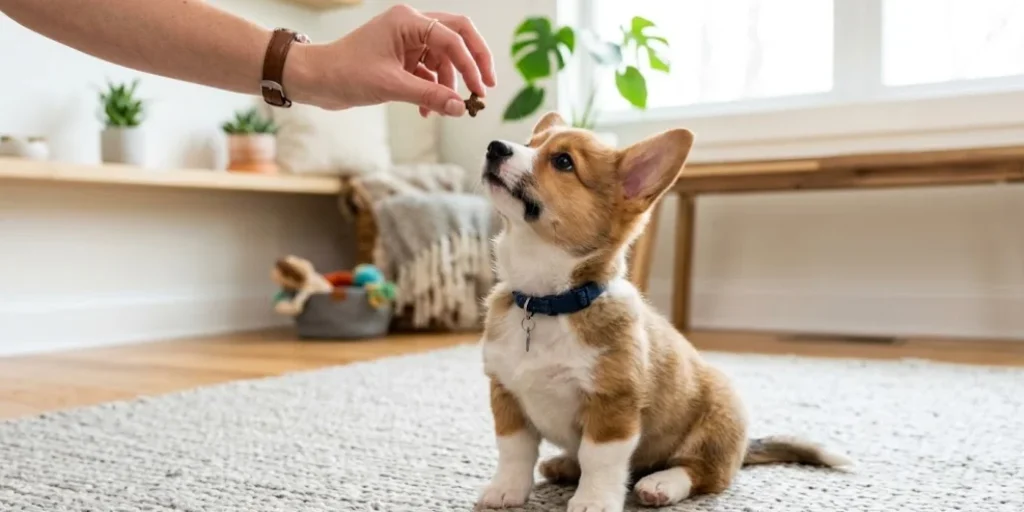
Positive reinforcement, using treats and praise, works wonders with this breed, encouraging them to repeat desired behaviors. Consistent training, even short daily sessions, will reinforce these commands, helping your Corgi learn quickly and preventing frustrating setbacks in the long run.
Socialization with other dogs and people
Early socialization is incredibly important for Corgi puppies to ensure they grow into well-adjusted and confident adult dogs. Exposing your pup to a variety of sights, sounds, people, and other dogs in a controlled and positive manner helps them develop good social skills. Attending a puppy training class can be an excellent way to facilitate this, helping your Corgi learn appropriate interactions and reducing the likelihood of fear or aggression later in life.
Managing the herding nip
Recognizing nipping behavior
The herding instinct in a Corgi often manifests as nipping, especially at heels or ankles, mimicking how their ancestors would herd cattle. It’s not aggression, but rather an innate drive to control movement. Recognizing this behavior early in your Corgi puppy is crucial for Corgi owners, as it allows you to address it before it becomes an ingrained habit during your Corgi’s training journey. Observing when and why your pup nips will give you insights into their natural tendencies.
Redirecting nipping to appropriate toys
When your Corgi puppy starts to nip, a key Corgi training tip is to immediately redirect their attention to an appropriate chew toy. This teaches your Corgi what they are allowed to nip and chew on, and what they are not. Keep plenty of suitable toys readily available, so you can quickly intervene. This positive redirection helps satisfy their natural urge to nip without causing discomfort to family members.
Positive reinforcement strategies
Using positive reinforcement is highly effective when managing nipping. When your Corgi chooses to chew on a toy instead of nipping you, offer praise and a small treat. This reinforces the desired behavior, making your pup more likely to repeat it. Consistency in your training method, coupled with patience, will help your Corgi understand the boundaries and develop better habits.
Dealing with stubbornness during training
Identifying stubborn behaviors
Corgis are known for their strong personalities and can often display stubbornness, especially when they don’t see the immediate benefit of a command. This might look like ignoring you, turning away, or simply refusing to comply. Understanding that this isn’t defiance but often a Corgi’s way of testing boundaries or showing their independent streak is important for Corgi owners navigating their Corgi’s training. Identifying these moments is the first step in effective dog training.
Tips for maintaining patience and persistence
Training a Corgi requires a good deal of patience and persistence, particularly when dealing with stubbornness. Avoid getting frustrated, as your pup can sense your emotions and it might make them even more resistant. Keep training sessions short, fun, and engaging, ending on a positive note. Breaking down complex commands into smaller, easier steps can also help overcome a Corgi’s stubbornness, making the Corgi training process more manageable for both of you.
Adjusting training methods for better results
If your Corgi is being particularly stubborn, it might be time to adjust your training method. Try different types of treats, vary your tone of voice, or change the location of your training sessions to keep things interesting. Sometimes, a Corgi just needs a different approach to ‘click.’ Experiment with what motivates your individual pup; some Corgis are highly food-motivated, while others respond better to toys or enthusiastic praise. Flexibility in your approach is key to teaching your Corgi.
Corgi barking: training approaches
Understanding why Corgis bark
Corgis are notorious for their barks, and understanding the root cause is vital for effective Corgi training. They might bark to alert you to strangers, to express excitement, out of boredom, or even due to their strong herding instinct, using their voice to ‘control’ situations. Your Corgi’s barks can vary in intensity and frequency, so learning to interpret what your pup is trying to communicate through their barking will inform your training approach.
Techniques to reduce excessive barking
To reduce excessive barking, Corgi owners can employ several techniques. Firstly, ensure your Corgi puppy is getting enough mental and physical exercise, as boredom often leads to barking. Consistent obedience training, including commands like “quiet” or “enough,” is crucial. When your Corgi barks, calmly acknowledge it, then redirect their attention to an appropriate activity. Rewarding silence is a powerful positive reinforcement tool in managing this behavior.
Incorporating commands to manage barking
Teaching your Corgi specific commands to manage barking is highly effective. You can teach your Corgi to “speak” on command, and then follow it with a “quiet” command, rewarding them when they stop barking. This gives you control over their vocalizations rather than simply trying to suppress them. Incorporating these commands into your regular Corgi training routine helps your pup learn when it’s appropriate to bark and when it’s time to be quiet, making for a more peaceful home.
House training a Corgi
Setting up a house training routine
Establishing a solid house training routine is fundamental for any Corgi puppy, setting them up for success in their new home. Consistent potty breaks, especially after waking up, playing, and eating, are crucial. Taking your Corgi puppy to the same designated potty spot each time will help them understand where they are expected to go, making the process much clearer for your pup. This routine forms the backbone of successful Corgi training.
Common pitfalls and how to avoid them
When house training a Corgi, common pitfalls include inconsistent schedules and not cleaning accidents thoroughly enough, which can encourage your pup to return to the same spot. Another mistake is punishing accidents; Corgis respond much better to positive reinforcement. Instead, interrupt your Corgi calmly and immediately take them outside. Avoiding these errors will make house training your Corgi a smoother experience.
Using crate training effectively
Crate training is an incredibly effective tool for house training a Corgi. A crate provides a safe, den-like space where your Corgi puppy is unlikely to soil, as dogs naturally avoid soiling their sleeping area. Introduce the crate positively with treats and toys, ensuring it’s never used as punishment. Gradual introduction and making the crate a comfortable spot will greatly aid in teaching your Corgi appropriate potty habits.
How much exercise should training include?
Importance of physical activity for Corgis
Despite their short legs, Corgis are an active breed with significant energy levels, and adequate physical activity is vital for their overall well-being and successful Corgi training. Regular exercise helps manage their weight, prevents boredom, and can even reduce problematic behaviors like excessive barking or destructive chewing. Mental exercise, combined with physical activity, is key to a well-balanced Corgi.
Fun exercises that reinforce training
Incorporating fun exercises into your Corgi’s routine can effectively reinforce training commands. Activities like fetch, short walks, or even agility games tailored for their short legs can be great ways to practice “come,” “stay,” or “drop it” in an engaging manner. These activities not only provide physical exertion but also offer valuable mental stimulation, which is particularly important for a clever breed like the Corgi, preventing them from developing boredom-induced behaviors.
Weight management considerations
Given their propensity to gain weight, especially with their short legs, weight management is a crucial consideration for Corgi owners. Integrating regular, appropriate exercise is paramount. This, combined with a balanced diet, helps prevent obesity, which can lead to various health issues. Monitoring your Corgi’s activity levels and food intake is an important aspect of their overall care, ensuring they remain healthy and agile throughout their life.
Corgis Aren’t the Only Herders With a Nipping Habit
That heel-nipping instinct goes back generations, and it shows up well beyond the Corgi. If you’re curious how other herding breeds channel the same drive, Herding Breed Training has the broader rundown
FAQ
Why does my Corgi nip at my heels?
Your Corgi nips at your heels primarily due to their strong, innate herding instinct. This breed was originally developed to herd cattle by nipping at their legs, and this behavior is deeply ingrained. While it can be frustrating, especially with a Corgi puppy, it’s generally not aggression but rather an attempt by your pup to “herd” you. Consistent training, including redirection to appropriate chew toys and positive reinforcement, can help manage this behavior, teaching your Corgi what’s acceptable.
Are Corgis stubborn to train?
Corgis can indeed be perceived as stubborn to train, largely due to their intelligent and independent nature, coupled with a strong will. They are not always quick to obey if they don’t see the immediate benefit or if they’re not adequately motivated. Successful Corgi training requires patience, consistency, and finding what truly motivates your individual pup, whether it’s high-value treats, favorite toys, or enthusiastic praise. Their stubbornness is often a sign of their cleverness and strong personality.
How do I stop my Corgi from barking so much?
To reduce excessive barking in your Corgi, start by understanding the reason behind their vocalizations—it could be due to their herding instinct, boredom, alert barking, or a need for attention. Ensure your Corgi receives sufficient mental and physical exercise to combat boredom. Implement consistent obedience training, teaching commands like “quiet” or “enough,” and reward silence with positive reinforcement. Socialization also plays a role, helping your Corgi feel more secure in various situations, thus potentially reducing alert barking.